

Buying a home theater projector in 2026 is both easier and more complicated than it used to be. Easier, because laser light sources, better HDR processing, motorized optics, built-in streaming, and legitimately bright RGB laser engines have moved into more price ranges. More complicated, because there is no longer one obvious type of projector that makes sense for every room.
A dedicated blacked-out theater has very different needs from a living room that still gets sunlight at 3 p.m. A gamer may care about 120Hz or 240Hz support more than native contrast. Someone building around a CinemaScope screen may care more about lens memory and optical flexibility than Google TV.
That's why this list isn't simply ordered from most expensive to least expensive. We're looking at the projectors we'd choose for different kinds of home theaters.
Four of the six models below have also been reviewed here at Home Technology Review. The XGIMI Titan Noir Max, Valerion VisionMaster Max, and BenQ W5850 received our Editor's Choice award, while the Epson QB1000 earned our Highly Recommended award.
Price: $5,999 at ProjectorScreen
HTR Award: Editor's Choice

Brightness has always been one of projection's biggest compromises. You could build a great-looking projector for a dark theater, or you could build something bright enough for a multipurpose room, but doing both well was much harder.
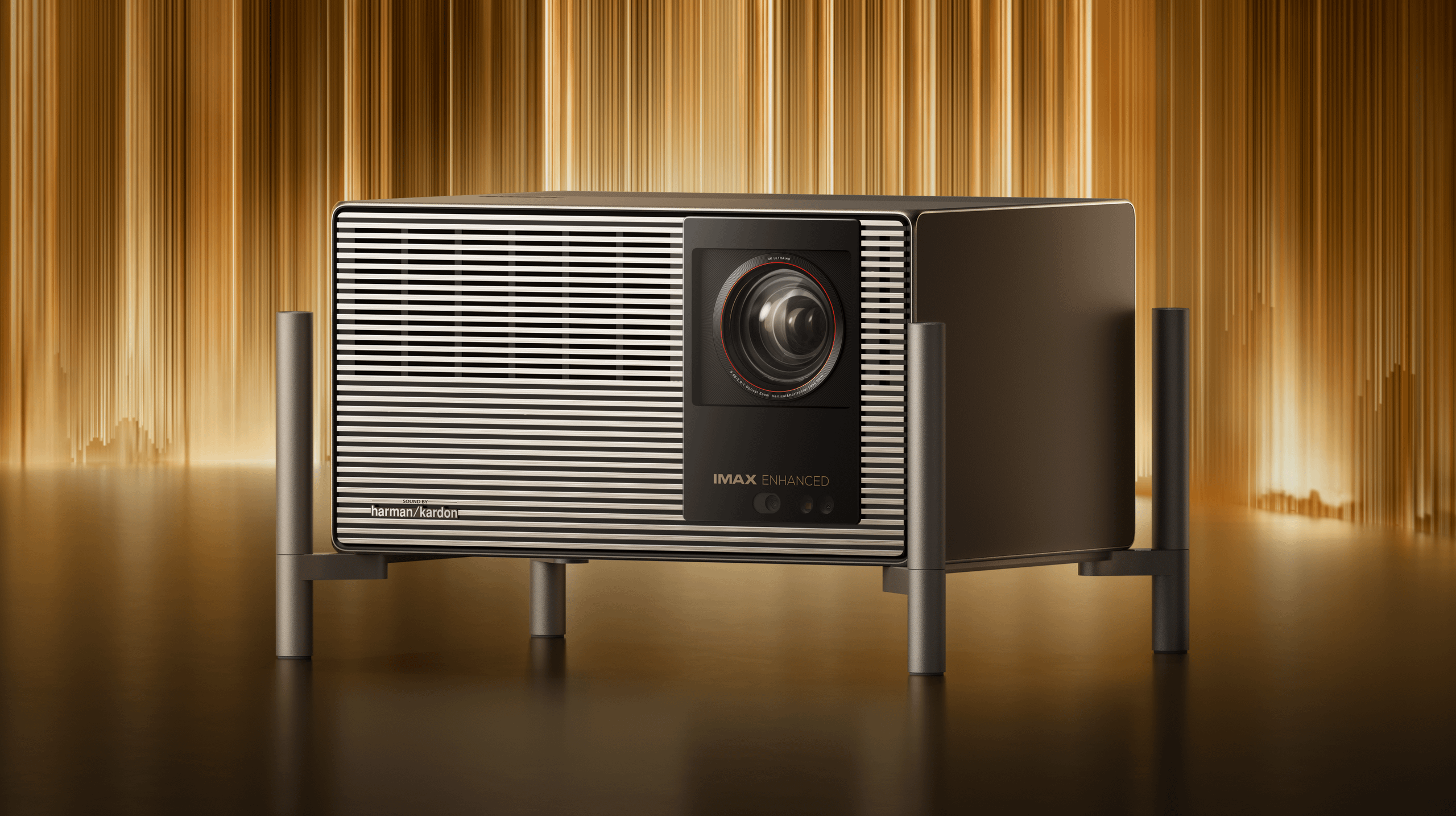
The XGIMI Titan Noir Max is our pick for people who don't want their projector to become useless as soon as someone opens the curtains.
XGIMI rates the flagship model at an enormous 7,000 ISO lumens, generated by an RGB triple-laser light engine. It also offers a claimed native contrast ratio of up to 10,000:1, along with Dolby Vision, HDR10+, IMAX Enhanced, Filmmaker Mode, dynamic tone mapping, and wide BT.2020 color coverage.
Installation flexibility is another major part of the appeal. The Titan Noir Max offers extensive vertical and horizontal lens shift, optical zoom spanning a 0.98:1 to 2.0:1 throw ratio, and lens-memory support. That last feature is particularly useful if you're building around a 2.35:1 CinemaScope screen rather than a conventional 16:9 setup.
Gaming hasn't been ignored either. XGIMI supports up to 1080p at 240Hz, along with VRR and ALLM, and claims input lag as low as 1ms in that high-refresh-rate mode.
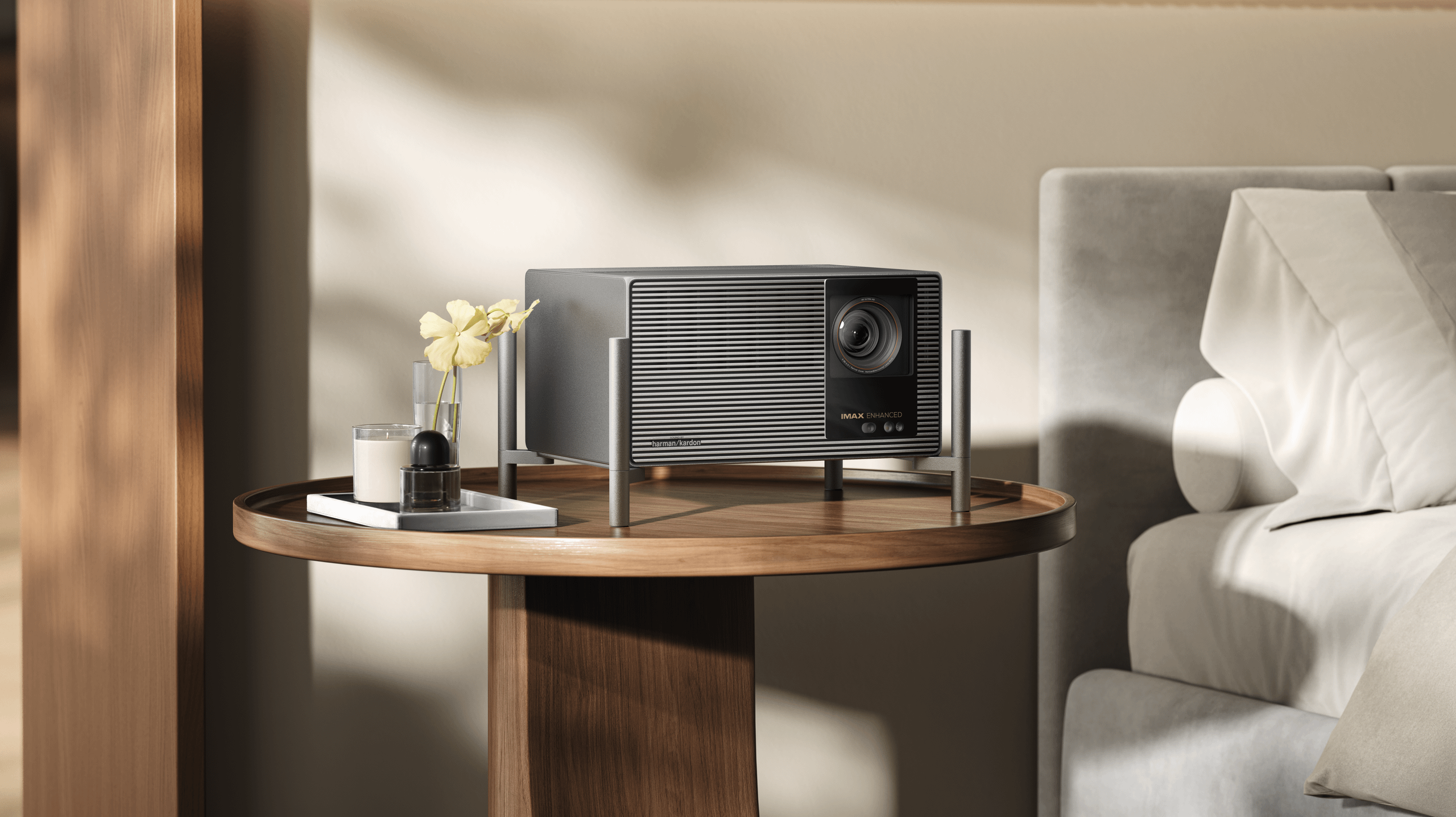
What really earned the Titan Noir Max its place here, though, was how it handled real rooms in our testing. Our review described it as the projector that "finally gets daytime right," specifically because it tackles the usual brightness-versus-black-level problem instead of simply throwing more lumens at the screen.
That doesn't mean ambient light suddenly stops mattering. A dark room will still give you the best projector image, and screen choice becomes especially important when there's significant daylight in the space. But buyers who need one projector to handle movie night and Saturday-afternoon sports have far more headroom here than with a traditional dark-room cinema model.
The downside is obvious: at $5,999, this isn't a casual living-room upgrade. But for a large multipurpose theater where brightness is a genuine requirement, the Titan Noir Max fills a role that many traditional enthusiast projectors simply aren't designed for.
Price: $3,699 at Amazon
HTR Award: Editor's Choice
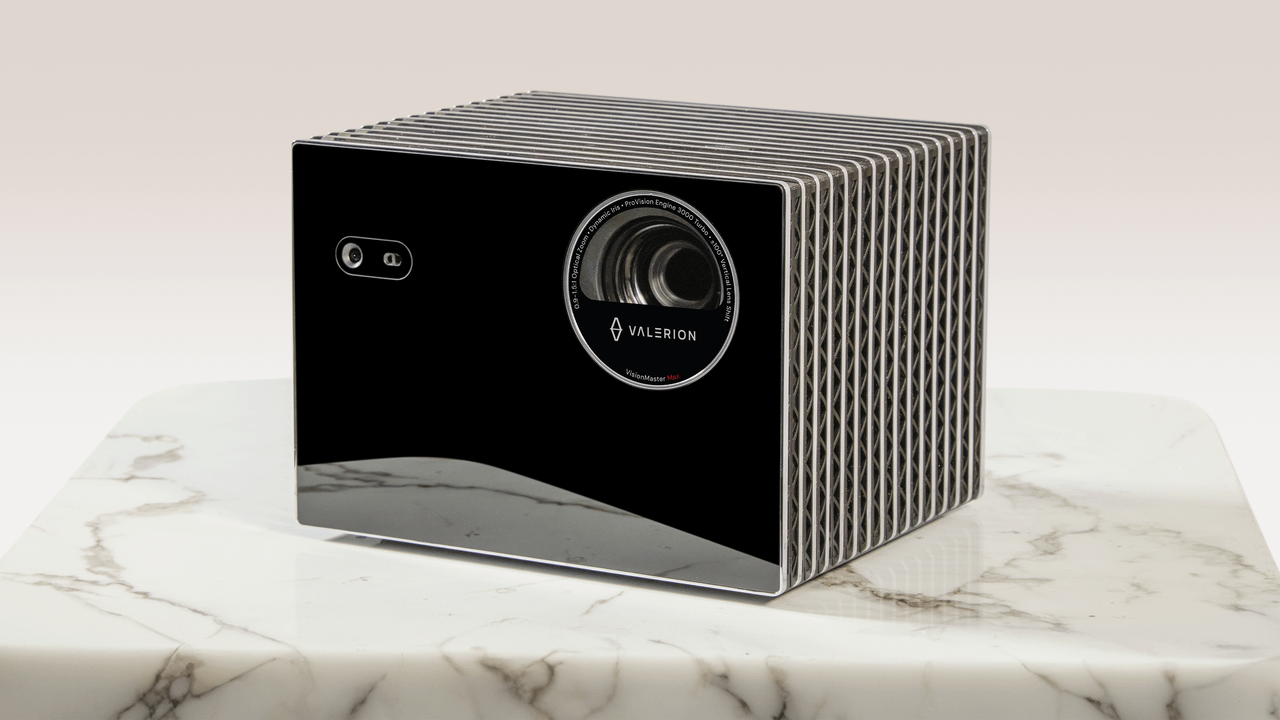
The Valerion VisionMaster Max is arguably the easiest recommendation on this list for someone who wants a little bit of everything.
It uses an RGB triple-laser light source rated at 3,500 ISO lumens, supports up to 4K UHD projection at 300 inches, and includes an adjustable iris system, motorized optical zoom, extensive vertical lens shift, Google TV, and support for Dolby Vision and the other major HDR formats. Valerion also rates gaming latency at 15ms for 4K/60, 8ms at 1080p/120Hz, and 4ms at 1080p/240Hz.
Those numbers alone don't explain why it's here.
When we reviewed the VisionMaster Max, its combination of brightness, color, contrast, HDR performance, and easy motorized setup stood out. We found that the image remained usable with some ambient light while still delivering the depth and shadow detail you'd expect from a projector aimed at serious home theater use.
And the price has become an important part of the equation.

At the $3,699 Amazon price we're using for this guide, the VisionMaster Max sits well below the Titan Noir Max, BenQ W5850, Epson QB1000, and JVC DLA-NZ700. Yet it still provides features such as an RGB laser engine, optical zoom and shift, Dolby Vision, Google TV, and high-refresh-rate gaming.
There are still reasons to move elsewhere on this list. The Titan Noir Max has significantly more light output. The JVC has the advantage when deep native blacks are the priority. The BenQ is aimed more squarely at calibrated dedicated-theater installations.
But that's exactly why the VisionMaster Max is our all-rounder. You don't have to build the room around one narrow strength.
For buyers who want a projector that can handle serious movie watching, streaming, occasional ambient light, and gaming without immediately requiring another box or a professional installation, the Valerion hits a particularly interesting middle ground in 2026.
Price: $6,999 at ProjectorScreen
HTR Award: Editor's Choice
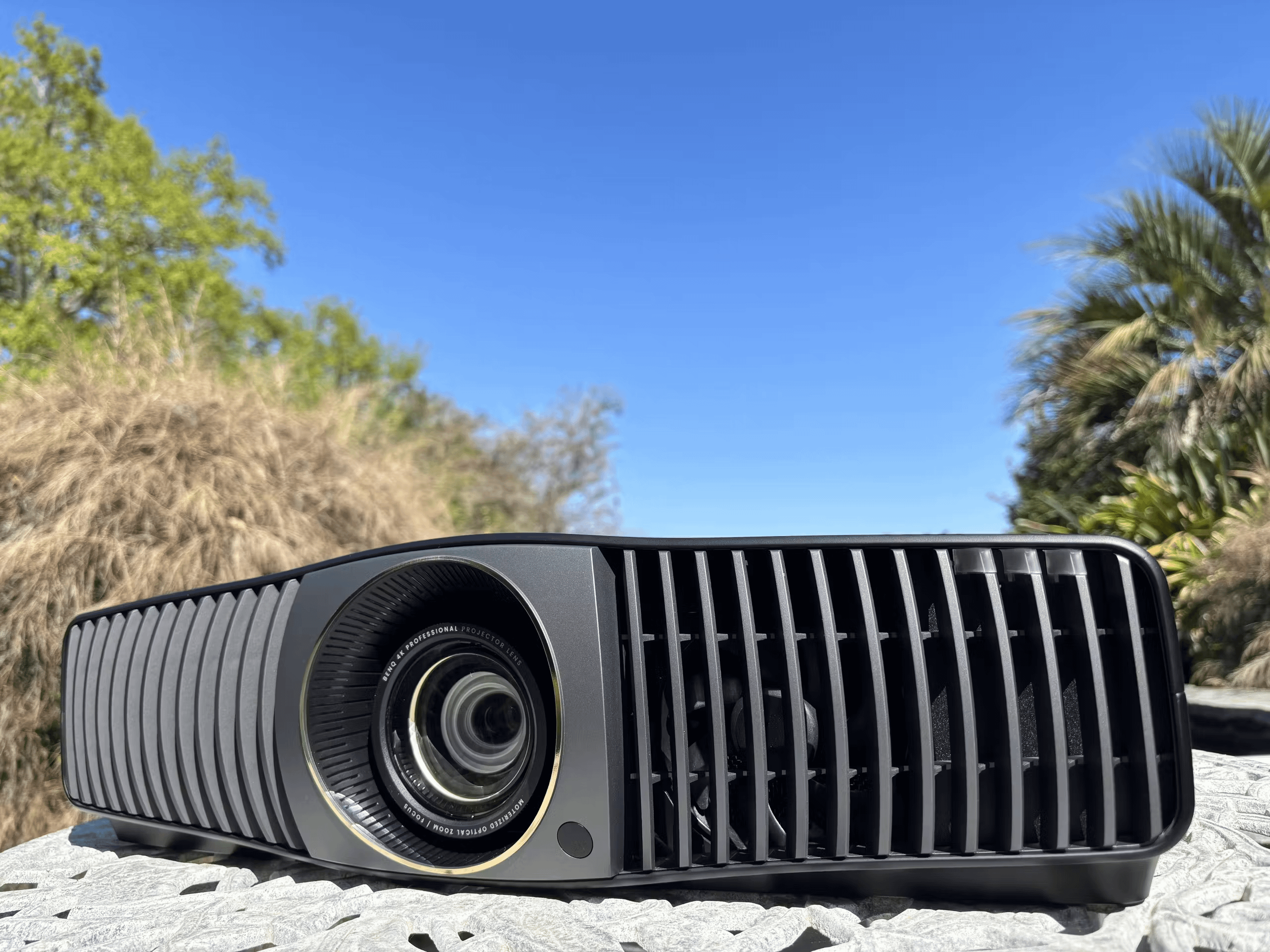
The BenQ W5850 takes a more traditional approach.
This isn't really trying to be the giant-screen replacement for your living-room TV. It's a 2,600-lumen laser cinema projector aimed primarily at dedicated rooms, with an emphasis on color accuracy, optics, installation flexibility, and large-screen movie reproduction. BenQ specifies 100% coverage of both DCI-P3 and Rec.709, along with HDR10, HDR10+, HLG, and Filmmaker Mode.
Its biggest advantage for some rooms is the lens.
The W5850 offers a 1.0:1 to 1.6:1 throw range, 1.6x zoom, and motorized vertical and horizontal lens shift. That relatively short throw makes it possible to generate a larger image from a shorter room than many traditional premium projectors allow.
That mattered during our review. We specifically noted that the updated lens could make the difference between being limited to a smaller screen and fitting something closer to 130 inches into a room where projector placement can't move farther back.

Color was another strength. Our testing found the factory calibration strong before further adjustment, while the W5850's 4K DLP/XPR image remained sharp across a large screen.
There are caveats.
This is still a DLP projector, and our review found that its black levels don't reach the same territory as premium LCoS designs from companies such as JVC. Setup is also more traditional than what you'll find from XGIMI or Valerion; don't expect the projector to magically align everything for you.
But buyers building a proper darkened cinema don't necessarily need lifestyle-projector conveniences. They may care a lot more about getting an accurate image onto the biggest screen their room can physically support. That's where the W5850 makes the most sense.
Price: $8,499 at ProjectorScreen / $6,698 at Amazon
HTR Award: Highly Recommended
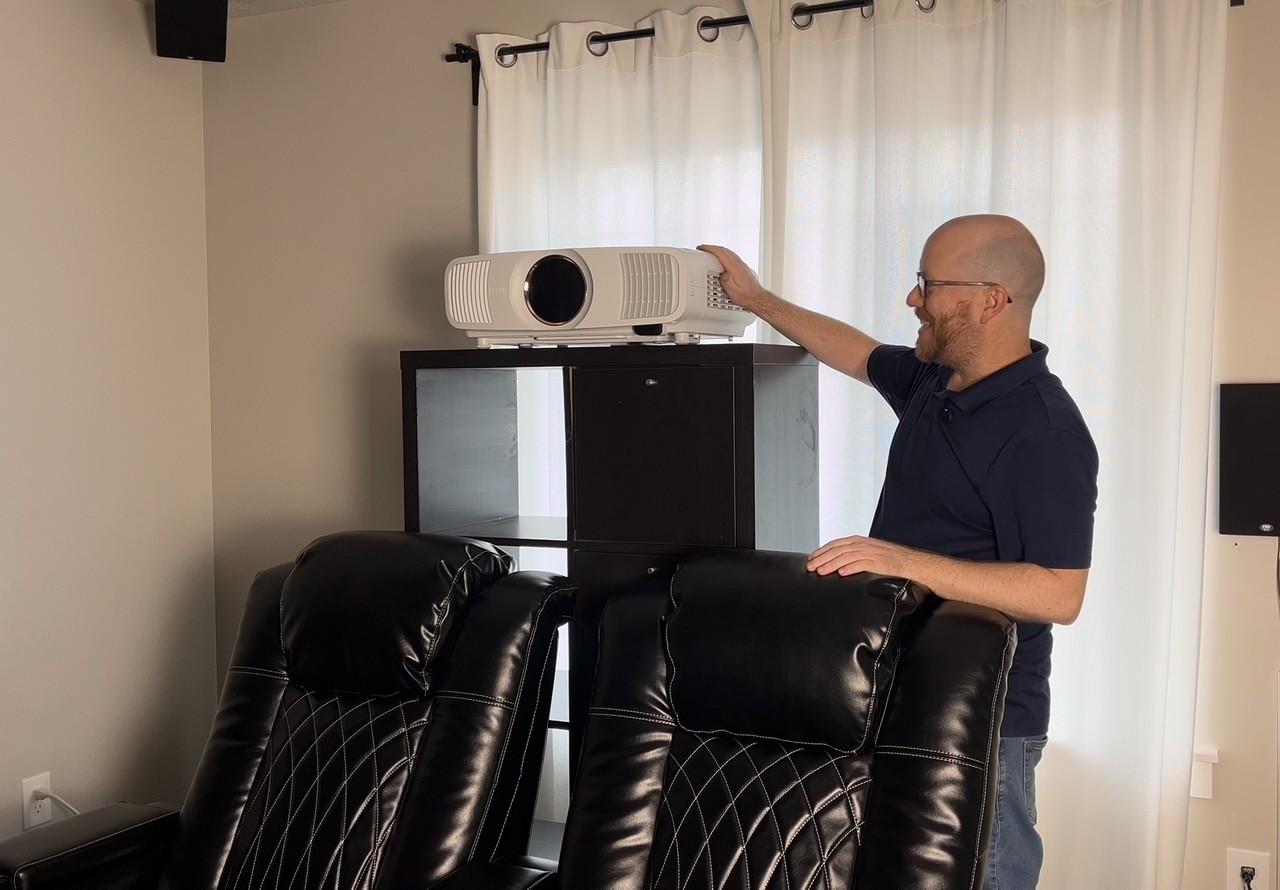
DLP dominates a large part of today's home-projector market, which makes the Epson QB1000 an important alternative.
The QB1000 uses Epson's three-chip 3LCD architecture and a laser light source rated at 3,300 lumens. Its 4K display system puts 8.29 million pixels on screen through pixel shifting, while HDMI 2.1 connectivity supports 4K at 120Hz. There's also HDR10+, dynamic tone mapping, ALLM, motorized focus, zoom and lens shift, and Epson's UltraBlack technology.
That combination makes the QB1000 unusually versatile for a projector designed with home theater in mind.
During our review, its extra brightness compared with the previous LS12000 proved useful even when some ambient light entered the room. We also found the motorized lens controls particularly convenient, and the 120Hz capability helped with fast-moving content.

The QB1000 is also the obvious option here for viewers who are sensitive to the rainbow effect sometimes visible on single-chip DLP projectors. Because 3LCD creates color differently, that particular DLP artifact isn't part of the equation.
Gamers get another reason to look at it. The combination of 4K/120 support, sub-20ms input lag reported in our testing, and ALLM means you don't have to choose between a serious home-theater projector and modern console support.
At its $8,499 ProjectorScreen price, the QB1000 faces very stiff competition. The $6,698 Amazon price, however, changes that calculation significantly and puts it much closer to the W5850 and Titan Noir Max.
The QB1000 won't be our first choice for someone chasing the deepest possible black floor—that's where the JVC comes in—but its mixture of brightness, installation flexibility, 3LCD color reproduction, and gaming support makes it one of the more complete traditional home-theater projectors available.
Price: $9,999 at ProjectorScreen / $8,999 at Amazon

This is the projector on our list for the person who has already painted the walls dark, installed blackout shades, chosen the screen carefully, and wants the projector to disappear into the room once the movie starts.
The JVC DLA-NZ700 takes a very different route from the brighter RGB-laser models above.
It uses three third-generation 0.69-inch native 4K D-ILA devices, delivering a true 4096 x 2160 image without relying on pixel shifting. JVC rates brightness at 2,300 lumens and native contrast at an unusually high 80,000:1.
Those brightness numbers can make it look underpowered next to the Titan Noir Max's 7,000-lumen specification. That's where reading projector spec sheets without considering the room gets dangerous.
In a light-controlled theater, brightness isn't the only goal. Native contrast, black depth, shadow detail, lens quality, and HDR tone mapping become enormously important.

JVC's second-generation Frame Adapt HDR performs dynamic tone mapping for HDR content, while Deep Black Tone Control is designed to extract more detail and depth from darker scenes. The NZ700 also supports HDR10+, HLG, Filmmaker Mode, an adjustable aperture, and a BLU-Escent laser rated for roughly 20,000 hours.
Installation hardware is appropriately serious as well. There's a fully motorized 1.6x lens with up to ±70% vertical and ±28% horizontal lens shift, plus five installation memories. That makes the projector particularly useful with CinemaScope screens or installations where you're switching between multiple aspect ratios.
What the NZ700 doesn't attempt to be is an all-in-one entertainment device. There's no Google TV trying to replace your Apple TV or Kaleidescape box, and nobody is buying this primarily because they want built-in speakers.
That's fine. At this end of the market, the projector is one component of a larger theater system. For viewers who watch primarily in a properly darkened room and put black level and cinematic contrast ahead of sheer brightness, the NZ700 is the most purpose-built choice on this list.
Price: $1,699 at Amazon and ProjectorScreen

The interesting thing about the least expensive projector on this list is how little of the modern feature set you actually give up.
At $1,699, the XGIMI HORIZON 20 costs less than half as much as the next-cheapest projector here. Yet it still uses an RGB triple-laser light source, is rated at 3,200 ISO lumens, supports Dolby Vision, HDR10+, and IMAX Enhanced, includes Google TV, and offers optical zoom and wide lens shift.
That last part is especially important.
Budget and midrange lifestyle projectors have historically relied heavily on digital keystone correction. It works, but you're altering the image electronically rather than moving the optics. The HORIZON 20 adds actual optical adjustment, including vertical and horizontal lens shift, which gives it much more credibility as something you'd permanently install in a home theater.
It also happens to be one of the strongest gaming options in this guide. XGIMI specifies VRR and ALLM, plus high-refresh-rate modes up to 1080p/240Hz. Independent testing from RTINGS also found support for 4K/120 and very low input lag at higher refresh rates.

Picture quality holds up surprisingly well for the price, too. RTINGS found strong contrast in mixed and bright scenes, accurate out-of-box color, high color volume, and enough brightness to remain usable with some ambient light. Very dark scenes aren't its strongest area, with near-black details appearing somewhat elevated, which is one reason it doesn't replace something like the JVC in a serious blacked-out cinema.
That's an acceptable tradeoff at $1,699.
The HORIZON 20 isn't the cheapest 4K projector you can buy, so we're deliberately calling it Best Value rather than Best Budget. There are projectors below $1,000, but the compromises grow quickly once you start expecting serious home-theater performance.
This is where the HORIZON 20 separates itself. You get much of the convenience associated with modern lifestyle projectors without giving up the optical flexibility and HDR support that become important when the projector is part of a permanent system.
Projector shopping becomes much easier once you stop looking for the model with the biggest numbers and start thinking about the room.
A few things matter more than almost anything else:
There isn't one projector here that we'd recommend for every room.
The XGIMI Titan Noir Max makes the most sense when ambient light is something you actually have to live with. The Valerion VisionMaster Max is our premium all-rounder and, at $3,699, occupies an especially interesting position between mainstream lifestyle projectors and traditional high-end cinema models.
The BenQ W5850 is aimed more directly at the dedicated-theater buyer who values accurate color and needs its unusually useful lens range, while the Epson QB1000 gives buyers a powerful 3LCD alternative with serious gaming capabilities.
For the purist dark-room theater, the JVC DLA-NZ700 remains the most specialized machine here. Its 2,300-lumen rating won't win a spec-sheet brightness contest, but that's missing the point. Native contrast and HDR handling become much more important once the lights go out.
And then there's the XGIMI HORIZON 20. At $1,699, it's the one we'd look at first for buyers who want to get into serious big-screen projection without turning the projector itself into the most expensive component in the room.
Projectors have finally reached a point where buyers don't have to choose between the old-school dedicated cinema box and the bright, convenient lifestyle projector quite as sharply as they once did. The important part in 2026 is figuring out which compromises actually matter in your room, and which ones don't.




Privacy Policy
Terms and Conditions - Affiliate Policy
Home Security
© Copyright 2008-2026.
11816 Inwood Rd #1211, Dallas, TX 75244