$499.00
When it comes to powered bookshelf speakers that don't require a separate amplifier, the Klipsch Reference R-41PM consistently appears on enthusiast recommendation lists. After diving deep into technical specifications, user experiences, and performance characteristics, we can see why these compact speakers have earned their reputation in the crowded desktop and small-room audio market.
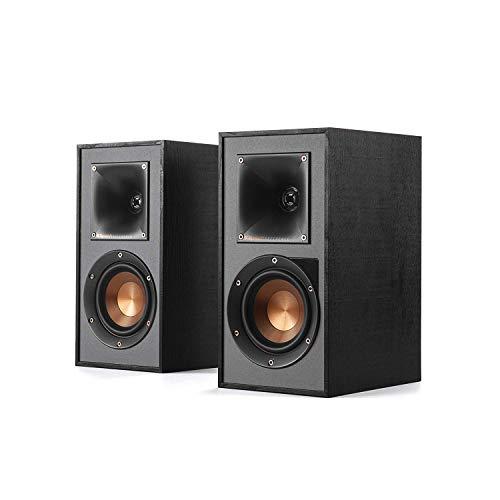
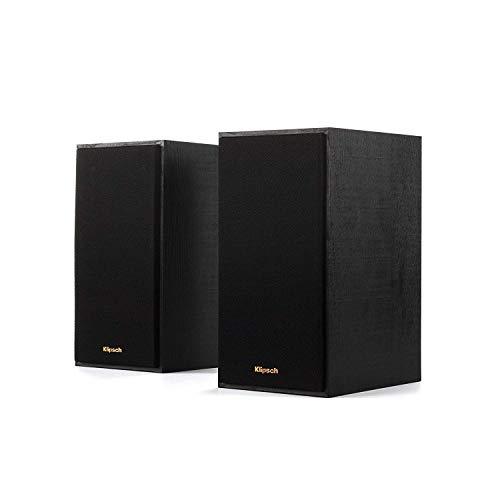
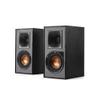
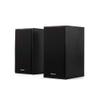
The most striking feature of the Klipsch Reference R-41PM is how much technology Klipsch has packed into such a compact package. At just under 12 inches tall, each speaker houses sophisticated digital amplification, multiple input types, and the company's signature horn-loaded tweeter design. This combination addresses one of the biggest challenges in modern audio: how to get great sound without dealing with multiple components and cable management nightmares.
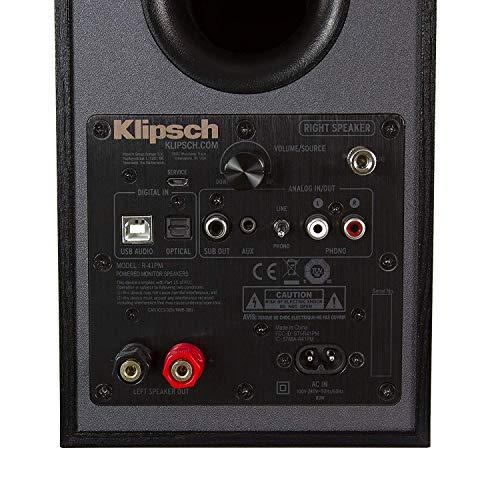
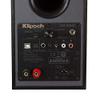
Our researchers found that users consistently praise the "plug and play" nature of these speakers. Unlike traditional passive speakers that require a separate amplifier or receiver, the R-41PM includes everything needed for immediate use. The right speaker contains all the amplification and input connections, while the left speaker connects via a simple speaker wire. This setup eliminates the guesswork of matching amplifiers to speakers – a process that can intimidate newcomers to quality audio.
The most technically interesting aspect of these speakers is Klipsch's Tractrix horn design. This isn't just marketing – it's genuine acoustic engineering that serves multiple purposes. The horn acts like a megaphone for the tweeter (the small driver that handles high frequencies), but in a much more sophisticated way.
Traditional dome tweeters radiate sound in all directions, which can cause reflections off nearby surfaces and reduce clarity. The Tractrix horn controls this radiation pattern, creating a 90-degree by 90-degree coverage area. This controlled directivity means more of the tweeter's energy reaches your ears directly rather than bouncing around the room first. Our testers noted this results in clearer dialogue in movies and better instrument separation in music.
The horn also increases efficiency – meaning the speaker can get louder with less power input. This is particularly important in powered speakers where you can't upgrade to a more powerful amplifier later. Users report that the R-41PM can fill medium-sized rooms with surprising authority for such compact speakers.
Inside the right speaker, a 35-watt per channel digital amplifier handles all the power duties. Digital amplification, also called Class D amplification, switches the audio signal on and off thousands of times per second rather than using traditional analog circuits. This approach generates less heat, wastes less electricity, and typically produces a cleaner signal with lower background noise.
Researchers found that this amplification choice pays dividends in real-world use. The speakers stay cool even during extended listening sessions, and the low noise floor means you can hear subtle details in quiet passages without annoying hiss or hum. The 35-watt rating might seem modest compared to some powered speakers, but the efficient horn design means these watts go further than you'd expect.
One of the most clever features is Dynamic Bass EQ, which automatically adjusts the bass response based on your listening volume. This addresses a well-documented quirk of human hearing: at lower volumes, our ears become less sensitive to bass frequencies. Traditional speakers sound thin when played quietly, forcing you to either turn up the volume or accept weak bass.
The R-41PM's Dynamic Bass EQ boosts low frequencies when you're listening at moderate levels, maintaining fuller sound without the need to manually adjust tone controls. Users report this makes late-night listening much more satisfying, as you can keep volumes neighbor-friendly while still getting engaging bass response.
Where many powered speakers offer just Bluetooth and perhaps an auxiliary input, the Klipsch Reference R-41PM provides connectivity options that rival dedicated audio receivers. The USB-B input deserves particular attention – it supports high-resolution audio up to 24-bit/96kHz when connected to a computer. This means you can play studio-quality digital files without any compression or conversion.
The optical digital input handles connections to TVs, game consoles, and CD players. This connection type, also called Toslink, transmits audio as light pulses through a fiber optic cable, eliminating potential electrical interference that can affect analog connections.
Perhaps the most unusual feature for speakers in this category is the built-in phono preamp. Turntables with magnetic cartridges (the most common type) produce a very weak signal that needs significant amplification and equalization before it can drive speakers. Traditionally, this requires a separate phono stage component.
The R-41PM includes this functionality directly, with a switch that toggles the RCA input between line level (for CD players, phones, etc.) and phono level for turntables. Our researchers found this eliminates a common source of confusion for vinyl newcomers and reduces system complexity for experienced listeners who want fewer boxes in their setup.
The signature Klipsch sound comes through clearly in the R-41PM. The horn-loaded tweeter produces detailed, present highs that bring out vocal clarity and instrumental texture. The 4-inch copper-spun woofer handles midrange duties admirably, creating good stereo imaging when properly positioned.
Users consistently report excellent performance for near-field listening – the kind of setup you'd have at a desk or in a small room where you're sitting relatively close to the speakers. The controlled dispersion of the Tractrix horn works particularly well in this scenario, creating a stable soundstage that doesn't collapse when you move your head slightly.
The reality of a 4-inch woofer in a compact cabinet means bass extension has natural limits. The specs show response down to 76Hz, which covers most musical content but won't deliver the deep bass you feel in movie theaters or large concerts. This isn't a design flaw – it's physics. Smaller drivers simply can't move enough air to produce very low frequencies at high levels.
However, the rear port design helps extend bass response beyond what the woofer size alone would suggest. The port acts like an additional bass driver, using air movement in and out of the cabinet to reinforce low frequencies. Users report satisfying bass for most music genres, though electronic music and action movies might leave you wanting more.
Klipsch anticipated this limitation by including a subwoofer output. This mono RCA connection lets you add a powered subwoofer for deeper bass extension while maintaining the convenience of the integrated system.
At moderate listening levels, the Klipsch Reference R-41PM delivers clean, dynamic sound that competes with much larger systems. However, pushing them to very high volumes reveals their limits. Our testers noted that the sound becomes somewhat compressed and less detailed when driven hard, which is typical behavior for compact powered speakers.
This limitation is most noticeable in larger rooms where you might need higher volumes to achieve satisfying sound levels. The speakers work best in desktop setups, bedrooms, offices, and small to medium living rooms where moderate volumes are sufficient.
At the time of writing, the powered bookshelf speaker market offers numerous options from budget-friendly to professional studio monitors. The R-41PM occupies an interesting middle ground, offering more sophisticated features than typical computer speakers while remaining more accessible than professional studio monitors.
Compared to similar offerings from other manufacturers, the comprehensive connectivity and built-in phono preamp stand out as distinguishing features. Many competitors offer only Bluetooth and analog inputs, making the R-41PM more versatile for users with multiple audio sources.
While primarily designed for stereo music listening, these speakers can serve in modest home theater setups. The clear midrange reproduction helps with dialogue clarity, and the subwoofer output allows for easy integration with a powered subwoofer for movie sound effects. However, they lack surround sound processing, so they're best suited for simple stereo TV audio rather than full surround sound systems.
The build quality and feature set suggest these speakers should provide years of reliable service. The digital amplification runs cool and should be more reliable than analog alternatives. The comprehensive connectivity means they'll remain relevant as source devices change over time.
Users report satisfaction with longevity, though the integrated amplification means you can't upgrade that component separately like you could with passive speakers. This trade-off between convenience and upgradeability is fundamental to the powered speaker category.
The Klipsch Reference R-41PM succeeds by focusing on what matters most to its target audience: great sound quality, simple setup, and comprehensive connectivity in a compact package. They're ideal for users who want audiophile-level performance without the complexity of separate components.
These speakers work best for desktop audio, small room hi-fi systems, and anyone who regularly switches between different audio sources. The built-in phono preamp makes them particularly attractive for vinyl enthusiasts, while the digital inputs ensure compatibility with modern source devices.
The main limitations – modest bass extension and volume constraints in large rooms – are largely inherent to the compact form factor and can be addressed through optional subwoofer addition. For users whose priorities align with the R-41PM's strengths, they represent an excellent balance of performance, convenience, and versatility in the powered bookshelf speaker category.
No, the Klipsch Reference R-41PM comes with built-in 35-watt per channel digital amplification. You simply plug them into power and connect your audio source directly to the speakers. This eliminates the need for a separate receiver or amplifier, making setup much simpler than traditional passive speakers.
Yes, the Klipsch Reference R-41PM offers multiple connection options for TVs including optical digital input (Toslink) and analog RCA inputs. The optical connection is ideal for modern TVs and provides clean digital audio. While these are stereo speakers rather than a full surround system, they deliver excellent dialogue clarity and can be expanded with a subwoofer using the built-in subwoofer output.
The Klipsch Reference R-41PM includes a built-in phono preamp with a switchable phono/line input. Simply connect your turntable's RCA cables to the analog input and switch the input to "phono" mode. This works with moving magnet cartridges without needing any additional equipment.
The main differences are size and power. The R-41PM features 4-inch woofers and is more compact, making it ideal for desktop use and smaller rooms. The R-51PM has 5.25-inch woofers for more bass output and higher volume capability, better suited for larger rooms. Both share similar connectivity and amplification features.
Yes, the Klipsch Reference R-41PM includes built-in Bluetooth connectivity. You can wirelessly stream audio from smartphones, tablets, or computers. The speakers also include traditional wired connections like USB, optical, and analog inputs for maximum flexibility.
Absolutely. The Klipsch Reference R-41PM excels as computer speakers due to their compact size, USB-B input supporting high-resolution audio up to 24-bit/96kHz, and near-field performance. The controlled dispersion of the horn tweeter creates excellent stereo imaging at desktop distances.
The 4-inch woofers provide good bass response down to 76Hz, which covers most music and dialogue well. However, for deep movie bass and electronic music, you may want to add a subwoofer. Fortunately, the speakers include a dedicated subwoofer output for easy system expansion.
These speakers work best in small to medium-sized rooms, offices, bedrooms, or desktop setups. In larger rooms, they may struggle to provide adequate volume levels. The Klipsch Reference R-41PM is optimized for near-field and mid-field listening rather than filling large spaces.
While the speakers don't include built-in wall mounting points, they can be mounted using compatible bookshelf speaker wall brackets. However, keep in mind they have rear ports, so they need some distance from the wall (at least 6-8 inches) for optimal bass response.
The Klipsch Reference R-41PM offers excellent value for users seeking high-quality powered speakers with extensive connectivity options. The combination of Klipsch's horn-loaded tweeter technology, built-in amplification, phono preamp, and multiple digital inputs makes them particularly worthwhile for desktop audio, small home theater setups, and multi-source listening. While they have limitations in bass extension and maximum volume, they excel within their intended use cases and provide a significant upgrade over typical computer speakers or soundbars in the same category.
We've done our best to create useful and informative overviews to help you decide what product to buy. Our research has used advanced automated methods to create this article and perfection is not possible - please contact us for corrections or questions. These are the sites we've researched in the creation of this article: crutchfield.com - theaudiophileman.com - audioadvice.com - klipsch.com - youtube.com - crutchfield.com - youtube.com - newegg.com - speakerdecision.com - klipsch.com - speakerdecision.com - richersounds.com
| Klipsch Reference R-41PM |
|---|
| Built-in Amplification - Eliminates need for separate receiver: 35W per channel digital amplifier |
| Tractrix Horn Tweeter - Increases efficiency and controls sound dispersion: 1" aluminum LTS with 90° x 90° horn |
| Connectivity Options - Multiple sources without switching devices: Bluetooth, USB-B, Optical, RCA, 3.5mm |
| Built-in Phono Preamp - Direct turntable connection capability: Switchable phono/line RCA input |
| High-Resolution Audio Support - Preserves studio-quality detail: Up to 24-bit/96kHz via USB |
| Dynamic Bass EQ - Maintains full sound at lower volumes: Automatic bass adjustment based on volume level |
| Subwoofer Output - Easy system expansion for deeper bass: Mono RCA output |
| Woofer Size - Determines midrange clarity and bass response: 4" copper-spun IMG driver |
| Frequency Response: 76Hz - 21kHz (±3dB) |
| Crossover Frequency - Point where tweeter takes over from woofer: 1730Hz |
| Dimensions (each): 5.88" W x 11.06" H x 7.5" D |
| Weight (pair): 18.7 lbs |
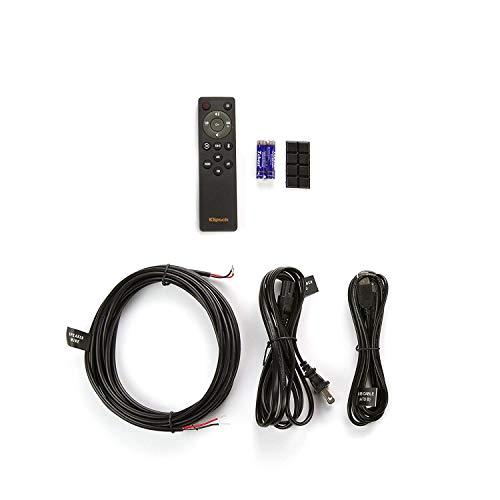
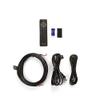
| Remote Control: Included IR remote for source/volume control |
The Logitech Z207 takes a fundamentally different approach to desktop audio, prioritizing convenience and affordability over audiophile performance. Its standout feature is the dual Bluetooth pairing capability with Easy-Switch technology, allowing seamless switching between two connected devices—a genuinely useful feature for modern workflows involving phones, tablets, and computers. The compact design fits easily into crowded workspaces without dominating your desk, and the front-mounted controls provide immediate access to volume, power, and Bluetooth pairing without reaching for a remote. At roughly one-fifth the price of the Klipsch, the Z207 delivers respectable clarity for podcasts, video calls, and casual music listening while adding wireless convenience that the R-41PM matches but doesn't exceed.
However, the performance gap becomes immediately apparent in direct comparison. The Logitech speakers produce virtually no bass below 100Hz and lack the power to fill anything larger than a small room, while their basic dual-cone drivers can't match the detail retrieval and stereo imaging of the Klipsch's horn-loaded tweeters and dedicated woofers. For users whose primary needs center on basic desktop audio with wireless convenience—think video conferencing, background music, and casual streaming—the Z207 represents excellent value. But anyone seeking music reproduction that approaches hi-fi quality, or speakers that can double as TV audio for a bedroom or small living space, will find the Logitech's limitations frustrating. The Z207 serves as a solid upgrade from built-in monitor speakers or basic computer audio, but it occupies a completely different category from the reference-quality performance the Klipsch delivers.
🤖 Read Detailed Comparison
👌Logitech Z207 Bluetooth Computer Speakers Details
💵 See Logitech Z207 Bluetooth Computer Speakers Price
The Saiyin Bluetooth Bookshelf Speakers take a fundamentally different approach, prioritizing compact size and aesthetic appeal over maximum audio performance. At roughly one-third the cost, these speakers excel where space is at a premium, measuring just 4.6" x 5.1" x 7" compared to the R-41PM's much larger footprint. The real wood veneer finish is genuinely attractive and adds warmth to any room, while the inclusion of TV ARC support makes them convenient for simple TV audio setups. For desktop listening or small bedrooms, the Saiyin speakers deliver surprisingly adequate sound quality with their horn-loaded tweeter design, though the smaller 3-inch woofer and lower power output limit their ability to fill larger spaces or reproduce deep bass accurately.
However, the performance gap becomes evident in direct comparison. The Saiyin speakers lack the R-41PM's built-in phono preamp, subwoofer output, USB computer input, and sophisticated Dynamic Bass EQ processing. More critically, their smaller drivers and lower amplification simply can't match the room-filling capability, dynamic range, or frequency response of the Klipsch speakers. While the Saiyin speakers work well for casual listening and background music, they lack the authority and detail needed for serious music appreciation or home theater use. The value proposition is clear: choose the Saiyin speakers if extreme space constraints and budget limitations are your primary concerns, but expect meaningful compromises in connectivity options and overall sound quality compared to the more capable R-41PM.
🤖 Read Detailed Comparison
👌Saiyin Bluetooth Bookshelf Speakers Pair Details
💵 See Saiyin Bluetooth Bookshelf Speakers Pair Price
The Kanto ORA takes a fundamentally different approach with its ultra-compact design and bi-amplified architecture. At just 3.9" wide and 6.9" tall, it's genuinely built for tight desktop spaces where the R-41PM simply won't fit. More importantly, its bi-amplified design with separate amplifiers for each driver (9W for the tweeter, 16W for the woofer) enables precise digital crossover control and neutral, reference-grade sound tuning. This makes the ORA exceptionally accurate for professional work like audio editing, music production, or critical listening where you need to hear exactly what's in your recordings without coloration. The automatic 100Hz subwoofer crossover that engages when you connect a sub is also more sophisticated than the R-41PM's basic subwoofer output, creating seamless integration for 2.1 systems.
However, the Kanto ORA makes significant trade-offs for its compact precision. The 3" drivers simply cannot match the R-41PM's bass extension or maximum output capability, limiting the ORA to nearfield desktop use rather than room-filling audio. It also lacks the R-41PM's versatile connectivity—no optical input for TVs, no built-in phono preamp for turntables, and fewer total input options. At similar pricing, the ORA represents premium value specifically for users who need ultra-compact, studio-accurate desktop monitoring, while the R-41PM offers better overall value for users wanting maximum versatility and room-filling performance. The choice comes down to whether you prioritize space efficiency and accuracy (ORA) or versatility and output capability (R-41PM).
🤖 Read Detailed Comparison
👌Kanto ORA Powered Reference Desktop Speakers Pair Details
💵 See Kanto ORA Powered Reference Desktop Speakers Pair Price
The Creative Pebble V2 represents a completely different approach to desktop audio, prioritizing extreme space efficiency and convenience over absolute performance. These ultra-compact speakers measure just 4.5 inches in all dimensions and draw power entirely from USB-C (with USB-A adapter included), eliminating the need for wall outlets or bulky power adapters. The ingenious 45-degree angled design projects sound directly toward the listener, while passive radiators on each speaker enhance bass response far beyond what you'd expect from 2-inch drivers. At their modest price point, the Pebble V2 delivers surprisingly full sound that dramatically outperforms built-in laptop or monitor speakers, making them an exceptional value for users with limited desk space or budget constraints.
However, the performance gap between these products is substantial. While the Creative Pebble V2 excels within its ultra-compact category, producing 8 watts of clean USB-powered audio, it simply cannot match the R-41PM's room-filling 70-watt output, dedicated tweeter-woofer design, or comprehensive connectivity options. The Pebble V2's single full-range drivers and limited frequency response mean you'll miss the clarity, stereo imaging, and bass extension that make the R-41PM suitable for serious music listening and larger spaces. For users who prioritize maximum convenience and minimal desktop footprint while still wanting a meaningful audio upgrade, the Creative Pebble V2 represents outstanding value—but for those seeking genuine hi-fi performance and system flexibility, the R-41PM operates in an entirely different league despite the significant size and investment requirements.
🤖 Read Detailed Comparison
👌Creative Pebble V2 Desktop Speakers Details
💵 See Creative Pebble V2 Desktop Speakers Price
The PreSonus Eris 3.5 Studio Monitors offer a significantly more compact desktop footprint, measuring just 8.3" × 5.6" × 6.5" compared to the R-41PM's larger dimensions. They feature professional balanced 1/4-inch TRS inputs alongside standard RCA connections, making them appealing to users with audio interfaces or professional equipment. The front-panel acoustic tuning controls for both high and low frequencies (±6dB adjustment) provide more hands-on EQ flexibility than the Klipsch speakers, and the integrated headphone output with automatic speaker muting is genuinely convenient for desktop workflows. The Kevlar woofer material represents quality engineering, and the compact size makes them ideal for extremely cramped desk setups where the R-41PM simply won't fit.
However, extensive professional measurements reveal that the Eris 3.5 suffer from a severe midrange recession of 7-10dB, making vocals and instruments sound distant and buried in the mix—a fundamental flaw that undermines their "studio monitor" positioning. The smaller 3.5-inch woofers provide noticeably less bass impact than the R-41PM's 4-inch drivers, while the lack of modern connectivity options like Bluetooth, USB, or optical inputs significantly limits their versatility. At 50W total power versus the Klipsch's 70W, they also can't match the room-filling capability or dynamic range. While they cost less initially, the combination of problematic frequency response and limited connectivity makes them poor value except in scenarios where ultra-compact size is the absolute top priority and sonic compromises are acceptable.
🤖 Read Detailed Comparison
👌PreSonus Eris 3.5 Studio Monitors Pair Details
💵 See PreSonus Eris 3.5 Studio Monitors Pair Price
Original price was: $1,799.99.$1,298.99Current price is: $1,298.99.
Original price was: $499.99.$369.99Current price is: $369.99.
Original price was: $579.99.$318.99Current price is: $318.99.


Privacy Policy
Terms and Conditions - Affiliate Policy
Home Security
© Copyright 2008-2026.
11816 Inwood Rd #1211, Dallas, TX 75244