

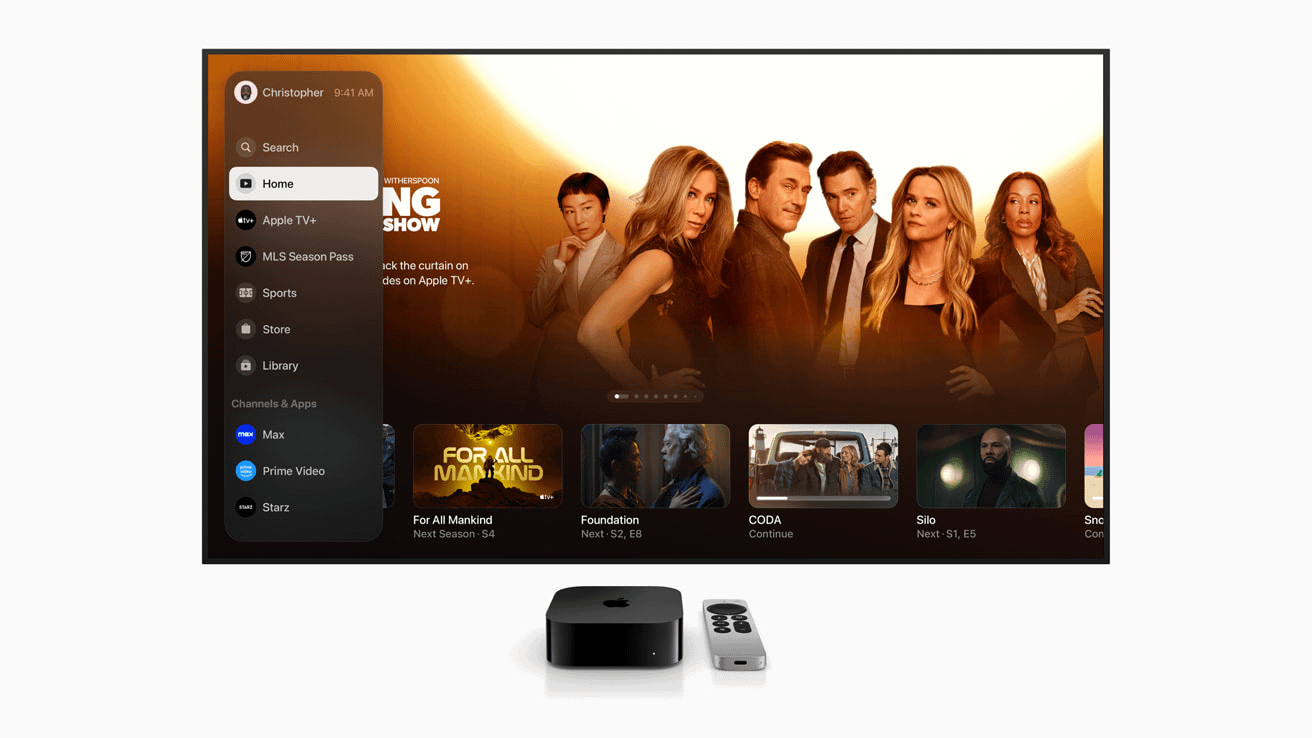
Apple’s next big update for Apple TV—tvOS 26—is bringing something home theater fans have been asking about for years: passthrough audio. It’s not flashy, it wasn’t even mentioned during the WWDC keynote, but it was quietly confirmed in Apple’s developer documentation and later verified by AppleInsider and it could be a meaningful shift for anyone who’s serious about sound.
So, what exactly is passthrough audio? As someone who works with high-performance audio and home theater setups, I often get asked about features like audio passthrough. It sounds technical—and it is—but the concept is actually pretty straightforward once you break it down.
Put simply, audio passthrough allows a device like an Apple TV or a Mac with Apple silicon to send the original, encoded audio bitstream—completely untouched—directly to your AV receiver or sound system over HDMI. Instead of decoding the audio internally and converting it into Linear PCM (LPCM), the device hands off that job to your external gear.
Let me put it in more relatable terms.
Normally, when you play a movie or TV show on your Apple TV, it decodes the audio itself. That means it unpacks all the sound layers—dialogue, effects, music—and sends them to your receiver in a processed format. It works fine for most situations, but there's a catch: some of the more advanced metadata from high-end formats like Dolby Atmos or DTS:X can get lost or altered in the process.
That’s where passthrough changes everything.
With passthrough enabled, the Apple TV acts more like a delivery service. It doesn’t decode or interpret anything—it just forwards the original compressed audio (like Dolby TrueHD or DTS-HD MA) straight to the receiver. This allows your home theater system—usually much better equipped for decoding complex surround formats—to handle the audio the way it was originally mastered. The result? Full object-based surround sound, as the filmmaker or sound designer intended.

This is a major step forward, especially for enthusiasts who use apps like Infuse, which are built to handle high-bitrate content with lossless audio tracks. With passthrough support, those apps can finally send pristine audio to your receiver without compromise, unlocking a noticeably more immersive and cinematic experience.
In short, audio passthrough ensures you're hearing movies and shows in their full glory. It’s one of those behind-the-scenes features that makes a big difference, especially if you’ve invested in a high-quality surround system that can take advantage of it.
According to developer documentation spotted during WWDC and confirmed by AppleInsider, tvOS 26 now includes passthrough support in its AVFAudio framework. But there’s a big catch—it’s not live yet in the current developer beta, and it’ll still be up to individual app developers to support it in their streaming apps.
While this change will matter most to Apple TV users, since it's the device most often plugged into serious home theater setups, passthrough support is being added across Apple’s platforms. That includes iOS 26, macOS 26, iPadOS 26, visionOS 26, and even watchOS 26 (though we’re not entirely sure how that one fits in).
A Mac mini connected to a TV or receiver could be another interesting use case, especially for folks using Plex, VLC, or other media apps. But make no mistake: this feature is really about Apple TV catching up to what other streaming boxes have offered for a while.
Even though the groundwork is there, don’t expect this to be plug-and-play the moment tvOS 26 launches. As of now, there’s no passthrough toggle in the tvOS settings menu, and no guarantee that streaming apps will update their code to take advantage of the new feature right away.

Apple could still make it easier by offering a system-wide toggle or app-specific options, but that’s speculation for now. If you’re hoping to get untouched Atmos or DTS:X from your Apple TV to your sound system, you’ll need to wait and see how developers and Apple choose to roll this out.
Passthrough audio might not move the needle for the average Apple TV user, but it could be a key piece of the puzzle for Apple as it figures out how to compete in the streaming device space going forward.
Let’s be honest: Roku and Fire TV still dominate, especially at lower price points. Apple TV looks and feels premium, but it's never been the affordable pick. And while it’s technically capable, it hasn’t really carved out a spot as the go-to box for high-end setups either.
That’s where something like passthrough audio could help. It doesn’t solve Apple TV’s pricing problem, but it could at least help Apple make a stronger case to audiophiles and home theater fans. Apple TV needs something in 2025 and beyond to steal back viewers. Roku and Fire TV remain the top giants in the battlefield. While I personally think they need a more compact and affordable option, firing upmarket could shift the battle into Apple’s favor.
Right now, there isn’t a true “king of high-end streamers” that balances price, quality, and ecosystem. The Nvidia Shield comes close, but it’s aging. If Apple can make the case that Apple TV 4K, with passthrough and other pro-friendly features, is that device, it could finally find its niche.
What happens next? That depends on whether developers pick this up and whether Apple makes it user-friendly. If streaming apps support passthrough and Apple includes a proper settings toggle, this could quietly become one of the biggest quality-of-life improvements to Apple TV in years.
But if it stays hidden in developer menus or only works with a handful of apps, it’ll be yet another “almost there” feature that most people won’t notice.
Still, for those who care about sound—and already have the gear to take advantage of it—this is a welcome step in the right direction.
For advertising please contact the editor at [email protected]





Privacy Policy
Terms and Conditions - Affiliate Policy
Home Security
© Copyright 2008-2026.
11816 Inwood Rd #1211, Dallas, TX 75244