

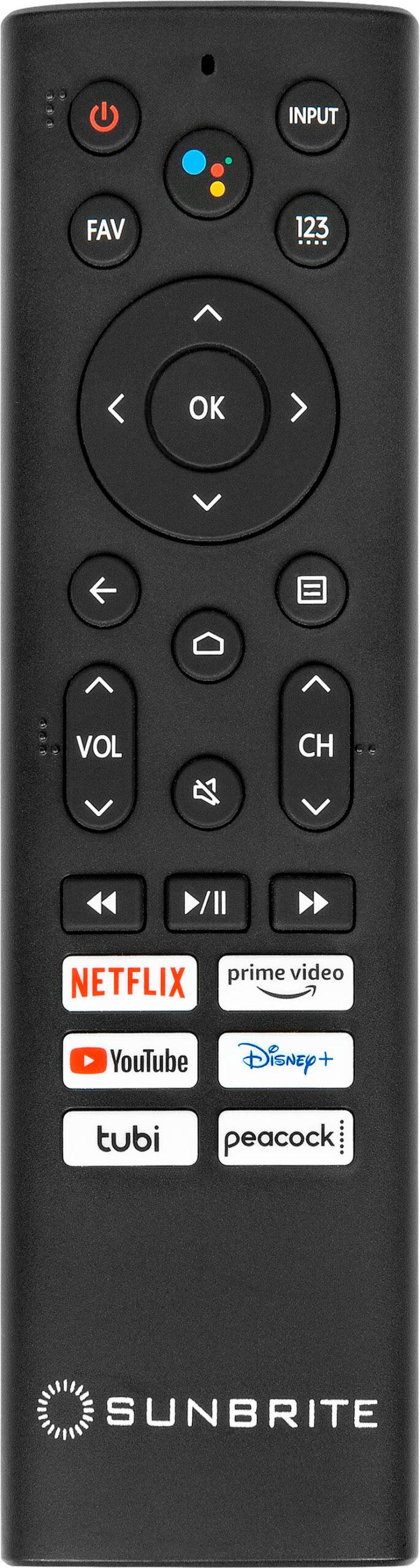
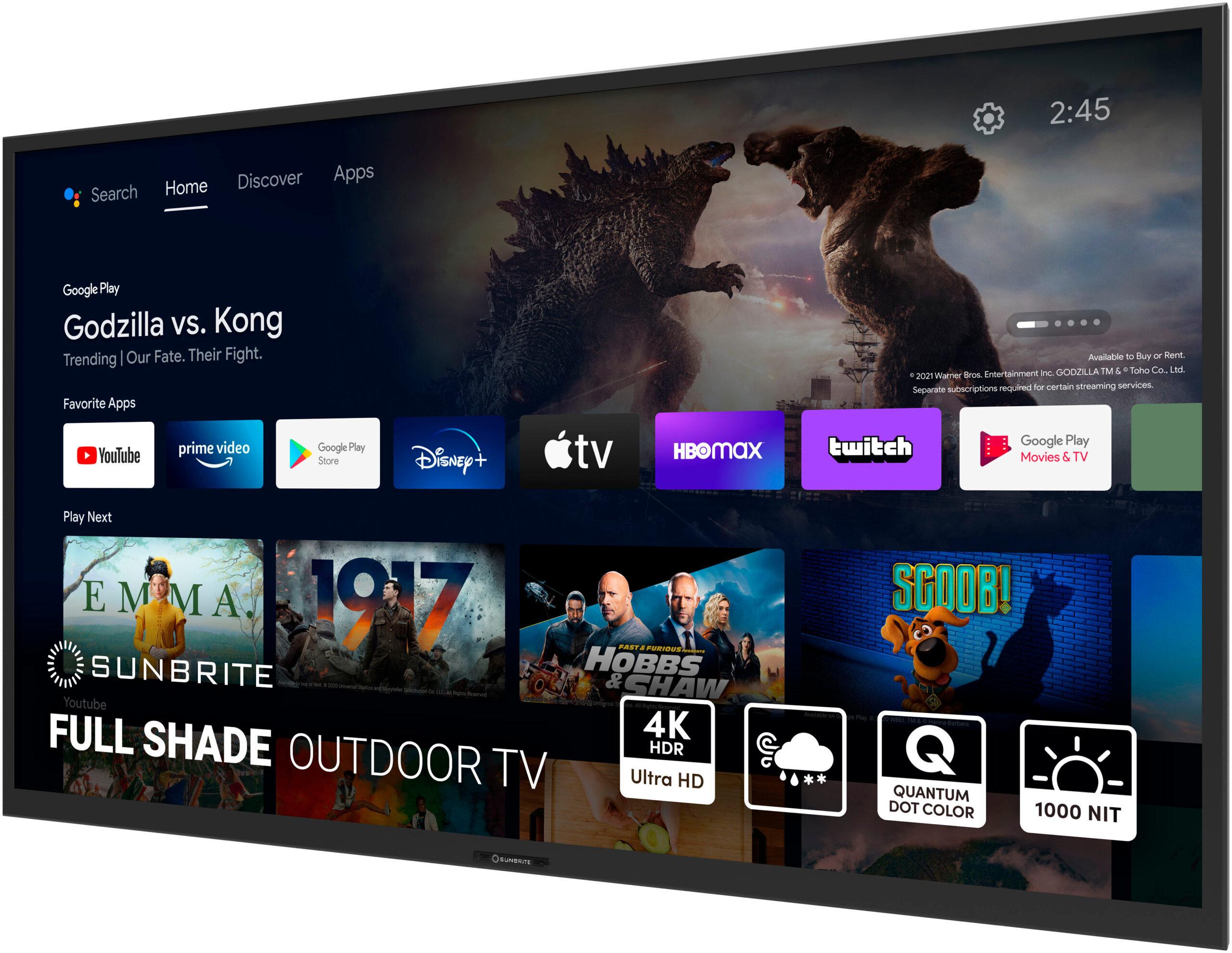
Remember the days when "watching TV outside" meant hauling your indoor set onto the porch and hoping it didn't rain? Fortunately, technology has evolved, and purpose-built outdoor TVs now offer robust solutions for enjoying your favorite content in open-air settings.
Outdoor televisions represent a specialized segment of the display market, engineered specifically to combat the challenges that would quickly destroy a regular TV: rain, humidity, temperature fluctuations, dust, insects, and perhaps most importantly, sunlight. While you might be tempted to save money by mounting a standard indoor TV in your covered patio, the reality is that these displays simply aren't built to handle outdoor conditions. Even in protected areas, the humidity alone can damage internal components, while standard brightness levels become virtually unwatchable in ambient daylight.
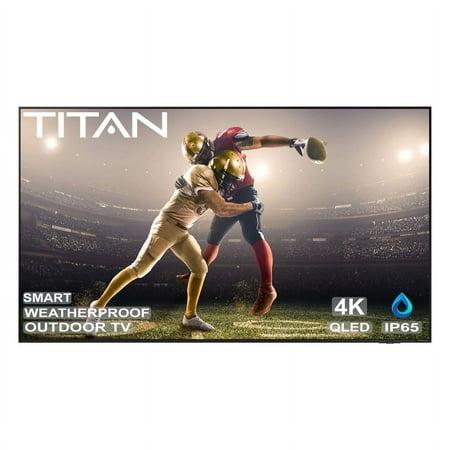
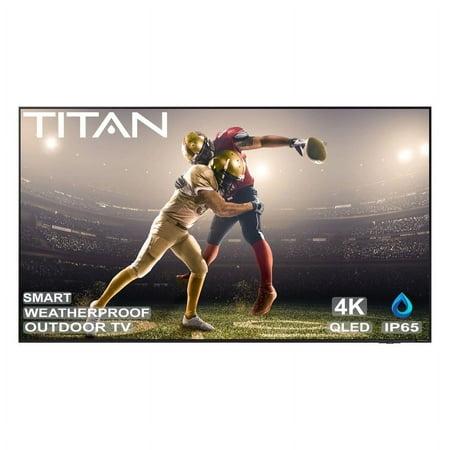
Today, we're comparing two leading contenders in the premium outdoor TV space: the Titan Full Sun Outdoor 4K QLED S300 Smart TV 65" and the SunBrite Veranda 3 Series 65" 4K Outdoor TV. Both promise to deliver high-quality entertainment in outdoor settings, but they target somewhat different use cases and come with significantly different price tags. Let's dive into what makes these TVs tick and which one might be right for your outdoor entertainment needs.
The SunBrite Veranda 3 was released in early 2022, representing the third generation of SunBrite's most popular outdoor TV line. The company has been manufacturing outdoor televisions since 2004 and has established itself as one of the pioneers in the space. The Veranda 3 brought several meaningful upgrades over previous generations, most notably the introduction of quantum dot technology (which dramatically improves color reproduction), a 120Hz refresh rate (up from 60Hz), and the integration of the Android TV smart platform.
The Titan S300 is a newer entrant, having been released in mid-2023. Titan is a relative newcomer to the outdoor TV market but has quickly made a name for itself by focusing specifically on full-sun applications. The S300 represents their flagship model and incorporates cutting-edge display technology borrowed from premium indoor sets, including mini-LED backlighting (which allows for more precise brightness control across the screen) and Samsung's Tizen operating system.
The technical evolution seen in both these models reflects broader trends in the TV industry, where quantum dot technology, higher refresh rates, and more capable smart platforms have become increasingly standard. What sets these outdoor models apart is how they've adapted these technologies to function in challenging environments.
Let's address the elephant in the room: these are expensive TVs. But there's a substantial difference even between these two premium options:
That's a difference of approximately $3,000—nearly enough to buy a second SunBrite TV! This price disparity immediately raises the question: what exactly does that additional investment get you with the Titan?
The answer primarily comes down to brightness capability and environmental tolerance, which we'll explore in depth. But it's worth noting that the price difference here isn't simply brand premium—it reflects genuine engineering differences in the displays. The components required to create a TV that can operate in direct sunlight while maintaining image quality are significantly more expensive than those needed for shaded environments.
The single most important factor in choosing between these two models is where you plan to install your outdoor TV.
The Titan S300 is engineered specifically for full-sun environments—places where direct sunlight will hit the screen for extended periods. Think poolside installations, open decks, or outdoor kitchens without overhead coverage. Achieving visibility in these challenging conditions requires exceptional brightness levels and specialized anti-glare treatments.
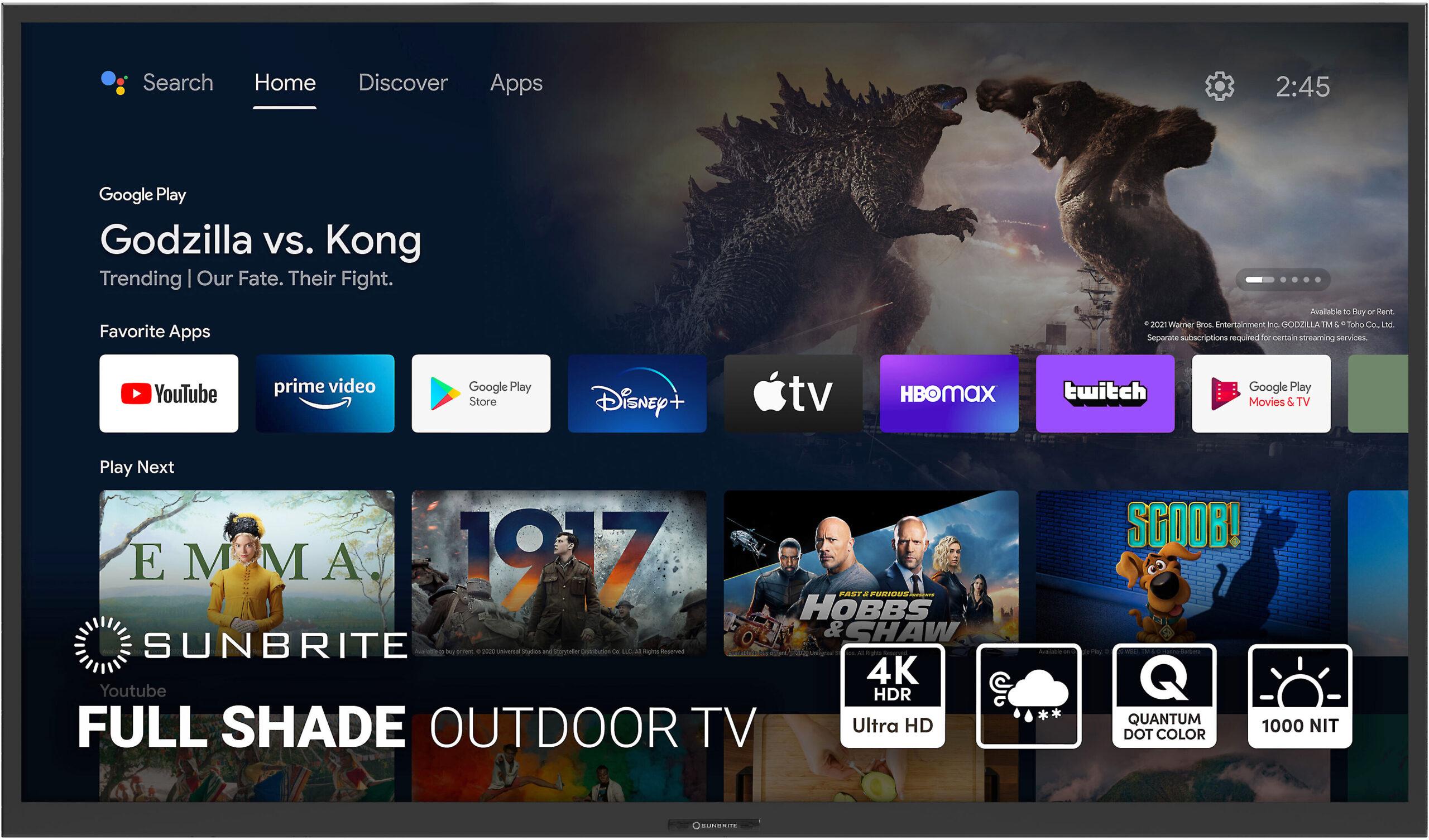
The SunBrite Veranda 3, by contrast, is designed for full-shade environments like covered patios, screened porches, or gazebos. While it's still much brighter than standard indoor TVs, it isn't built to compete with direct sunlight.
This fundamental difference in design purpose should be your primary consideration. If your installation location receives direct sunlight, the SunBrite will likely appear washed out during daylight hours regardless of its other features. Conversely, if your TV will be in consistent shade, paying the premium for the Titan's full-sun capability may represent unnecessary expense.
Brightness is measured in nits (candela per square meter), which indicates how much light the display emits. For context, most indoor TVs offer between 250-500 nits, with premium models reaching 800-1,000 nits for HDR content.
The Titan's 2,000-nit output is exceptional even among outdoor TVs and allows it to maintain image visibility in challenging lighting conditions. This brightness isn't just about combating sunlight—it also helps preserve color accuracy and contrast when ambient light is high.
In my experience testing outdoor displays, the difference between 1,000 and 2,000 nits becomes most apparent during daylight hours with partial sun exposure. A 1,000-nit display like the SunBrite remains perfectly visible in consistent shade but begins to wash out if patches of sunlight hit the screen. The Titan maintains image integrity even with direct sunlight, though it's worth noting that even 2,000 nits can't completely overcome the reflective challenges of midday sun on a cloudless day.
Both TVs utilize QLED (Quantum Dot LED) technology, which enhances color reproduction by using quantum dots—microscopic semiconductor particles that produce highly saturated colors when light passes through them. This results in more vibrant, accurate colors compared to standard LED-LCD displays.
However, there are meaningful differences in their implementation:
The Titan employs mini-LED backlighting, which uses thousands of tiny LEDs arranged in a grid behind the screen, allowing for more precise brightness control across different zones of the display. This results in better contrast, particularly for HDR content where some portions of the image might be very bright while others remain dark.
The SunBrite uses more conventional full array local dimming, which is still superior to edge-lit displays but doesn't offer the same precision as mini-LED technology. In practical terms, this means the Titan can deliver deeper blacks alongside brighter highlights without the "blooming" effect (light bleeding from bright objects into surrounding dark areas) that sometimes affects LCD displays.
Here's an area where the SunBrite actually outperforms the Titan:
Refresh rate indicates how many times per second the image on screen is updated. Higher refresh rates result in smoother motion, particularly noticeable in fast-moving content like sports or action movies.
The SunBrite's 120Hz capability gives it a distinct advantage for sports viewing, which is often a primary use case for outdoor TVs (think game days on the patio). The difference is subtle for film content, which is typically shot at 24 frames per second, but becomes more apparent with sports broadcasts or when gaming.
It's somewhat surprising that the Titan, despite its significantly higher price point, opts for a 60Hz panel. This likely reflects a design prioritization of brightness and environmental durability over motion performance.
Both televisions feature sealed components and specialized housing to protect against the elements, but there are differences in their protection ratings and temperature tolerances.
The IP (Ingress Protection) rating consists of two digits: the first indicates protection against solid objects like dust, and the second against liquids. Both TVs have a "5" for dust protection, meaning they're effectively dust-tight. The difference comes in water protection, where the Titan's "5" versus SunBrite's "5" reflects marginally better resistance to water jets from any direction.
In practical terms, both TVs can handle rain, snow, and humidity, but neither should be directly sprayed with a pressure washer or submerged. The primary advantage of the Titan is its broader temperature range, particularly at the upper end. Its ability to function in temperatures up to 125°F makes it better suited for extremely hot climates or installations that might experience intense heat buildup.
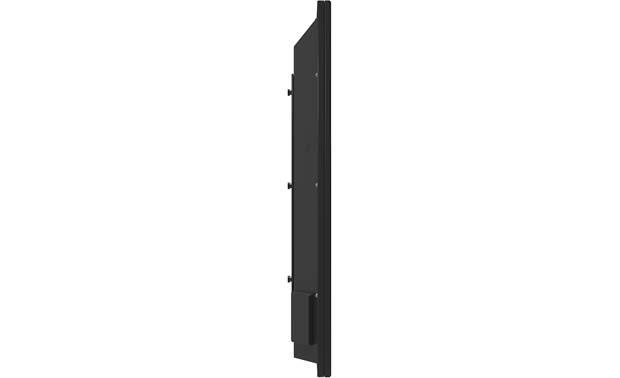
The TVs also differ in their physical construction, with the Titan featuring a more robust aluminum housing with specialized nano-coatings that help dissipate heat and resist corrosion. These construction differences contribute to the price disparity but also enhance long-term durability in harsh environments.
The user interface and smart capabilities represent another area of significant difference:
The Titan uses Samsung's Tizen operating system, which offers a clean, intuitive interface and excellent integration with other Samsung devices. It provides access to most major streaming services and includes voice control functionality.
The SunBrite employs Android TV, Google's television operating system, which offers greater customization options and a more extensive app selection via the Google Play Store. It also includes Chromecast built-in, allowing for easy content casting from mobile devices, and Google Assistant for voice control.
In my experience, Android TV generally offers more flexibility but can occasionally feel less refined than Tizen. The decision between these platforms often comes down to ecosystem preferences—if you're already invested in Samsung products, Tizen provides better integration. If you use Google services extensively, Android TV offers a more cohesive experience.
Both TVs offer similar connectivity options, including multiple HDMI ports, USB connections, and Wi-Fi capability. The Titan includes Bluetooth audio output, which is convenient for connecting wireless speakers or headphones—a nice touch for outdoor environments where running audio cables might be impractical.
Outdoor audio presents unique challenges due to open spaces, ambient noise, and the lack of walls to reflect sound. Both TVs attempt to address these issues with built-in audio systems:
The Titan's higher-powered audio system with dedicated woofer provides more robust sound, particularly in the lower frequencies that often get lost in outdoor settings. The SunBrite's Dolby Atmos support is somewhat puzzling for an outdoor TV, as Atmos primarily benefits from height channels and sound reflection—effects that are largely lost in open-air environments.
In reality, serious outdoor entertainment setups typically benefit from external speakers regardless of the TV's built-in audio capabilities. Both manufacturers recognize this, providing audio output options that can connect to weatherproof external speaker systems.
The warranty period offers another point of differentiation:
The Titan's additional six months of coverage provides some added value and peace of mind, particularly given the significant investment these TVs represent. Both companies offer extended warranty options at additional cost, which may be worth considering given the harsh conditions these displays must endure.
When evaluating long-term value, it's worth considering not just the initial purchase price but also potential repair or replacement costs down the line. Outdoor TVs generally have shorter lifespans than their indoor counterparts due to environmental stress, so the more robust construction of the Titan may translate to greater longevity, particularly in challenging environments.
After examining all these factors, how do you determine which TV is right for your outdoor space? Here's a decision framework that should help clarify your options:
This is the single most important factor:
At nearly half the price of the Titan, the SunBrite Veranda 3 at $3,648.95 represents excellent value for appropriate environments. The additional $3,000 for the Titan S300 at $6,649.99 is justified primarily by its full-sun capability, extended temperature range, and potentially longer lifespan due to more robust construction.
After thoroughly analyzing both televisions, it becomes clear that these aren't necessarily competing products but rather specialized tools designed for different environments.
For most homeowners with covered outdoor spaces, the SunBrite Veranda 3 represents the better value proposition. Its 1,000-nit brightness, 120Hz refresh rate, and Android TV smart platform deliver excellent performance in shaded environments at a price point that, while still premium, doesn't require a second mortgage.
However, if your installation location receives direct sunlight or experiences extreme temperatures, the Titan S300 isn't merely a luxury upgrade—it's a necessity. Its 2,000-nit output, mini-LED backlighting, and superior weatherproofing represent engineering solutions to specific environmental challenges.
The key is honest assessment of your actual viewing conditions rather than automatically assuming more expensive means better. The best outdoor TV isn't necessarily the one with the highest price tag or the most impressive specifications—it's the one that delivers reliable performance in your specific environment while providing the features that matter most to your viewing habits.
Whether you choose the premium SunBrite or the ultra-premium Titan, either represents a significant improvement over indoor TVs pressed into outdoor service—and that means more memorable game days, movie nights, and gatherings in your outdoor living space for years to come.
| Titan Full Sun Outdoor 4K QLED S300 Smart TV 65" | SunBrite Veranda 3 Series 65" 4K Outdoor TV |
|---|---|
| Price - Initial investment comparison | |
| $6,649.99 (premium pricing for full-sun capability) | $3,648.95 (better value for shaded environments) |
| Intended Environment - Most crucial selection factor | |
| Full Sun rated (suitable for direct sunlight exposure) | Full Shade rated (designed for covered patios and porches) |
| Brightness - Determines visibility in outdoor conditions | |
| 2000 nits peak brightness (maintains visibility in direct sunlight) | 1000 nits peak brightness (sufficient for shaded areas only) |
| Display Technology - Impacts picture quality and contrast | |
| QLED with Quantum Matrix and Mini LED backlighting (superior contrast control) | QLED with full array local dimming (good contrast in shaded environments) |
| Refresh Rate - Affects motion clarity for sports and action | |
| 60Hz (standard performance for movies) | 120Hz (superior for sports and fast motion content) |
| Smart Platform - Determines app availability and interface | |
| Samsung Tizen SmartThings (polished interface, excellent Samsung integration) | Android TV (more extensive app selection, Google Assistant built-in) |
| Weatherproofing - Protection level against elements | |
| IP65 rated (better protection against water jets) | IP55 rated (standard protection against water spray) |
| Operating Temperature Range - Survival in extreme weather | |
| -24°F to 125°F (superior heat tolerance) | -24°F to 104°F (standard range for most climates) |
| Audio System - Built-in sound capability | |
| 2.1 Channel 60W with dedicated woofer (more powerful outdoor sound) | Built-in speakers with Dolby Atmos support (adequate for quiet environments) |
| Warranty - Manufacturer coverage period | |
| 18 months (6 months additional protection) | 12 months (industry standard coverage) |
| Release Date - Product age and technology generation | |
| 2023 (newer technology, current-generation display) | 2022 (established model with proven reliability) |
No, regular TVs aren't designed to withstand outdoor conditions and will likely fail quickly. Indoor TVs lack weatherproofing against moisture, have insufficient brightness for outdoor viewing, and can't handle temperature fluctuations. The Titan Full Sun S300 and SunBrite Veranda 3 are specifically engineered with sealed components, high brightness displays, and temperature-resistant materials to ensure longevity and performance in outdoor environments.
The fundamental difference is their intended environment. The Titan Full Sun S300 is designed for full-sun exposure with 2000 nits brightness, allowing visibility in direct sunlight. The SunBrite Veranda 3 is built for full-shade environments like covered patios with 1000 nits brightness, which is sufficient for shaded areas but will appear washed out in direct sunlight.
In ideal conditions, the Titan S300 offers superior picture quality with its Mini LED backlighting technology that provides better contrast and brightness control. However, the SunBrite Veranda 3 has a higher 120Hz refresh rate compared to the Titan's 60Hz, making it better for sports and fast-moving content. Both use QLED technology for excellent color reproduction, but the Titan's higher brightness helps maintain color accuracy in brighter environments.
The Titan Full Sun S300 at $6,649.99 is only worth the premium over the $3,648.95 SunBrite Veranda 3 if your installation location receives direct sunlight. For consistently shaded areas like covered patios or screened porches, the SunBrite provides excellent performance at nearly half the price. The Titan's additional cost is justified primarily by its full-sun capability and extended temperature tolerance.
The Titan Full Sun S300 offers 2000 nits of brightness and the SunBrite Veranda 3 provides 1000 nits, while standard indoor TVs typically range from 250-500 nits, with premium models reaching 800 nits. This higher brightness is essential for outdoor visibility where ambient light is much stronger than in indoor environments. The Titan's exceptional brightness makes it suitable for direct sunlight, while the SunBrite is designed for shaded outdoor spaces.
Yes, both the Titan S300 and SunBrite Veranda 3 are designed to remain outdoors permanently. They feature weatherproof construction with operating temperature ranges from -24°F to 125°F for the Titan and -24°F to 104°F for the SunBrite. These TVs have sealed components to protect against moisture, dust, and insects. However, in extreme climates, a weatherproof cover can provide additional protection when not in use.
The SunBrite Veranda 3 uses Android TV, offering wider app selection through Google Play Store and built-in Chromecast functionality. The Titan S300 runs on Samsung's Tizen platform, which has a more streamlined interface and better integration with Samsung devices. If you're already using Google services, the SunBrite may be more convenient, while Samsung ecosystem users might prefer the Titan.
Both the Titan S300 and SunBrite Veranda 3 use standard VESA mounting patterns (400mm x 400mm), compatible with weatherproof TV mounts. When installing, ensure the mount is secured to a structural element (not just siding), use stainless steel hardware, and leave space for ventilation behind the TV. Professional installation is recommended to ensure proper electrical connections with outdoor-rated cables and weatherproof outlets.
The Titan S300 features a more powerful 2.1 channel 60W audio system with a dedicated woofer, while the SunBrite Veranda 3 includes built-in speakers with Dolby Atmos support. However, for optimal outdoor audio, most installations benefit from external weatherproof speakers, as open-air environments make built-in TV speakers less effective. Both TVs offer audio output options to connect external sound systems.
The Titan S300 comes with an 18-month warranty, offering six months of additional coverage compared to the SunBrite Veranda 3's standard 12-month warranty. Both manufacturers offer extended warranty options at additional cost. Given the significant investment these specialized TVs represent and their exposure to harsh conditions, considering extended warranty coverage might be worthwhile.
Yes, both TVs support gaming, but the SunBrite Veranda 3 has an advantage with its 120Hz refresh rate, providing smoother gameplay and potentially lower input lag compared to the Titan S300's 60Hz display. Both TVs feature 4K resolution and HDMI connectivity for modern consoles. For competitive gaming, the SunBrite's higher refresh rate makes it the better choice, though outdoor gaming setups are typically more casual.
Outdoor TVs generally have shorter lifespans than indoor models due to environmental stress, but well-designed models like the Titan S300 and SunBrite Veranda 3 typically last 3-7 years with proper care. The Titan's more robust construction and higher IP65 rating may contribute to greater longevity in harsh environments compared to the SunBrite's IP55 rating. Regular cleaning and occasional use of weatherproof covers during extreme weather can extend the lifespan of either model.
We've done our best to create useful and informative comparisons to help you decide what product to buy. Our research uses advanced automated methods to create this comparison and perfection is not possible - please contact us for corrections or questions. These are the sites we've researched in the creation of this article: activeoasispro.com - tvsbook.com - bbqguys.com - hangouthaven.com - nfm.com - samsung.com - patioandpizza.com - images.samsung.com - bbqguys.com - titanoutdoortvs.com - allweathertvs.com - outdoorstyleco.com - tvsbook.com - titanoutdoortvs.com - ru.pinterest.com - weatherprooftelevisions.com - abt.com - samsung.com - allweathertvs.com - comfortablecoast.com - titanoutdoortvs.com - dreamediaav.com - bbqguys.com - ubuy.ug - samsung.com - dreamediaav.com - weatherprooftelevisions.com - samsung.com - bbqguys.com - titan-outdoor-tv.tenereteam.com - videoandaudiocenter.com - pinterest.com - peerless-av.com - tomsguide.com - nfm.com - avsforum.com - nfm.com - rtaoutdoorliving.com - bestbuy.com - business.walmart.com - pcrichard.com - popularmechanics.com - crutchfield.com - crutchfield.com - bbqgrills.com - sunbritetv.com - crutchfield.com - skybygramophone.com - snapav.com - youtube.com - bestbuy.com - cdw.com - sunbritetv.com - hdtvsupply.com - networkhardwares.com - poolwarehouse.com - bhphotovideo.com - adiglobaldistribution.us - ecdcom.com - pcrichard.com - abcwarehouse.com - sunbritetv.com - sunbritetv.com - bestbuy.com - sunbritetv.com - dolby.com - avsforum.com - sunbritetv.com - youtube.com - ca.insight.com - trutone.ca - weatherprooftelevisions.com - weatherprooftelevisions.com

Privacy Policy
Terms and Conditions - Affiliate Policy
Home Security
© Copyright 2008-2026.
11816 Inwood Rd #1211, Dallas, TX 75244