

An Installer and Editor-in-Chief’s Unfiltered Truth
As someone who’s spent years in the trenches as an audio/video installer, salesman, editor-in-chief, and reviewer, I’ve seen just about every kind of cable and interconnect under the sun—some genuinely well-made, others so dripping with snake oil it’s hard not to laugh (or cry) at the price tag. If you’ve ever browsed high-end audio forums or walked through a hi-fi show, you’ve no doubt encountered passionate debates (to put it mildly) about whether expensive cables and interconnects are worth the money—or just another industry con.
Here’s my take: While better cables can provide cleaner transmission in theory, the impact on actual, audible sound quality is minimal to nonexistent for most systems. And the dollars spent chasing these “improvements” are almost always better spent elsewhere. Let’s break down why.
Most expensive audiophile cables are a waste of money. Science and real-world testing show they don’t improve sound in typical home setups. Spend your money on better speakers, room treatment, or source material—instead of falling for cable snake oil. The real magic in audio is in the music, not the wire.
Let’s be honest: the high-end cable market is a goldmine for clever marketing and wild claims. You’ll hear terms like “oxygen-free copper,” “cryogenic treatment,” “directional flow,” and “nano-particle shielding.” Some cables come in velvet bags with hand-polished connectors and price tags that could fund a decent used car.
And it works. Why? Because the psychology of premium pricing and scarcity drives the audiophile urge for “just one more upgrade.” High-gloss advertisements, influencer sponsorships, and constant coverage at trade shows perpetuate the myth that cables are the last frontier for unlocking your system’s true potential.
But is there any science to back this up?
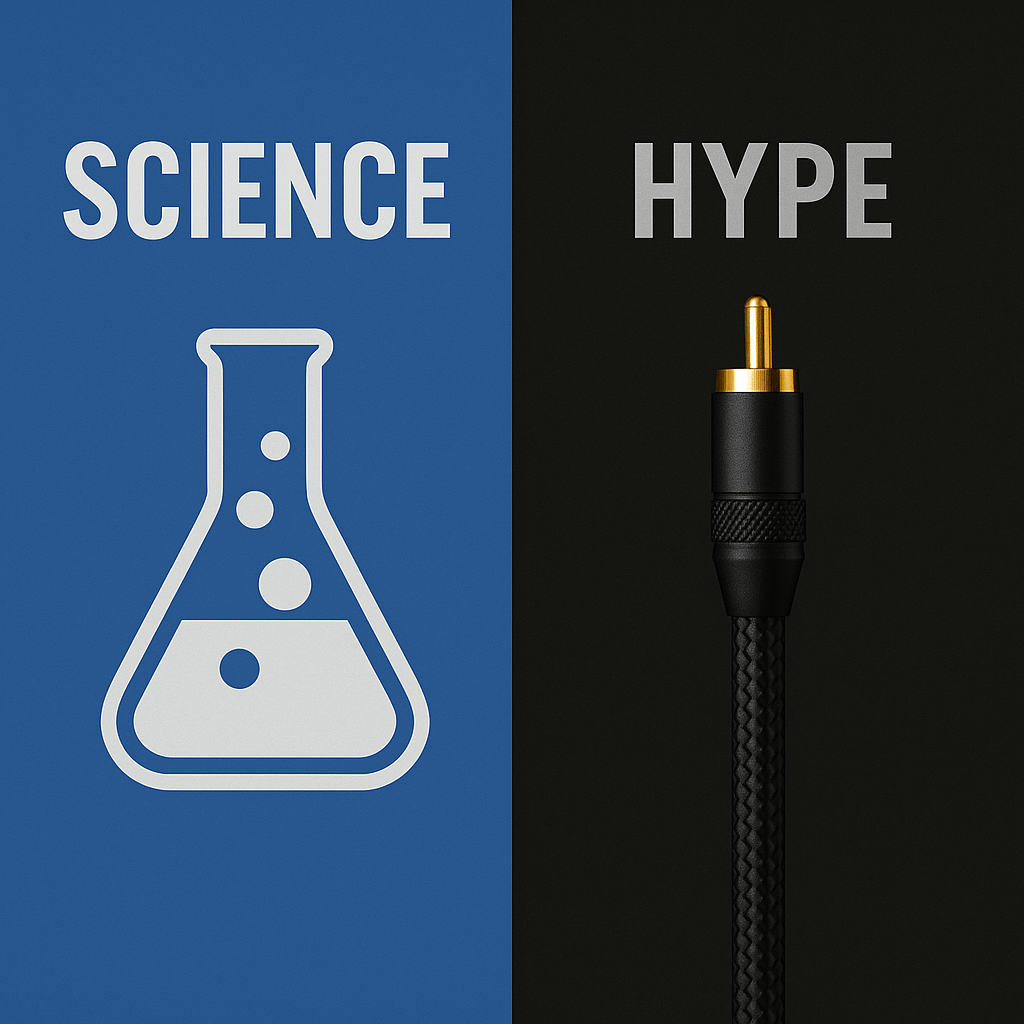
Here’s the hard truth: when it comes to transmitting analog audio signals over typical home distances, the differences between a $20 cable, a $200 cable, and a $2,000 cable are almost always imperceptible—even under controlled, double-blind listening conditions.
It’s true that cables can measure differently in the lab. You’ll see small variations in capacitance, resistance, or shielding effectiveness. But in most real-world systems, these differences are so tiny they’re completely drowned out by bigger factors: your speakers, your amplifier, and especially your room acoustics.
Double-blind studies—including those by the Audio Engineering Society (AES) and sites like Audio Science Review—consistently show that listeners can’t reliably distinguish expensive cables from good-quality budget ones. The rare exceptions? Extremely long runs, very high-impedance loads, or severe electrical noise—all scenarios almost never seen in typical living rooms.
So why do so many audiophiles swear they can hear a difference?
Simple: human psychology. The placebo effect is real, and so is confirmation bias. When you spend hundreds (or thousands) on a “miracle” cable, your brain wants—needs—to justify the expense. Every new listening session becomes a treasure hunt for subtle “improvements.”
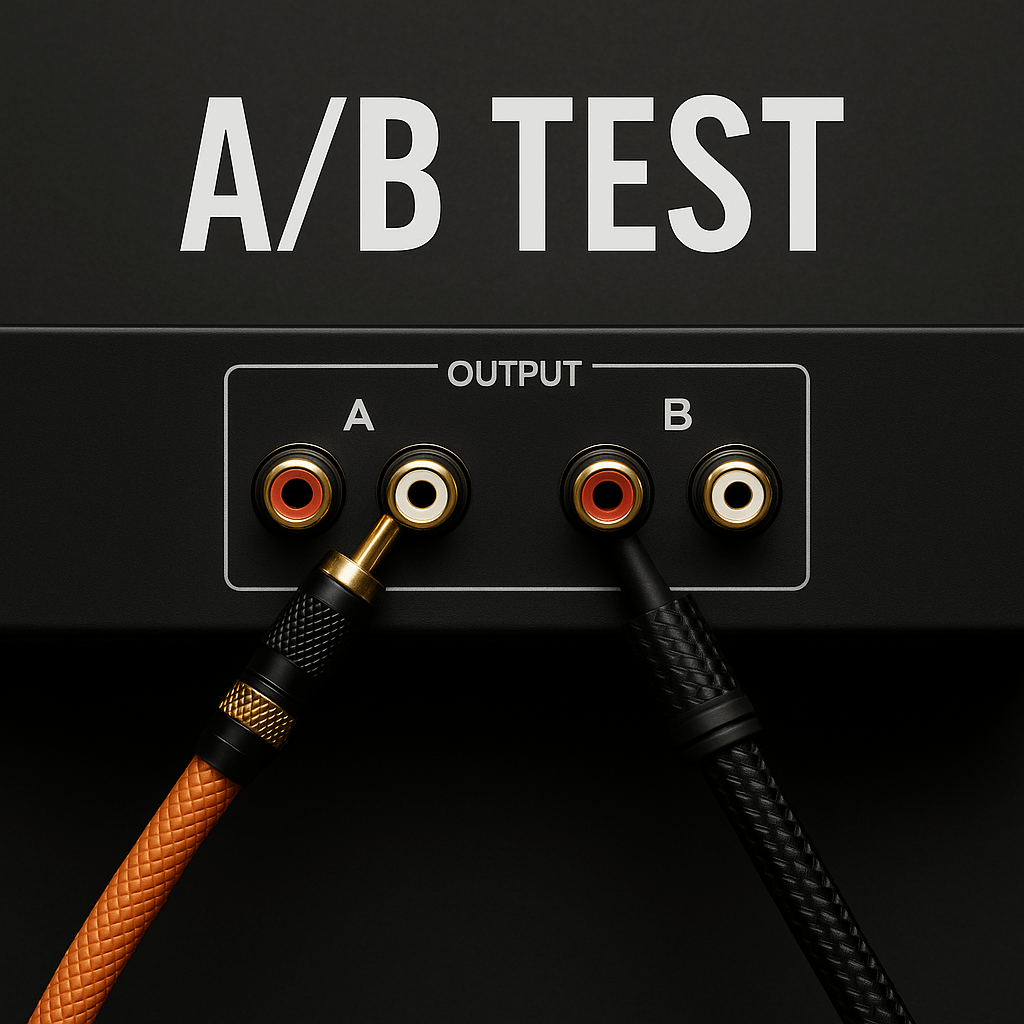
I’ve lost count of the times a client was convinced their new cable “opened up the soundstage” or “brought new detail to the mids,” only for a quick A/B switch (with their eyes closed) to shatter the illusion. As Ethan Winer famously demonstrated in his Audio Myths Workshop, our senses are easily fooled—especially when marketing hype is involved.
“If a cable company can’t show a measurable improvement, why should you believe your ears alone?” – Ethan Winer
Are all cables the same? No. But for most home audio systems, you’re simply not going to hear a difference past a certain baseline of build quality.
Let’s talk value. Suppose you have a $2,000 budget for upgrades. Here’s where your money goes the farthest:
Cables? Spend what you need for solid construction, good shielding, and reputable connectors. If you want to build your own, go for it (and pocket the savings).
“The most dramatic improvement to sound quality comes not from cables, but from your speakers and your room.”
As an installer, I get why some dealers push boutique cables so hard—the profit margins are massive. Ever wonder what the profit is on a $2,000 set of speaker cables? Normally around $1,200–$1,500! But I made a decision early on to steer my clients toward real, honest upgrades instead of cash-grab “magic wires.”
That said, customer expectations are tricky. If a client wants the $500 cable for peace of mind (or bragging rights), I’ll install it—but I’ll also make sure they know it won’t change the game as much as they think.
This is where it gets spicy. On one side, you have the objectivists—engineers, scientists, and “bit-perfect” types who demand proof for every claim. On the other, the subjectivists—listeners who trust their ears, experience, and emotion above all else.
This divide fuels endless arguments on forums, in YouTube comments, and at audio shows. Certain YouTubers and reviewers fan the flames by claiming to “hear” miraculous improvements, often with affiliate links conveniently nearby.
The truth, as usual, is somewhere in the middle: trust your ears, but keep them honest with blind tests and a healthy dose of skepticism.
Let’s cut through the static: The audiophile cable market is built on half-truths, clever marketing, and the hope that most buyers won’t ask hard questions—or worse, that they’ll convince themselves there’s something “magical” happening that science just can’t measure. If there’s one thing my years as an installer and editor have taught me, it’s this: Most high-end audio cables are the snake oil of our hobby, preying on people’s insecurities and the natural human desire to “complete” their system.
I’ve seen $1,000 cables installed between $500 speakers and $300 receivers. I’ve seen people with $10,000 wire collections and $1,000 spent on room treatment—and guess which one makes the actual difference. The hard truth is, for 99% of systems, any great made cable is more than good enough. The expensive stuff? It’s pure status, not science.
The cable industry doesn’t want this message to get out. Why would they? They rely on mystique, on confusion, on the idea that “if you can’t hear the difference, your system isn’t good enough—or maybe your ears aren’t.” This is not just marketing—it’s gatekeeping, and it actively harms the hobby by intimidating newcomers and shifting the focus away from what actually matters: music, room acoustics, and genuine system synergy.
And let’s not let the “reviewers” off the hook either. Too many so-called experts are happy to play along, cashing in on affiliate sales, sponsorships, or just the easy clicks that come from stoking cable drama. How many of them are running proper blind tests, publishing real data, or even admitting when they can’t tell the difference? Not many. It’s more lucrative to keep the debate going, to keep the mystery alive, to keep audiophiles reaching for their wallets.
Is there a place for nice cables? Sure—if you want jewelry for your rack, or bulletproof reliability in a pro environment. But if you care about sound, stop falling for the myth that you can buy your way to audio nirvana with fancy wires.
If you want controversy, here it is: I believe the obsession with audiophile cables is one of the biggest wastes of money and energy in the entire audio world, and it distracts us from what’s real, measurable, and truly transformative. The sooner we call out the snake oil, the sooner we can focus on what actually moves the needle—better speakers, smart setup, proper treatment, and actually listening to the music.
At the end of the day, the truth is simple and threatening to the cable industry:
If you can’t hear the difference in a blind test, it isn’t there. No amount of marketing, price tag, or “expert” opinion can change that.
Don’t let anyone sell you magic. Trust your ears, trust real evidence, and remember why you got into this hobby in the first place—because you love music, not myths.
Here’s my final take, both as an installer and an editor who’s fielded more cable questions than I can count:
At the end of the day, the real “magic” in audio is in the music, not the wire.
For advertising please contact the editor at [email protected]



Privacy Policy
Terms and Conditions - Affiliate Policy
Home Security
© Copyright 2008-2026.
11816 Inwood Rd #1211, Dallas, TX 75244