

It’s really happening. After years of delays, speculation, and watching every other music service pass it by, Spotify is finally offering lossless audio streaming. Yep, that long-rumored “HiFi” tier that felt like vaporware? It’s now live — and if you're a Spotify Premium subscriber, you won’t need to pay anything extra to use it.
“The wait is finally over; we’re so excited lossless sound is rolling out to Premium subscribers,” said Gustav Gyllenhammar, VP Subscriptions, Spotify. “We’ve taken time to build this feature in a way that prioritizes quality, ease of use, and clarity at every step, so you always know what’s happening under the hood. With Lossless, our premium users will now have an even better listening experience.”
So, what exactly is Spotify Lossless? In short: it’s higher quality audio than what Spotify was previously offering.
Spotify’s new Lossless setting lets you stream music in FLAC format at up to 24-bit/44.1kHz — that’s a bit better than CD quality. It’s not as high-resolution as some other services like Qobuz or TIDAL that go up to 192kHz, but it’s still a big leap from Spotify’s usual “Very High” quality (which maxed out at 320kbps in compressed Ogg Vorbis format).
If you’ve got decent headphones, wired speakers, or a solid home audio setup, you’ll probably notice more detail, better dynamics, and less “mud” in the mix. But if you're listening on cheap Bluetooth earbuds or over a spotty mobile connection… you might not hear much difference.
If you’re paying for Spotify Premium, you already have access. That includes:
No new tier, no upsell — just an upgrade to your existing subscription.
However, the feature isn’t available everywhere yet. Spotify says it’s rolling out Lossless audio in over 50 countries, starting with places like the US, UK, Germany, Japan, Sweden, and Australia. If it’s available to you, you’ll get a notification in the app.
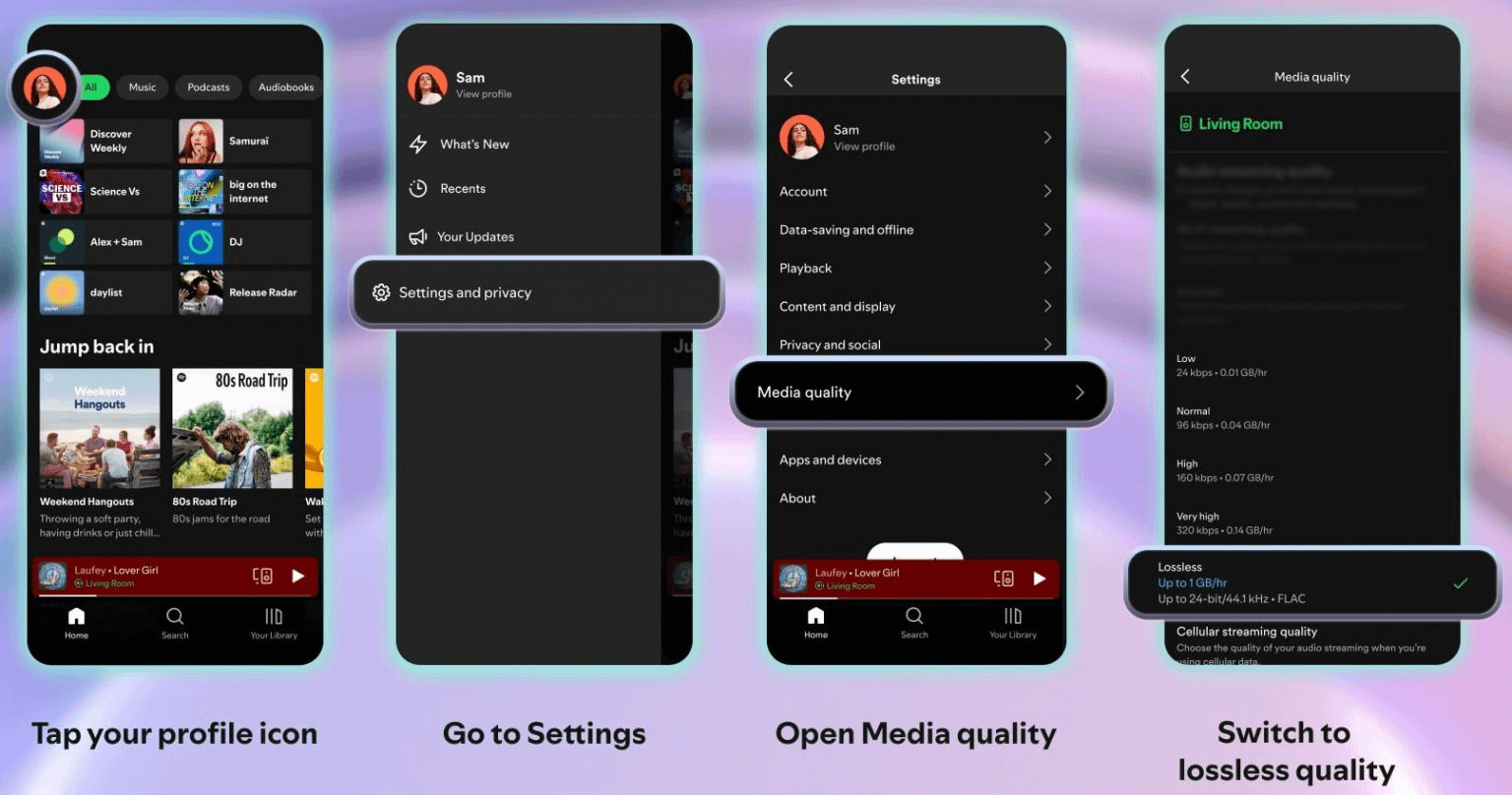
Here’s how to enable it once it’s live for your account:
You’ll need to do this separately on each device — Spotify doesn’t sync the setting across everything automatically.
You’ll be able to stream Lossless on your phone, desktop, and tablet, and also through Spotify Connect devices — which include a ton of gear from brands like:
Support for Sonos and Amazon Echo gear is coming soon.
One big thing to keep in mind: Bluetooth doesn’t support lossless audio, unless your headphones and phone both support something like aptX Lossless — which most don’t. So if you’re using Bluetooth earbuds, the audio will still be compressed. To hear true Lossless, you’ll want to use wired headphones or speakers — or stream over Wi-Fi to a compatible Spotify Connect device.
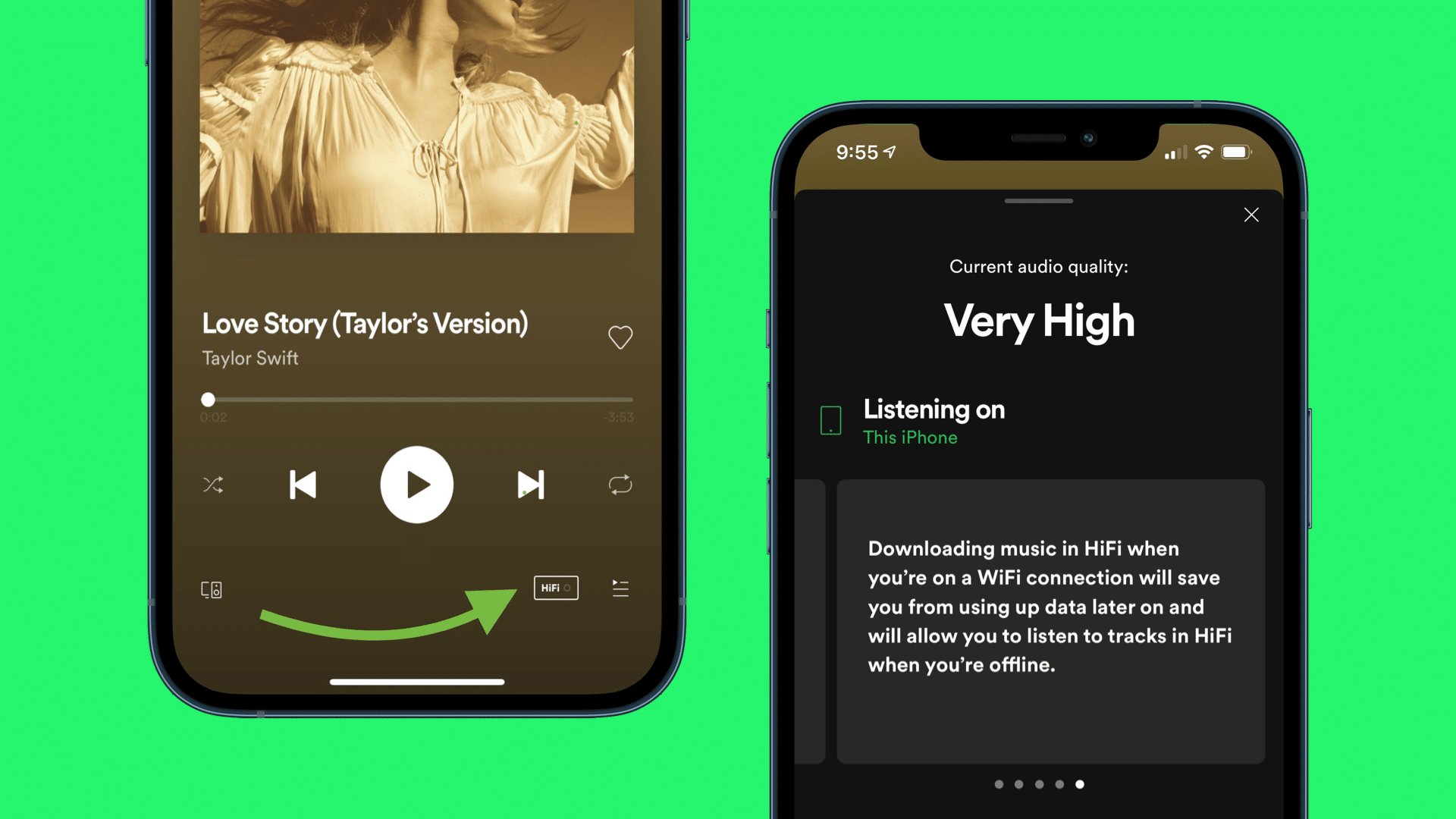
Is this “Hi-Res” audio? Not quite. Spotify is calling this Lossless, not Hi-Res. The audio tops out at 24-bit/44.1kHz, which is a nice bump over standard CD quality, but it doesn’t hit the same ultra-high resolutions offered by Apple Music, TIDAL, or Qobuz (which can reach up to 24-bit/192kHz).
That said, for most people — especially those who aren’t using $1,000 headphones — this is likely more than enough. And FLAC is a solid, widely supported format that works well across many devices.
What about data and storage? Good news: Spotify gives you control over how much data you use.
You can set different streaming qualities for Wi-Fi, cellular, and downloads, which is handy if you're trying to avoid blowing through your data plan. FLAC files are bigger than compressed ones, so songs might take a second or two longer to load. But once they’re cached, they won’t re-download unless you clear the cache.
So if you’re listening on the go and want to save data, keep Lossless turned off for cellular and just use it over Wi-Fi.
Spotify has over 600 million users, but for years, its audio quality was lagging behind. Every major competitor added Lossless or hi-res streaming between 2021 and 2023, and some people ditched Spotify because of it.
Now, with this long-awaited update, Spotify is finally catching up — and doing so without making Premium users pay more.
Sure, services like Qobuz and TIDAL still have higher resolution files and cater more directly to audiophiles. But Spotify’s strength has always been its clean UI, excellent recommendations, and massive device support. For most people, getting better-sounding music without needing to switch apps or services is a win.
Spotify Lossless is not a revolution, but it is a much-needed upgrade. If you already pay for Premium, turning it on is a no-brainer, especially if you’ve got the gear to enjoy it. And if you’re someone who left Spotify for better sound, this might be the update that gets you to reconsider.
Either way, it’s been a long time coming. Lossless is here, and Spotify finally sounds the way it probably should have all along.


Privacy Policy
Terms and Conditions - Affiliate Policy
Home Security
© Copyright 2008-2026.
11816 Inwood Rd #1211, Dallas, TX 75244