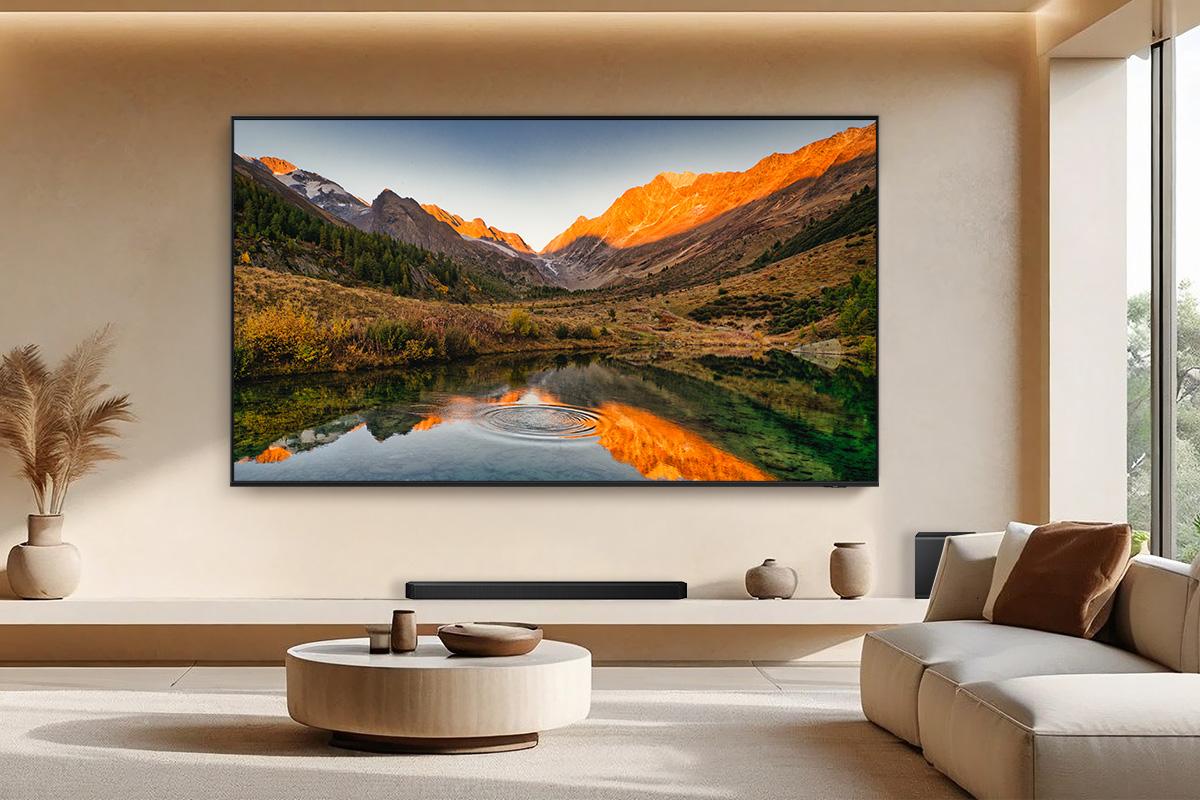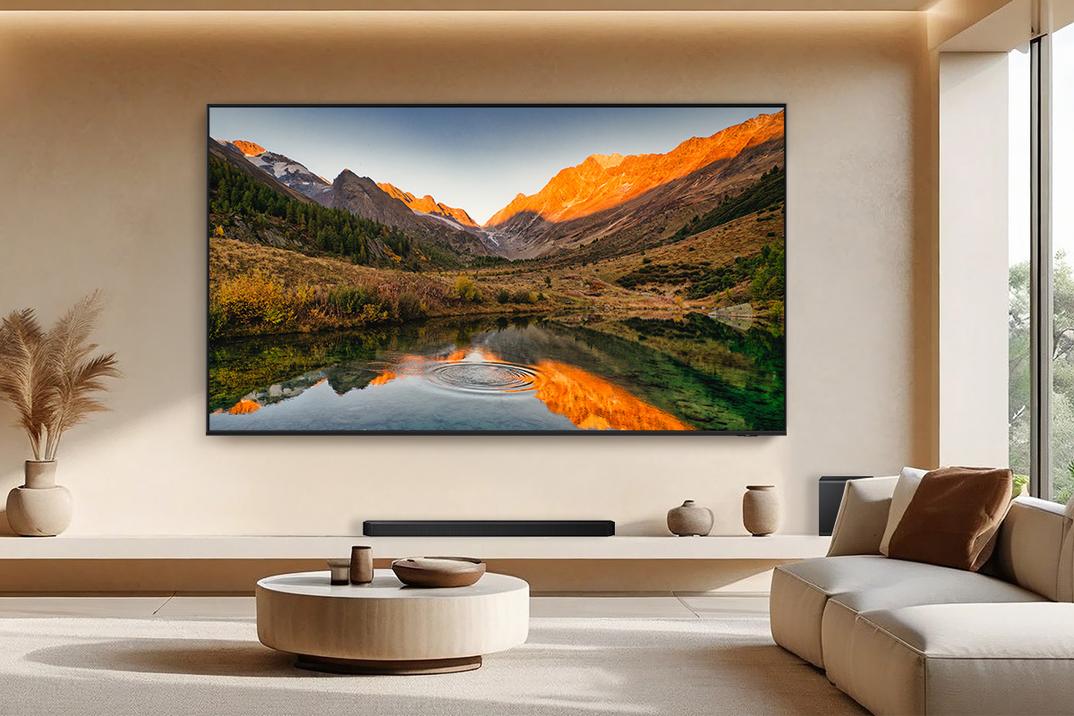
Samsung has taken “big screen” to a whole new level with the launch of its 115-inch QN90F Neo QLED 4K TV. Priced at $26,999, it’s now the largest 4K Neo QLED model in the company’s lineup, joining sizes that start at 43 inches and climb all the way up to this wall-dominating option.
If you’ve been looking at 97-inch OLEDs and thinking, “not quite big enough,” this TV might be what you had in mind. It also arrives at an interesting moment, since Samsung recently introduced a 115-inch MicroLED set for $30,000 — raising the question of how the two will compare for buyers chasing massive screens.
At 115 inches corner-to-corner, the QN90F is bigger than anything available in OLED right now, but it’s not entirely alone in Samsung’s catalog. The company is clearly trying to give shoppers more choices at the extreme end of TV sizes, with both the Neo QLED 4K option and the MicroLED version sitting side by side.
The QN90F belongs to Samsung’s well-known Neo QLED 4K family, which is already available in more traditional sizes. What makes this version different is that it pushes the format to its maximum without crossing into MicroLED technology, which is generally positioned as a higher-end option.
Making a TV this large comes with challenges, especially when it comes to keeping the picture sharp. Samsung is leaning on its NQ8 AI Gen3 processor — the same chip used in its flagship 8K models — to do the heavy lifting.

The processor enables something Samsung calls Supersize Picture Enhancer, which is meant to keep images clear and cut down on visual noise that can crop up on huge displays. It also powers 4K AI Upscaling Pro, so even older or lower-resolution content gets boosted to 4K. Meanwhile, Neo Quantum HDR Pro adjusts brightness and contrast scene by scene.
One feature that may stand out in everyday use is the Glare Free technology. Big TVs can be reflective, and on a 115-inch screen even a small glare can be distracting. Samsung says this coating helps reduce reflections whether the room is brightly lit or dim, similar to what it’s been using on its latest OLED models.
Samsung is also pitching this set to anyone who watches a lot of sports or plays games. The 144Hz refresh rate — powered by Motion Xcelerator — is designed to keep action looking smooth, while AI Motion Enhancer Pro works on fast-moving details like a baseball flying across the field or a hockey puck darting on the ice.
There’s also Auto HDR Remastering Pro, which takes standard content and tries to make it look closer to HDR by tweaking brightness, contrast, and color in real time.
For sound, the QN90F comes with Dolby Atmos speakers and Object Tracking Sound+, which aims to match the audio to what’s happening on screen. If a car zooms from left to right, the audio should feel like it’s following that same path.
Like the rest of Samsung’s 2025 TVs, this model runs on the updated Tizen operating system with One UI. Samsung has committed to seven years of OS updates, which means it’ll stay current with apps and services longer than most TVs.
It also brings along Samsung Vision AI features — things like asking the TV questions, translating captions, or even using a Galaxy Watch to control it. You’ll also find access to Samsung TV Plus (for free streaming channels), Gaming Hub (for console-free cloud gaming), and SmartThings (for smart home control). Security features are handled by Samsung Knox.
The QN90F’s biggest rival might be Samsung’s own 115-inch MicroLED TV. At $30,000, it’s only a few thousand dollars more, but the technology is very different. MicroLED uses tiny red, green, and blue LEDs to create light and color directly, without needing a backlight. That gives it an edge in brightness and color accuracy — at least on paper.
By comparison, the QN90F relies on Mini-LED backlighting with Samsung’s Quantum Matrix Technology Pro for local dimming and contrast control. It’s still a very capable approach, but it doesn’t match the “self-emissive” qualities of OLED or the direct-emission style of MicroLED.
For buyers, the choice may boil down to whether they want to spend a little less for the QN90F or stretch to MicroLED for the newer tech. OLED still holds an advantage in picture quality for many, but at under 100 inches, it simply can’t compete with the sheer size of Samsung’s latest offering.
The Samsung 115-inch QN90F Neo QLED 4K TV is available now in the U.S. through Samsung’s website with a price tag of $26,999.


Privacy Policy
Terms and Conditions - Affiliate Policy
Home Security
© Copyright 2008-2026.
11816 Inwood Rd #1211, Dallas, TX 75244