

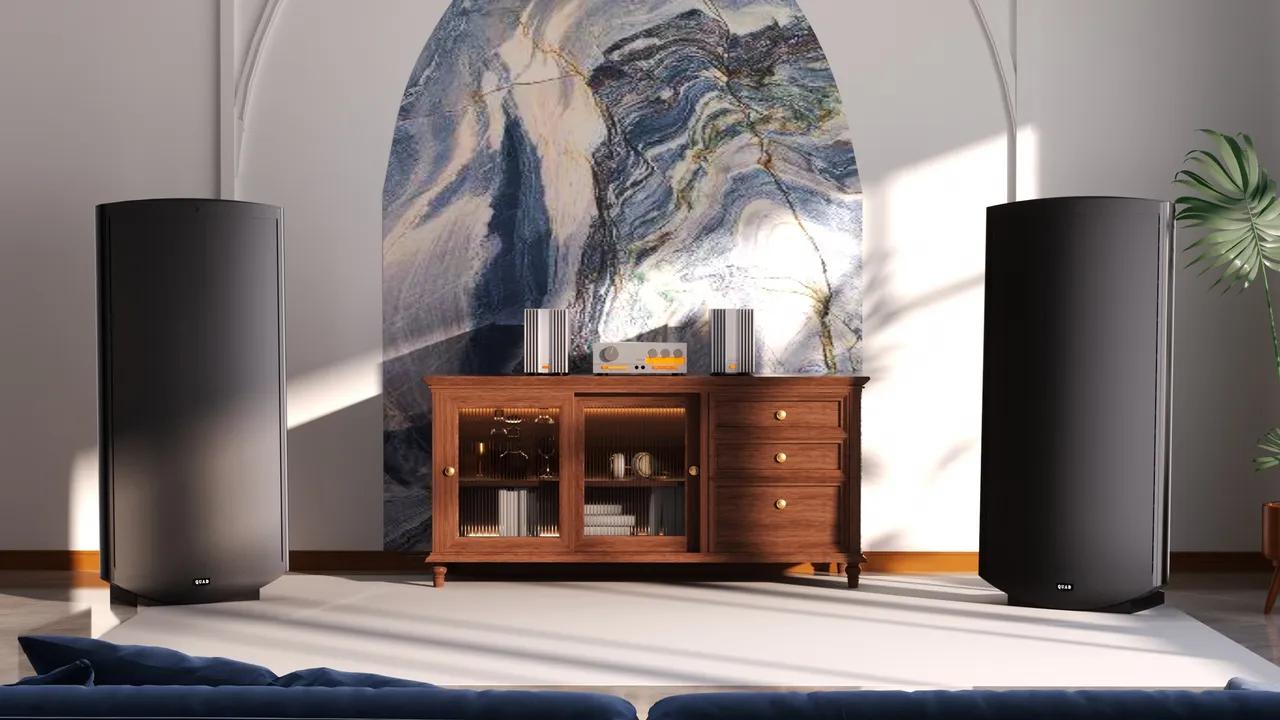
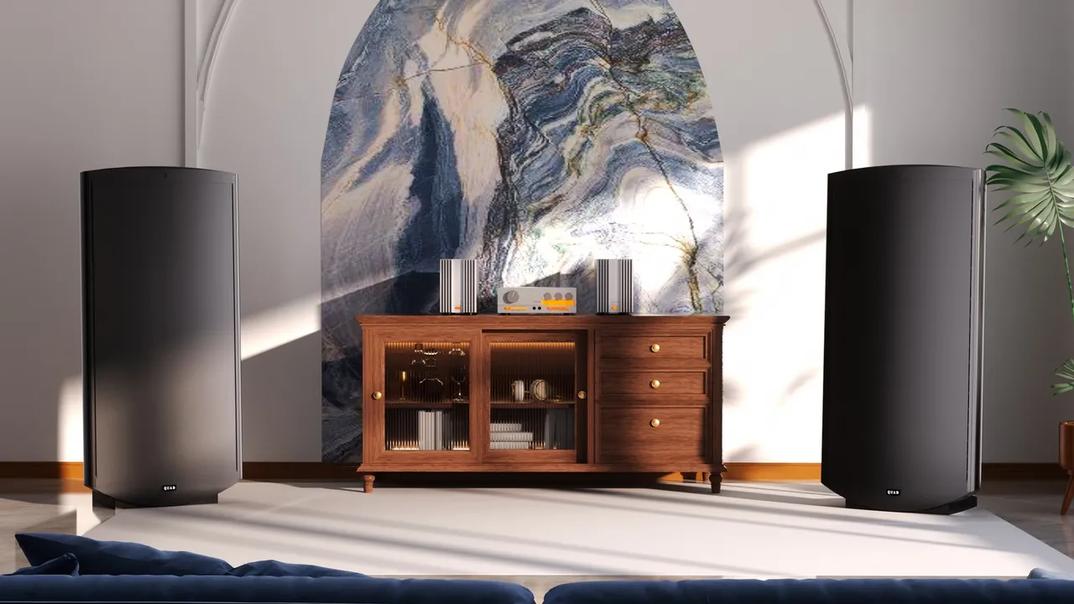
If you’ve ever wandered into a high-end audio showroom or scrolled through audiophile forums, chances are you’ve come across QUAD’s electrostatic speakers. They don’t look—or sound—like your typical speakers. And now, for the first time in over a decade, QUAD is updating the lineup with two new models: the ESL 2812X and ESL 2912X.
These new speakers are part of the sixth generation in a series that goes all the way back to 1957, when QUAD founder Peter Walker introduced the original ESL. The design has evolved slowly over the years—on purpose. Instead of chasing trends, QUAD has focused on refining what made these speakers so different in the first place.
Read our reviews:
Let’s start with what hasn’t changed: the overall shape and purpose. Both models stick with the full-range electrostatic format, meaning they don’t mix in traditional cone woofers like some hybrid speakers do. The ESL 2812X stands at 107cm and uses four electrostatic panels. The taller ESL 2912X is 147cm with six panels, which helps it better fill larger rooms. Size aside, both are built with the same technology under the hood.

What’s changed is how everything works behind the scenes. This generation introduces a handful of meaningful upgrades. The electrostatic panels, for example, go through a more precise manufacturing process now, thanks to techniques like laser metrology. It’s all about better consistency across each panel, which in turn improves clarity and balance.
QUAD also redesigned the electronics layout. Where the previous version used a single circuit board, the X-series splits the system into three separate modules: one for high-voltage multiplication, another for signal control and protection, and one for low-voltage audio. Separating those roles helps cut down on interference and keeps the signal cleaner.
So, what makes these speakers so different from the typical boxy ones you see everywhere? Traditional speakers use dynamic drivers: cones or domes that move back and forth using magnets and coils. Electrostatic speakers like these do things differently.

Each QUAD ESL uses a paper-thin Mylar diaphragm—thinner than a human hair—suspended between two perforated metal plates. It’s kept at a high voltage, and when music passes through, the electric field causes the diaphragm to move and create sound.
Because the diaphragm is so lightweight, it responds incredibly fast to changes in the signal. That means less distortion and more accuracy, especially in the midrange frequencies where vocals and most instruments live. For listeners who prioritize detail and realism, this design has always had a loyal following.
Another big change is in the transformers. These are essential to how the speakers work, and the new models use redesigned units built in the UK. According to QUAD, they help with dynamics, especially in the mids and highs, and offer a wider bandwidth that extends past 18kHz. This helps maintain clarity, even when the music gets intense.

And to keep everything running smoothly at high volumes, the speakers regulate the 5,250 volts they operate on with a circuit that protects the system from overloading. The goal is to keep everything stable—even during peaks in the music—without sacrificing any detail.
Cosmetically, the biggest change is the new matte black finish. Gone are the wood trims of previous generations. In their place is a darker, low-reflection look that helps the speakers blend into the room, especially in dim lighting. There’s even an optional LED halo at the bottom that makes them look like they’re floating (you can turn it off if you prefer something more subtle).
The grille cloth has been updated too—it’s acoustically transparent and designed to match the finish for a cleaner, more unified look.

If you’re already a fan of QUAD’s electrostatic speakers, this generation seems like a thoughtful update—bringing modern tweaks to a design that’s largely stayed true to its roots. And if you’ve never experienced electrostatic sound before, the ESL 2812X and 2912X could offer something different from the usual driver-and-cabinet setup. They won’t appeal to every type of listener, but for those who want a transparent, detailed listening experience, these are worth checking out.
In a world full of digital tweaks and wireless conveniences, the ESL X series is sticking to a very different kind of playbook, one that’s been evolving for nearly 70 years.
The ESL 2812X and ESL 2912X are expected to ship starting in mid-August 2025. The ESL 2812X will cost $14,995 / £10,999 / €13,999 per pair, while the larger ESL 2912X comes in at $17,995 / £12,999 / €16,999.





Privacy Policy
Terms and Conditions - Affiliate Policy
Home Security
© Copyright 2008-2026.
11816 Inwood Rd #1211, Dallas, TX 75244