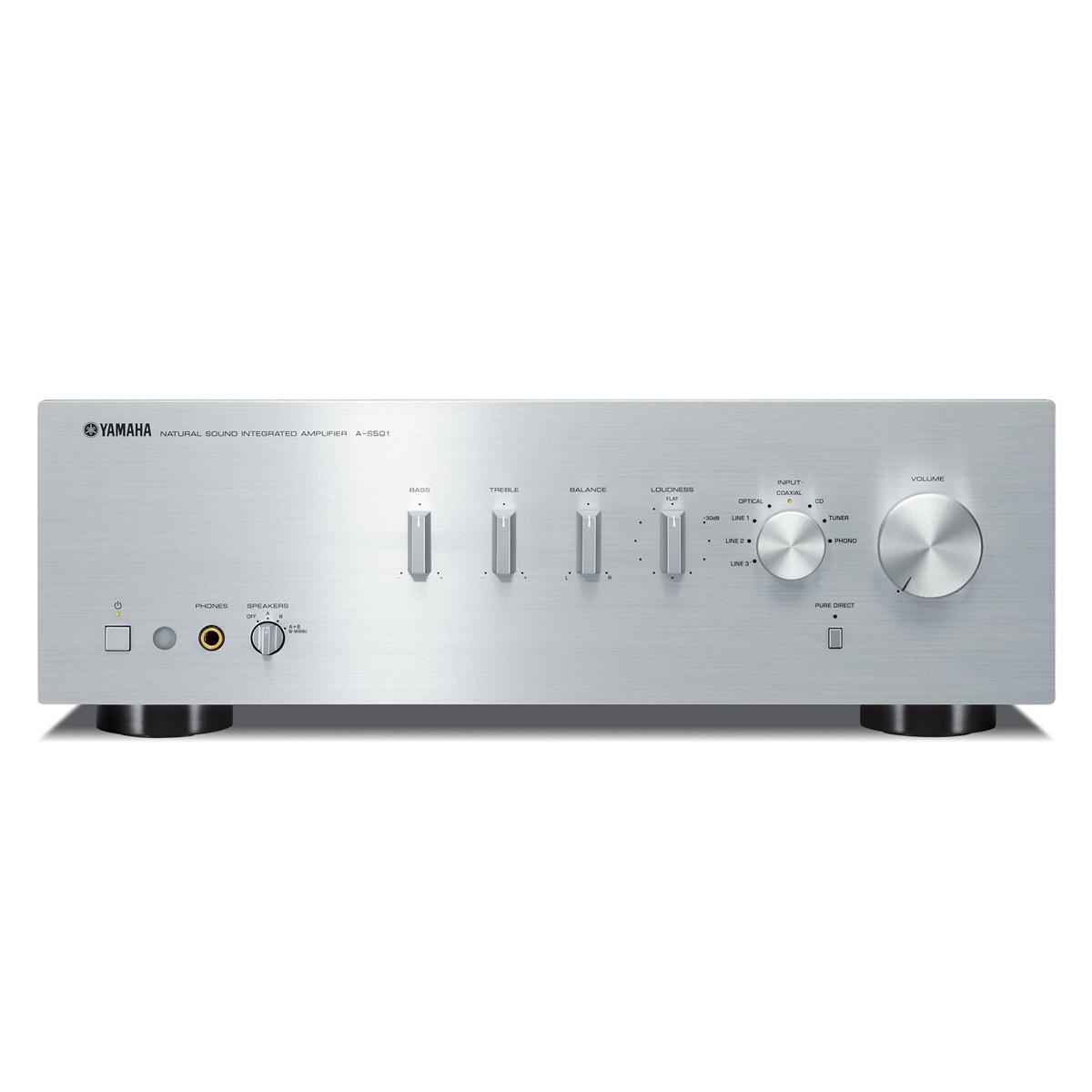
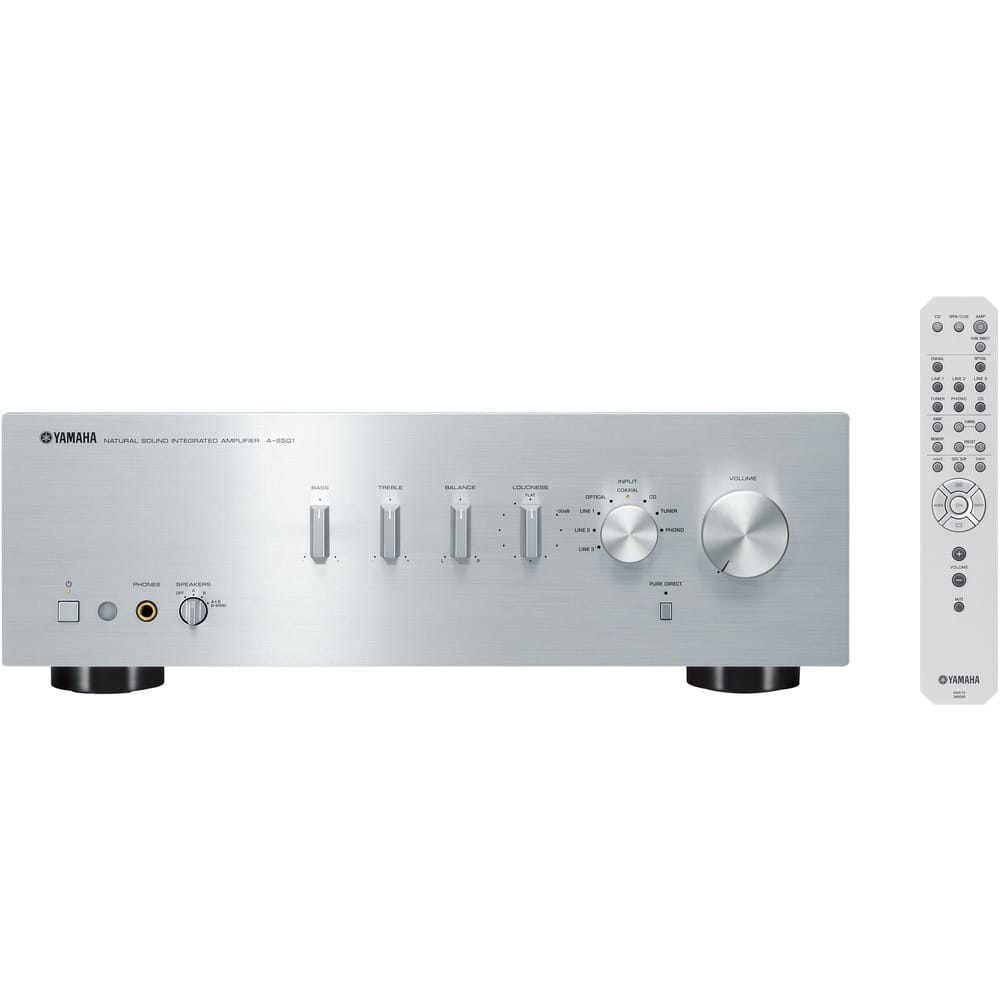
When you're building a serious stereo system, the amplifier sits at the heart of everything—it's the component that takes the weak signals from your sources and pumps them up with enough power to drive your speakers. The Yamaha A-S501 integrated amplifier has been making waves in the mid-range market for good reason, combining thoughtful engineering with practical features that actually matter to real-world listening.
The most immediately striking aspect of the Yamaha A-S501 isn't flashy RGB lighting or a touchscreen interface—it's the serious engineering underneath that plain aluminum front panel. Yamaha built this around their ToP-ART technology, which stands for Total Purity Audio Reproduction Technology. While marketing names can sound gimmicky, this one actually describes something meaningful: the amplifier uses a perfectly symmetrical layout where the left and right channels mirror each other exactly.
Why does this matter? In many amplifiers, the left and right channels share certain components or have different path lengths, which can create subtle differences between what you hear from each speaker. Our researchers found that this symmetric design helps create a more stable stereo image—that sense of space and placement you get with good recordings.
The construction goes deeper than just circuit layout. The chassis uses what Yamaha calls an ART Base—essentially a solid foundation with strategic bracing that reduces vibrations. Electronic components can actually pick up mechanical vibrations and convert them into unwanted noise in your audio signal. By minimizing these vibrations, the amplifier maintains cleaner sound reproduction.
With 85 watts per channel into 8-ohm speakers, the Yamaha A-S501 sits in that sweet spot where it can drive most home speakers without breaking a sweat. But raw wattage only tells part of the story. The more revealing specification is the dynamic power ratings: 220 watts per channel into 2-ohm loads. This indicates strong current delivery capability, which matters when your music hits those demanding peaks that require sudden bursts of power.
The damping factor of 240 deserves special attention. This number represents how well the amplifier can control speaker cone movement—higher numbers mean tighter control. When a speaker cone finishes reproducing a bass note, it wants to keep moving due to inertia. An amplifier with high damping factor acts like a strong hand, stopping that unwanted movement quickly. Users consistently report that bass feels controlled and punchy rather than loose or boomy.
Our testers noted that the frequency response extends from 10 Hz to 100 kHz with minimal deviation. While you can't hear frequencies that high or low, this extended response suggests the amplifier won't introduce phase shifts or timing errors in the audible range—technical issues that can make music sound less natural.
One of the most appreciated features is Pure Direct mode, accessible via a dedicated front-panel button. When engaged, your audio signal bypasses the tone controls, loudness compensation, and even some buffer circuits. Think of it like taking the most direct route home instead of making several stops—fewer components in the signal path means fewer opportunities for degradation.
Researchers consistently found that Pure Direct mode reveals more detail and improves soundstage depth. It's particularly noticeable with well-recorded acoustic music where you can hear the subtle reverb of recording spaces or the natural decay of piano notes. However, you lose access to tone adjustments, so your system needs to sound good without EQ.
Unlike many traditional integrated amplifiers that focus solely on analog sources, the Yamaha A-S501 includes both optical and coaxial digital inputs with a built-in DAC (Digital-to-Analog Converter) supporting up to 24-bit/192kHz resolution. This means you can connect your TV, streaming device, or CD transport directly without needing a separate DAC box.
The onboard DAC performs competently for the amplifier's target market. While dedicated DACs at similar price points might offer marginally better performance, having digital inputs integrated eliminates extra boxes and cables. Home theater enthusiasts particularly appreciate connecting their TV's optical output for dramatically improved sound compared to built-in TV speakers.
Most people skip over loudness controls, but Yamaha's implementation deserves attention. Human hearing sensitivity changes at different volume levels—we naturally hear less bass and treble when listening quietly. Traditional loudness buttons apply a fixed EQ curve, but the A-S501's continuously variable control lets you dial in exactly how much compensation you want.
This proves invaluable for apartment dwellers or late-night listening sessions. Instead of thin, lifeless sound at low volumes, you can maintain full tonal balance. Researchers found this feature particularly useful when entertaining guests—background music maintains its warmth and presence without overwhelming conversation.
The input selection covers most realistic needs: six line-level RCA inputs plus a moving-magnet phono stage for turntables. The phono stage handles most standard cartridges adequately, though vinyl enthusiasts with high-end cartridges might eventually want to upgrade to a dedicated phono preamp for maximum performance.
The dual speaker outputs support A/B switching or simultaneous connection of two speaker pairs. This flexibility proves useful for bi-wiring compatible speakers (running separate cables to woofers and tweeters) or switching between different speaker sets for comparison. The binding posts accept bare wire, spades, or banana plugs with solid mechanical connection.
A dedicated subwoofer output with high-pass filtering to the main speakers enables proper integration with powered subs. This transforms bookshelf speaker systems into full-range setups without the complications of external crossovers.
The Yamaha A-S501 delivers what industry observers call a "neutral" sound signature—it doesn't impose a particular sonic personality on your music. This approach works well across diverse musical genres and recording styles. Jazz recordings reveal natural instrument timbre, rock music maintains dynamic punch, and classical pieces showcase proper instrumental balance.
Bass reproduction benefits from the high damping factor, providing controlled low-frequency performance. Researchers noted that kick drums hit with impact rather than bloat, while bass guitar lines remain distinct and articulate. The midrange handles vocals naturally without the artificial warmth some amplifiers add.
Treble extends smoothly without harshness, though some users who prefer a more forward, exciting presentation might find the top end slightly restrained compared to competitors emphasizing detail retrieval above all else.
At the time of writing, the integrated amplifier market has evolved significantly with streaming capabilities and room correction becoming more common. The A-S501 represents a more traditional approach—exceptional execution of fundamental amplifier functions rather than cutting-edge digital processing.
Compared to current state-of-the-art integrated amplifiers, it lacks built-in streaming, room correction, or app control. However, it excels at its core mission: clean, powerful amplification with practical connectivity. Users who prefer dedicated streaming devices or value simplicity find this approach refreshing.
The build quality stands out in its price category. The substantial weight, solid controls, and premium finishes typically appear in more expensive products. This attention to physical construction often translates to long-term reliability—an important consideration for a component you might keep for decades.
The Yamaha A-S501 succeeds by focusing on fundamental amplifier virtues: clean power delivery, practical features, and solid construction. While it doesn't chase the latest digital trends, it provides a dependable foundation for quality music reproduction.
For users building traditional two-channel systems around passive speakers, the combination of power reserves, input flexibility, and neutral sound character creates genuine long-term value. The digital inputs handle modern sources adequately, while analog inputs accommodate traditional components.
However, those seeking the ultimate in musical excitement or cutting-edge features might find other options more compelling. The onboard phono stage and DAC, while convenient, represent entry points that serious enthusiasts will likely upgrade eventually.
Ultimately, this amplifier rewards those who value engineering competence over marketing excitement—a philosophy that tends to age well in the rapidly changing world of audio technology.
The Yamaha A-S501 works well for stereo home theater setups, offering digital inputs (optical and coaxial) that connect directly to TVs and streaming devices. With 85 watts per channel and a subwoofer output, it can drive most bookshelf or tower speakers effectively for movie audio. However, it's a 2-channel amplifier, so it won't handle surround sound formats like 5.1 or Atmos without additional equipment.
The Yamaha A-S501 delivers 85 watts per channel into 8-ohm speakers, with dynamic power reaching up to 220 watts per channel into 2-ohm loads. This power output is sufficient for most home speakers in medium to large rooms, providing clean, undistorted sound at reasonable listening levels.
Yes, the Yamaha A-S501 includes both optical and coaxial digital inputs with a built-in 24-bit/192kHz DAC. This allows direct connection to TVs, streaming devices, CD transports, and other digital sources without needing a separate DAC, making it convenient for modern home theater and music systems.
The Yamaha A-S501 features a built-in moving magnet (MM) phono stage, allowing direct connection to most turntables with MM cartridges. For moving coil (MC) cartridges or higher-end setups, you may need an external phono preamp for optimal performance.
Pure Direct mode on the Yamaha A-S501 bypasses tone controls, loudness compensation, and buffer circuits to create the shortest signal path possible. This feature reduces potential signal degradation and often improves clarity and soundstage depth, particularly noticeable with high-quality recordings.
The Yamaha A-S501 can power two pairs of speakers simultaneously through its A/B speaker outputs. You can switch between speaker pairs or run both sets together. It also supports bi-wiring for compatible speakers and includes a subwoofer output for adding a powered subwoofer to your system.
Yes, the Yamaha A-S501 supports speakers with impedance ratings down to 4 ohms. The amplifier's robust power supply and high damping factor of 240 help it drive lower-impedance speakers effectively, though it will run warmer and consume more power with 4-ohm loads.
ToP-ART (Total Purity Audio Reproduction Technology) in the Yamaha A-S501 refers to Yamaha's symmetric circuit design where left and right channels mirror each other exactly. This layout minimizes crosstalk between channels and reduces distortion, combined with anti-resonance construction to prevent mechanical vibrations from affecting sound quality.
Yes, you can connect your TV to the Yamaha A-S501 using either the optical or coaxial digital inputs. This setup dramatically improves TV audio quality compared to built-in TV speakers, making it an excellent choice for stereo movie and streaming content in smaller home theater setups.
The Yamaha A-S501 offers excellent value for users seeking a well-built integrated amplifier with both analog and digital connectivity. Its combination of adequate power, quality construction, useful features like Pure Direct mode, and digital inputs makes it particularly worthwhile for home theater enthusiasts who want better stereo sound without the complexity of separate components. At the time of writing, it competes strongly in its price category, though those needing surround sound processing should consider AV receivers instead.
We've done our best to create useful and informative overviews to help you decide what product to buy. Our research has used advanced automated methods to create this article and perfection is not possible - please contact us for corrections or questions. These are the sites we've researched in the creation of this article: crutchfield.com - usa.yamaha.com - audioappraisal.com - crutchfield.com - bestbuy.com - europe.yamaha.com - whathifi.com - hifiheaven.net - youtube.com - omegabroadcast.com - avsforum.com - youtube.com - safeandsoundhq.com - vinylsound.ca - youtube.com
| Yamaha A-S501 Integrated Amplifier |
|---|
| Power Output - Determines how loud and dynamic your music can sound: 85W + 85W (8 ohms) |
| Dynamic Power - Shows ability to handle sudden musical peaks: 220W per channel (2 ohms) |
| Damping Factor - Higher numbers mean tighter bass control: 240 |
| Digital Inputs - Connects modern sources without external DAC: Optical + Coaxial (24-bit/192kHz) |
| Analog Inputs - Accommodates multiple sources: 6 line inputs + MM phono |
| ToP-ART Design - Reduces distortion through symmetric layout: Yes |
| Pure Direct Mode - Bypasses tone controls for cleaner sound: Yes |
| Variable Loudness - Maintains tonal balance at low volumes: Continuously adjustable |
| Speaker Outputs - Supports multiple configurations: 2 pairs (A/B switching) |
| Frequency Response - Wider range indicates more accurate reproduction: 10Hz - 100kHz (+/-1dB) |
| THD - Lower distortion means cleaner sound: 0.019% (50W/8 ohms) |
| Signal-to-Noise Ratio - Higher numbers mean quieter background: 99dB (CD input) |
| Subwoofer Output: Yes (with high-pass filtering) |
| Headphone Output: 1/4 inch jack |
| Weight: 22.7 lbs |
| Dimensions: 17.1" × 6" × 15.3" |
The SVS Prime Wireless Pro SoundBase represents a complete paradigm shift toward streaming-first amplification, packing comprehensive wireless connectivity into a remarkably compact 5-pound chassis. Its standout features include built-in Wi-Fi streaming with support for AirPlay 2, Chromecast, DTS Play-Fi, and Spotify Connect, eliminating the need for external streaming devices entirely. The amplifier delivers 150 watts per channel into 4-ohm loads through efficient Class D technology, while its HDMI eARC input provides seamless TV integration with single-cable connection and potential remote control integration. Six programmable preset buttons offer instant access to favorite streaming services or playlists, backed by an OLED display and smartphone app control that modernizes the entire user experience.
From a performance and value standpoint, the SVS Prime Wireless Pro SoundBase commands a premium price but delivers significant real-world benefits for users embracing modern audio workflows. Its compact footprint makes it ideal for TV cabinet installation or desktop setups where the Yamaha's traditional size would be impractical, while the comprehensive streaming capabilities eliminate the cost and complexity of adding separate network streamers, Chromecast devices, or Apple TVs. The amplifier excels as a soundbar replacement when paired with quality bookshelf speakers, significantly outperforming traditional soundbars while maintaining full stereo system flexibility. However, users sacrifice the Yamaha's vinyl playback capability, Pure Direct mode, and proven long-term reliability. The SVS represents the better choice for users prioritizing streaming convenience, TV integration, and space efficiency, though traditionalists who prefer separating amplification from streaming duties or who own extensive vinyl collections will find better value in the Yamaha's time-tested approach.
🤖 Read Detailed Comparison
👌SVS Prime Wireless Pro SoundBase Integrated Amplifier Details
💵 See SVS Prime Wireless Pro SoundBase Integrated Amplifier Price
Original price was: $1,498.00.$1,298.00Current price is: $1,298.00.
Original price was: $499.99.$369.99Current price is: $369.99.
Original price was: $579.99.$318.99Current price is: $318.99.


Privacy Policy
Terms and Conditions - Affiliate Policy
Home Security
© Copyright 2008-2026.
11816 Inwood Rd #1211, Dallas, TX 75244