

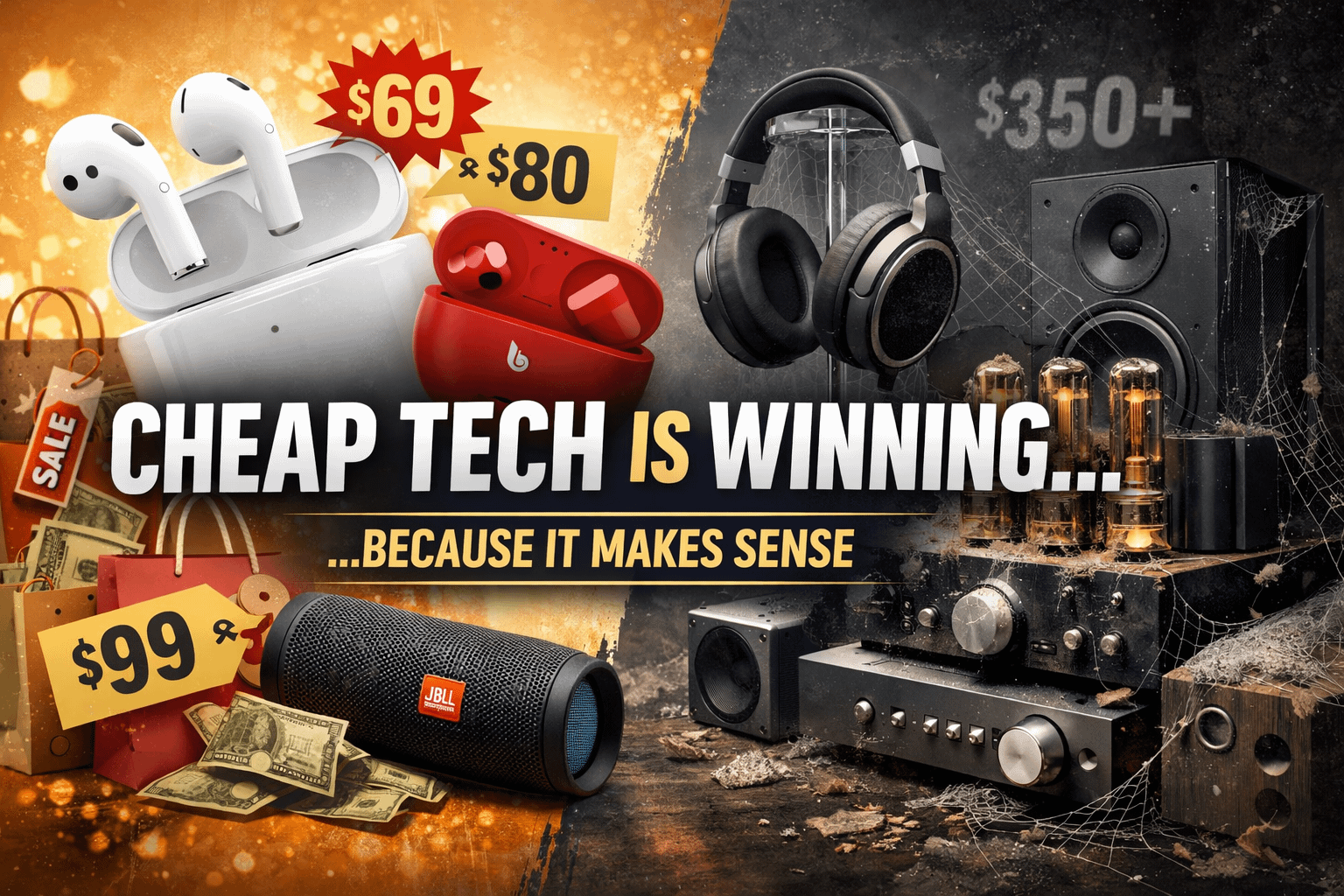
This Black Friday told us everything we need to know about where the tech market is headed.
U.S. consumers spent $11.8 billion online during Black Friday 2025, a 9.1% increase from last year. Online shoppers purchased $14.6 billion from Shopify merchants alone during the extended Black Friday-Cyber Monday weekend. The numbers look strong — until you realize what actually sold.
Apple AirPods 4 hit their lowest price ever at $69, down from $129. Beats Studio Buds dropped to $80 from $150. Budget Bluetooth speakers flew off digital shelves. Meanwhile, high-end audio gear sat there with perfectly respectable discounts that nobody seemed to care about.
The message is clear: people aren't waiting for premium tech to drop in price. They're just buying cheaper tech and moving on.
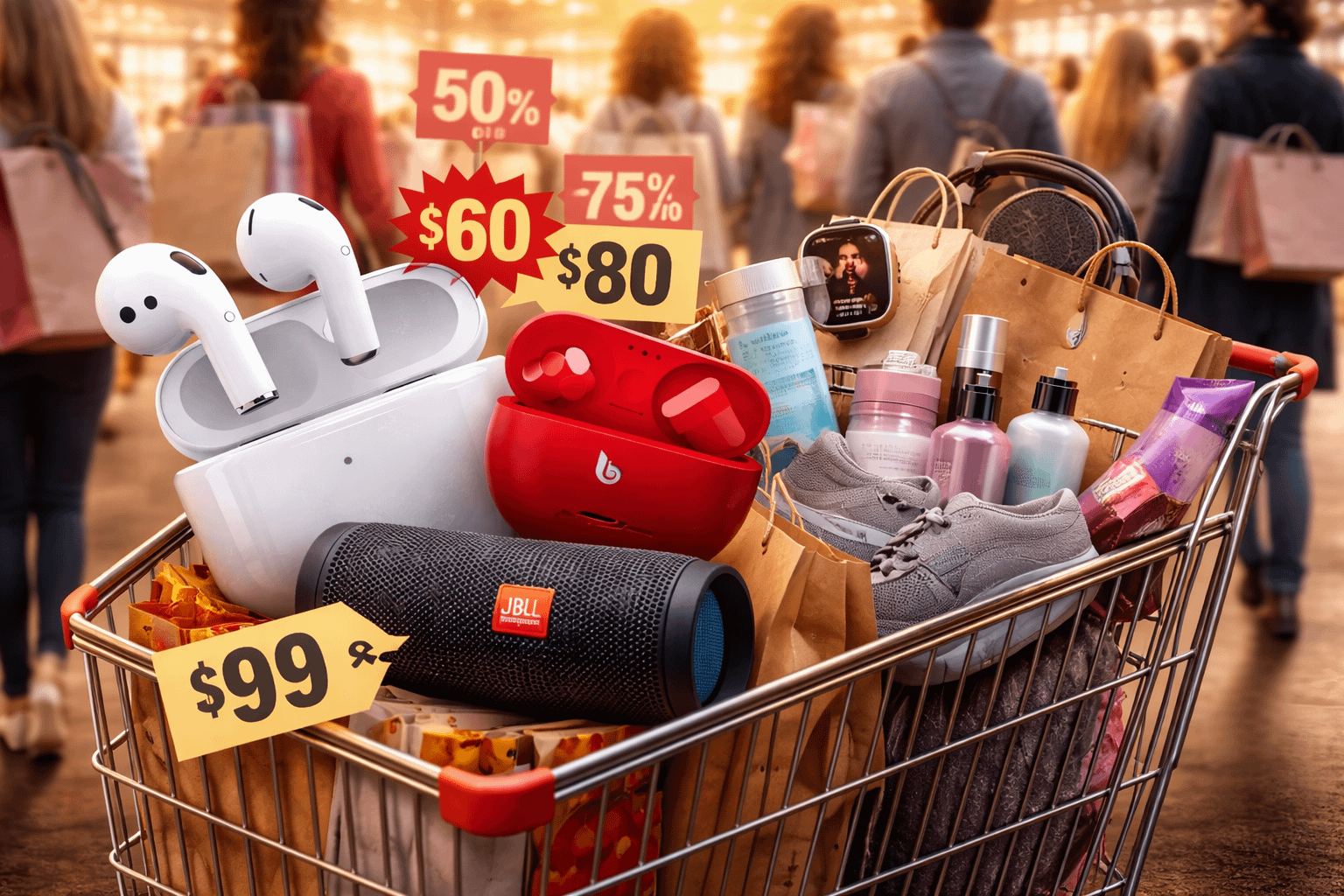
Look at what dominated Black Friday 2025: cosmetics, clothing, fitness products, and activewear led the pack. In audio specifically, Sony WH-1000XM5 headphones at $199 (down from $259) sold well, but you know what sold better? The $80 Beats Studio Buds. The $69 AirPods 4 that hit an all-time low. The $99 JBL Flip 5 portable speakers.
Here's the thing: most of these products aren't drastically cheaper than they used to be. The Beats Studio Buds' street price before Black Friday hovered around $110-120. AirPods 4 were regularly $100-110. They just dropped to price points where people stop thinking and start buying.
Nobody's demanding flagship performance anymore. They want something that works well at a price that doesn't need a justification speech. Once a product hits that threshold, it moves — even if there's something objectively better collecting virtual dust at twice the price.
This isn't about settling. It's about not overthinking a $80 purchase when you're already spending on five other things.
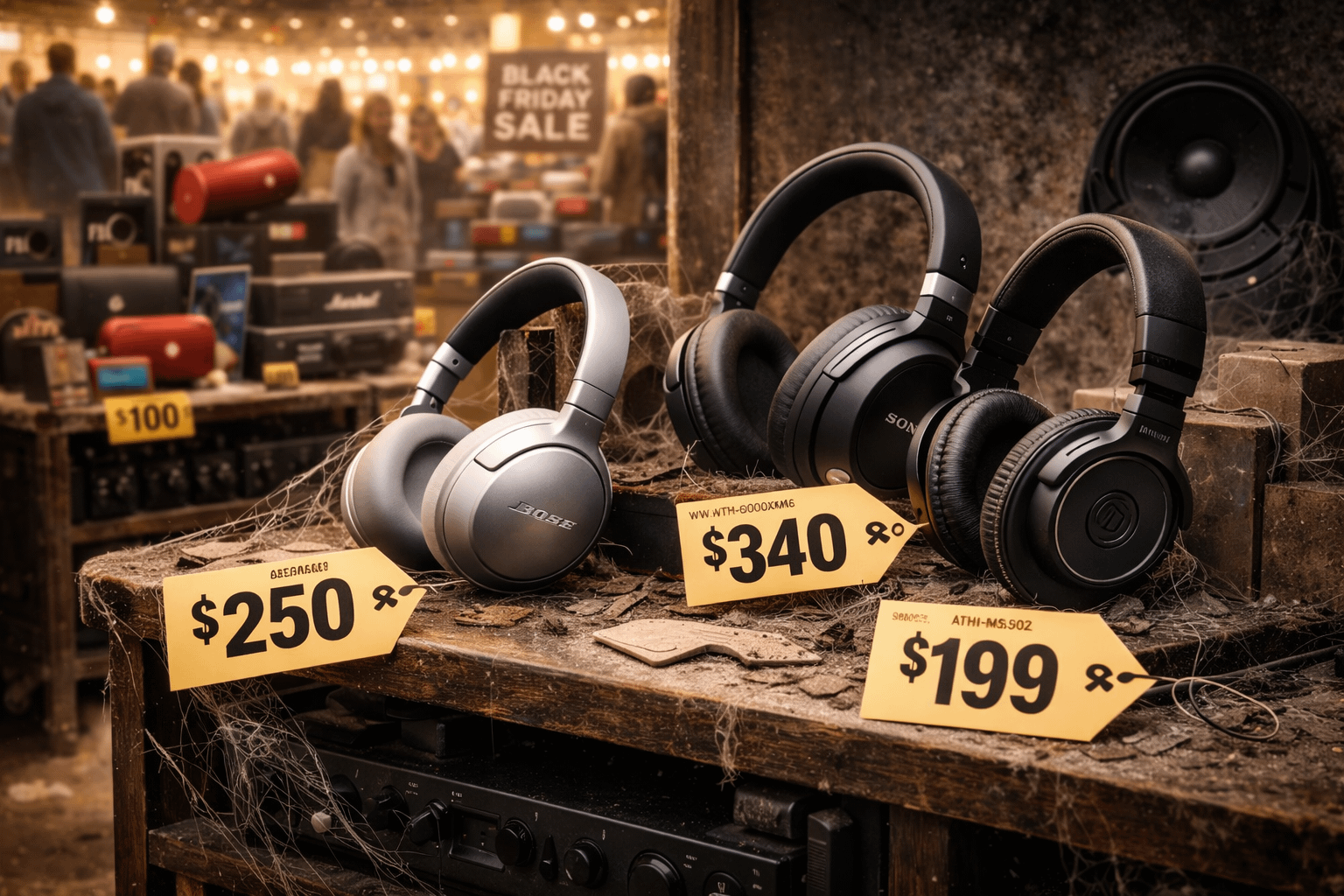
Audio equipment told the clearest story this holiday season.
High-end audio gear today is genuinely incredible. Bose QuietComfort Ultra headphones at $250 (down from $349) are some of the best noise-canceling cans you can buy. Sony's WH-1000XM6 at $340 (down from $400) represents the cutting edge of wireless audio engineering. The $199 Audio-Technica ATH-M50x are studio monitor legends. Sennheiser had the HD 660S2 at $430, down from $680.
And yet, relative to the entire audio market, these barely moved the needle.
Meanwhile, Beats Pill speakers at $100, JBL Clip 5 carabiner speakers at $59, and Marshall Acton III home speakers at $180 (down from $300) dominated actual sales volume. The average Black Friday cart value across all products was $114.70. Do the math.
Does this mean people don't care about sound quality? No. It means sound quality stopped being the deciding factor. Price, convenience, and not needing to research for three hours now matter more than the last 10% of fidelity. When explaining why a $340 pair of headphones sounds better than a $80 pair requires an explanation instead of immediate recognition, most buyers have already moved on to checkout.
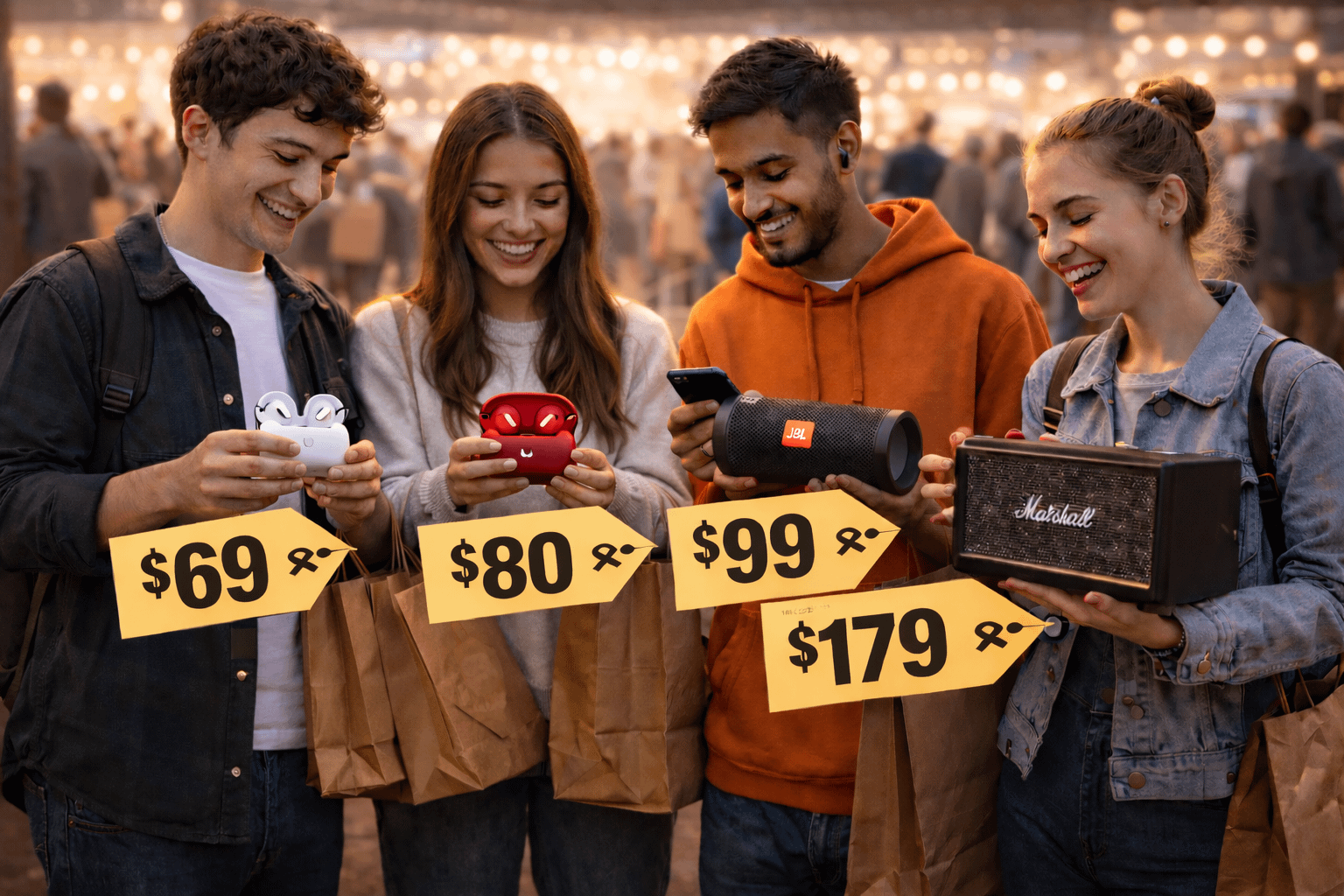
The data from this Black Friday makes something obvious: younger buyers are absolutely purchasing audio equipment.
Over 81 million people worldwide shopped from Shopify merchants during Black Friday weekend. The Shop App tracked 136 million packages globally. Audio products were everywhere in those orders — just not the four-figure kind.
Younger buyers went for the $69 AirPods 4, the $80 Beats Studio Buds, the $99 JBL portable speakers, and the $179 Marshall Acton III home speakers. They're choosing products that don't eat up half their apartment, don't require watching YouTube videos to set up, and don't demand a second job to afford.
To them, this isn't compromise — it's refusing to play a game where the entry fee keeps going up while the improvements keep getting harder to hear. When Bose QuietComfort headphones at $250 (already discounted 28%) still seem like a stretch, but $80 Beats solve 90% of the same problems, the choice isn't actually that hard.
The industry keeps mistaking "not buying high-end" for "not interested in audio." This Black Friday proved that dead wrong. They're very interested. They're just interested at $100, not $1,000.
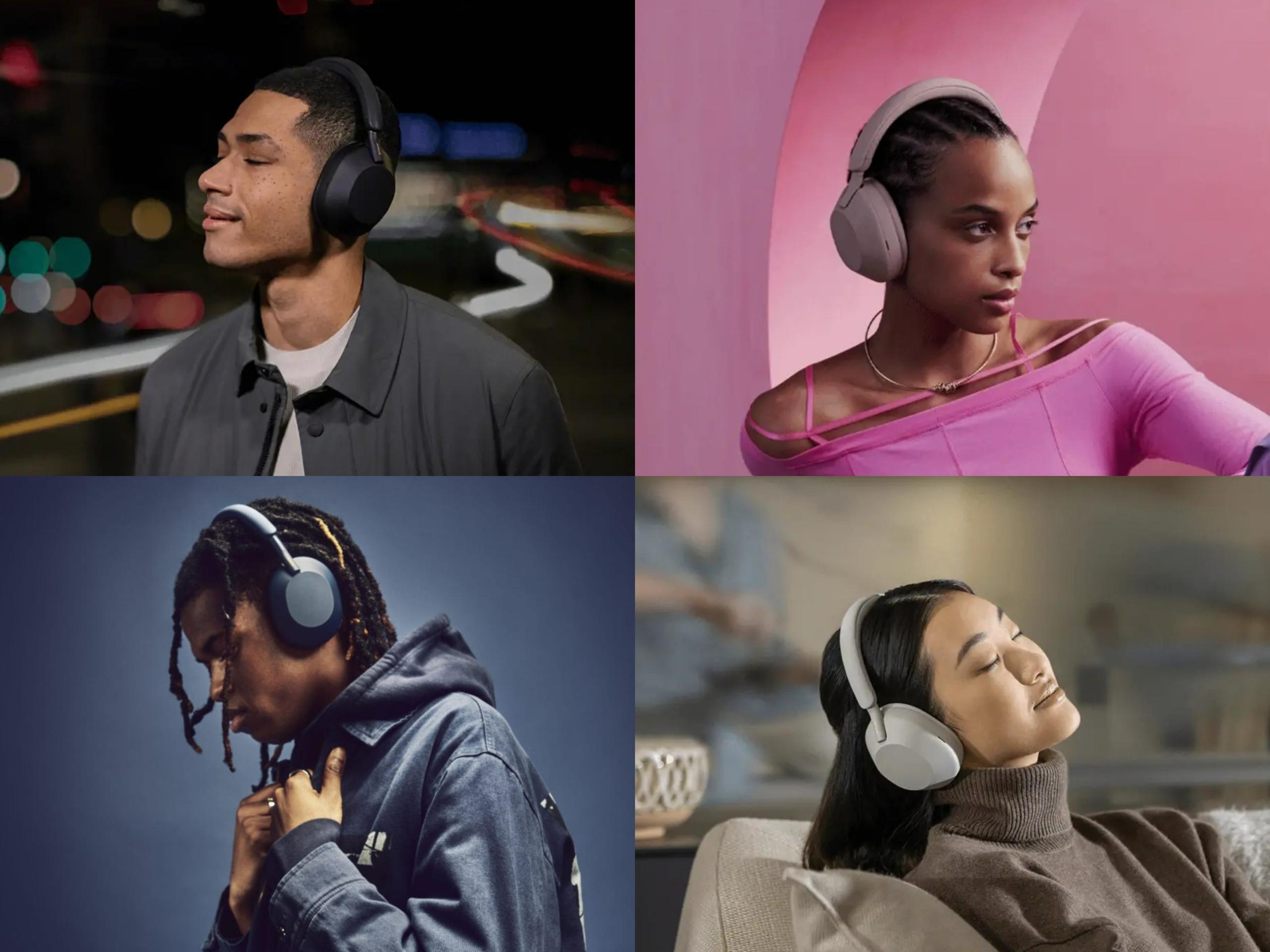
Black Friday 2025 showed something else: incremental improvements aren't moving the needle anymore.
Sony released the WH-1000XM6 headphones this year. They're excellent — slightly better noise canceling, improved touch controls, better battery life. They were $60 off for Black Friday at $340. You know what sold better? The previous-generation XM5s at $199, down from $259.
People saw two Sony headphones. One was $340 and represented the absolute latest. The other was $199 and was still fantastic. They bought the $199 pair in massive numbers because the $141 price difference didn't translate to an audible $141 difference in their daily commute.
This is the new reality. Most upgrades now are incremental — slightly better specs, marginally lower distortion, fractionally cleaner measurements. All real improvements, sure, but invisible to most people in everyday use. When progress becomes academic, price becomes the only thing that actually registers.
People haven't stopped upgrading because they don't care about quality. They've stopped because paying 70% more for 5% better doesn't make sense anymore, no matter how good the Black Friday discount looks.
In today's market, best-selling means affordable, easy to understand, and simple to live with. It doesn't mean aspirational or reference-grade.
People aren't sitting around waiting for premium gear to drop in price. They're opting out entirely and choosing products that just work without requiring sacrifice or justification. That shift is rewriting the sales charts across nearly every tech category — and audio is no exception.
This isn't a race to the bottom. It's not the death of quality or craftsmanship. It's a market correction.
Consumers aren't rejecting good products. They're rejecting expensive products that don't obviously improve their lives in ways they can feel every day. Until there's another genuine leap forward — something you can immediately hear, see, or experience without needing it explained — value is going to keep beating innovation.
Cheaper tech is winning not because it's better. It's winning because it lines up with how real people actually make buying decisions.
And that's what the industry really needs to wrap its head around.
For advertising please contact the editor at [email protected]




Privacy Policy
Terms and Conditions - Affiliate Policy
Home Security
© Copyright 2008-2026.
11816 Inwood Rd #1211, Dallas, TX 75244