

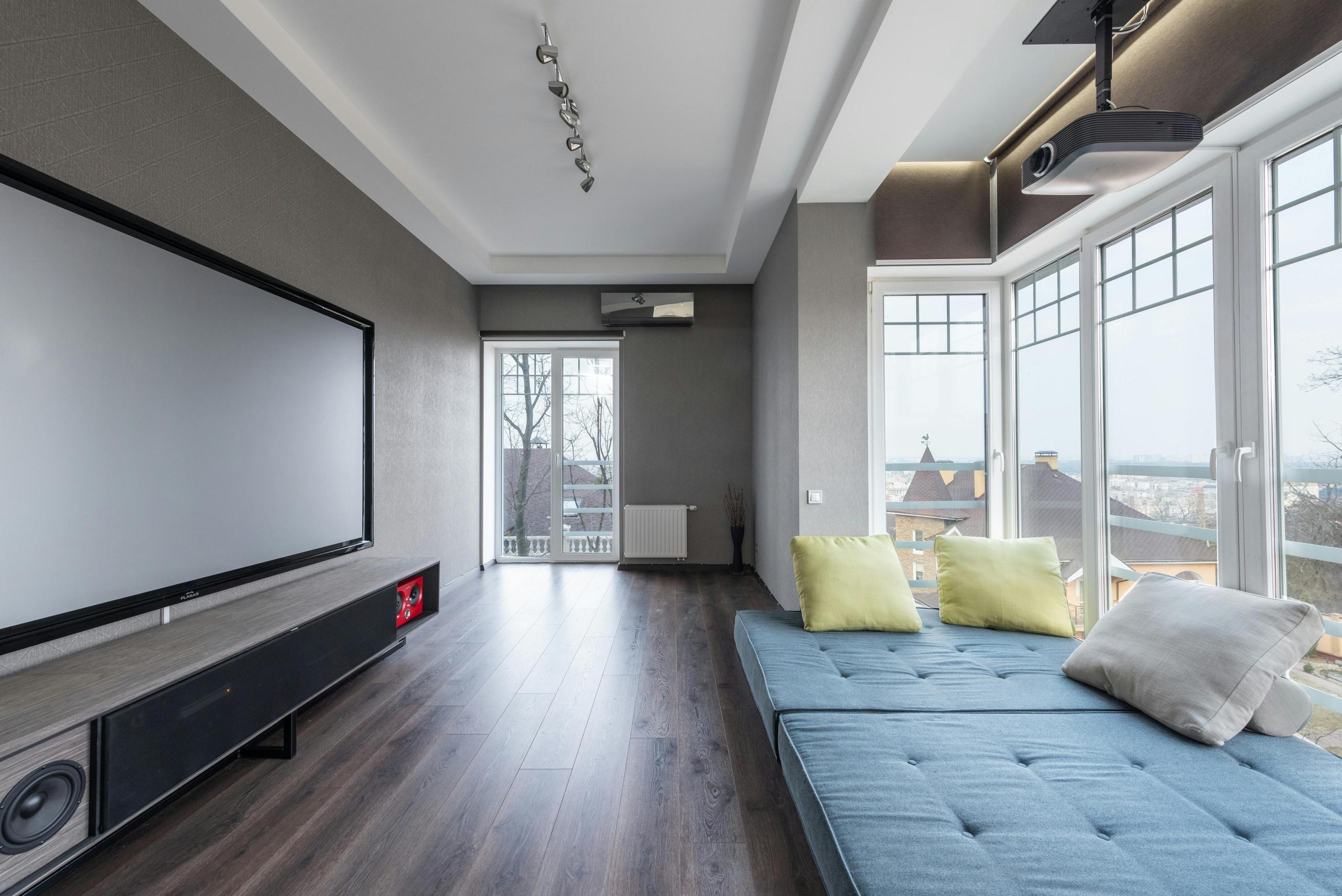
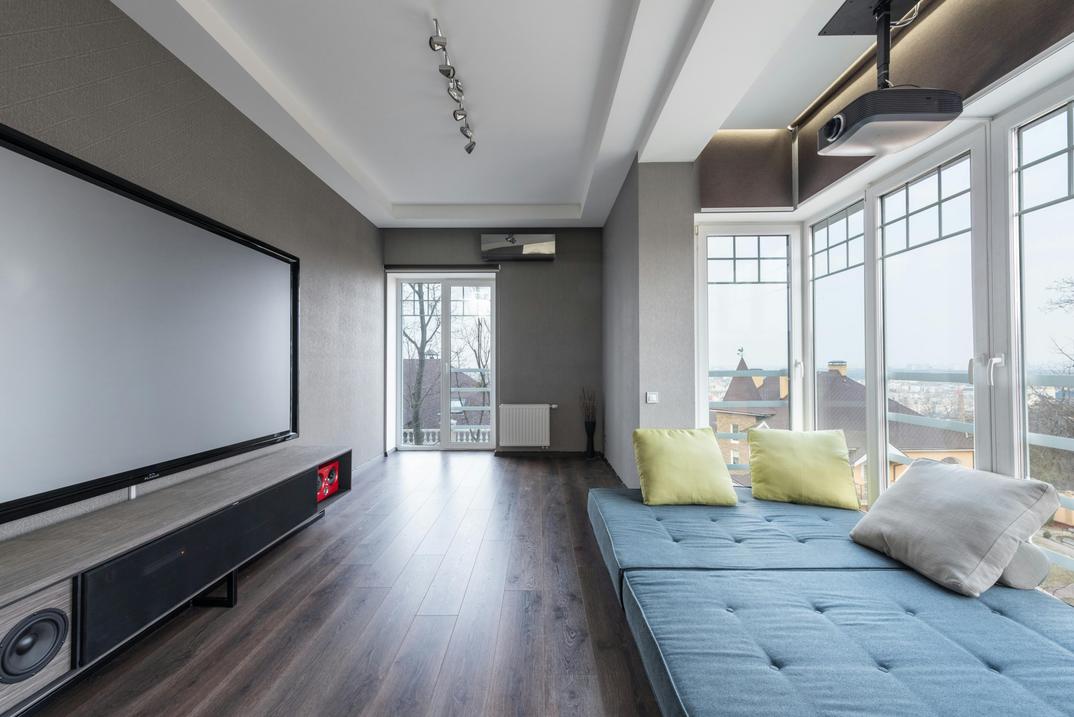
A well-tuned home theater is full of moving parts. Think of a hush box that lifts a projector into place, screen masking that glides to match aspect ratio, side panels that slide to tame reflections, or a TV that rises from a cabinet beside the first row. If paired mechanisms don’t move together, frames twist, seals pinch, and noise creeps in. You feel it as a shudder at the start, a squeak at mid-stroke, or a stall at the end. True sync fixes that. By reading real motion from each drive and correcting on the fly, you keep both sides aligned, load shared, and motion smooth. The win shows up in calmer sound, cleaner edges, and hardware that lasts longer because it is never fighting itself.
When space is tight and finish tolerances are small, clean feedback becomes your best tool. Hall sensors inside the motor create precise pulses as the shaft turns; a controller counts those pulses from each drive, compares them in real time, and trims speed, so partners stay in step. If your build needs two, three, or four points to move one element – say, a heavy soffit panel or a wide hush door – pick a controller that can read and balance them together. For compact setups that also need this kind of steady alignment, a 4 sync hall effect controller provides multichannel, pulse-based control so each side covers the same travel and finishes at the same moment, without guesswork or drift.
Projector lifts work best when the tray stays level from the first millimeter of travel to the last. With Hall feedback, you can ramp gently, hold mid-stroke to focus, and dock without a clunk. Screen masking is another clear win: top and side masks glide to the exact line for 2.35:1 or 1.85:1, then hold position for hours without hum. Wall panels that slide over first-reflection points look sleek when the gaps stay even; without sync, they rack and rub. Even small helpers – vent doors that open during a hot scene, or a rack slide that extends for service – benefit from motion that is square and quiet so you never break the mood right before the best line in the film.
The right drive turns ideas into daily use. Choose stroke, force, and duty cycle to match the load, then let feedback keep everything honest. For slim mechanisms behind fabric, in risers, or inside tight mill work, a quiet electric linear actuator pairs well with Hall control: it moves with enough push to carry trim and gear, yet accepts fine speed changes when the controller needs to correct. That gives you repeatable starts, straight travel, and a clean stop every time. Over weeks, this steadiness saves finishes, spares hinges, and keeps people talking about the show – not the hardware.
A tidy installation is half the battle. Run equal-length power leads to each actuator so voltage drop matches. Keep sensor lines away from noisy cables and terminate with firm, vibration-safe connectors. Teach end-stops with the real load attached; soft surfaces and seals change where “closed” lives. Log the taught limits, then test at slow and normal speeds so the controller maps travel cleanly. Set modest acceleration and deceleration to protect frames, and give the user a single “scene” command for the common cases: “open hush box,” “2.35:1 mask,” “service position.”
Quiet rooms need quiet starts. Ramp rates matter as much as felt pads. With sync running, both sides begin together, which removes the small twist that makes a panel groan. Set force limits so a stray hand or cable stops motion rather than bruising trim, and add a short delay between consecutive commands to avoid heat build-up. Cable management is worth the patience: leave a smooth service loop near each moving point and anchor it so it never scrapes. For parts, you often touch – mask edges, lift trays, access doors – spec steady fasteners and bushings that won’t loosen after a few weekends. Keep one spare actuator and a spare controller on the shelf; a like-for-like swap is faster than rewiring when a guest arrives in an hour.
Older theaters can gain the same polish with careful planning. Start with one element that shows the most benefit – a projector lift that shakes at the start, a wide hush door that binds, or a mask that never sits straight. Add Hall-equipped drives, bring them to a controller that supports multiple channels, and tune for speed and symmetry. Once you see smooth travel and even gaps, clone the pattern for the next mechanism. The room will feel calmer right away: fewer squeaks, no stalls, better docking, and less stress on paint and fabric. Most of all, the system becomes easy to live with. You press a single button, the motion feels measured and sure, and the show begins – exactly how a good theater should behave.


Privacy Policy
Terms and Conditions - Affiliate Policy
Home Security
© Copyright 2008-2026.
11816 Inwood Rd #1211, Dallas, TX 75244