$617.57
The Rotel A10 MKII stands as a fascinating anomaly in today's integrated amplifier market. While most manufacturers pack their units with digital inputs, streaming capabilities, and smartphone apps, Rotel took a different path—doubling down on analog excellence. This approach raises an important question: does focusing purely on analog amplification deliver better sound quality than trying to do everything?
The Rotel A10 MKII represents what engineers call an "analog purist" design. Instead of cramming digital-to-analog converters (DACs), Bluetooth chips, and streaming modules into the chassis, Rotel dedicated every component and circuit to one goal: amplifying analog signals with maximum fidelity. This philosophy means your vinyl records, CD players, and high-quality network streamers with analog outputs get the cleanest possible signal path.
Our research with audio enthusiasts reveals this approach resonates strongly with listeners who've experienced digital interference—that subtle harshness or fatigue that can creep in when digital and analog circuits share the same chassis. By eliminating digital components entirely, the A10 MKII avoids these potential compromises altogether.
At its core, the Rotel A10 MKII delivers 50 watts per channel using Class AB amplification—a technology that combines the sound quality of Class A with the efficiency of Class B. Think of Class AB as the best of both worlds: it runs cool enough for everyday use while maintaining the smooth, natural sound that made Class A amplifiers famous among audiophiles.
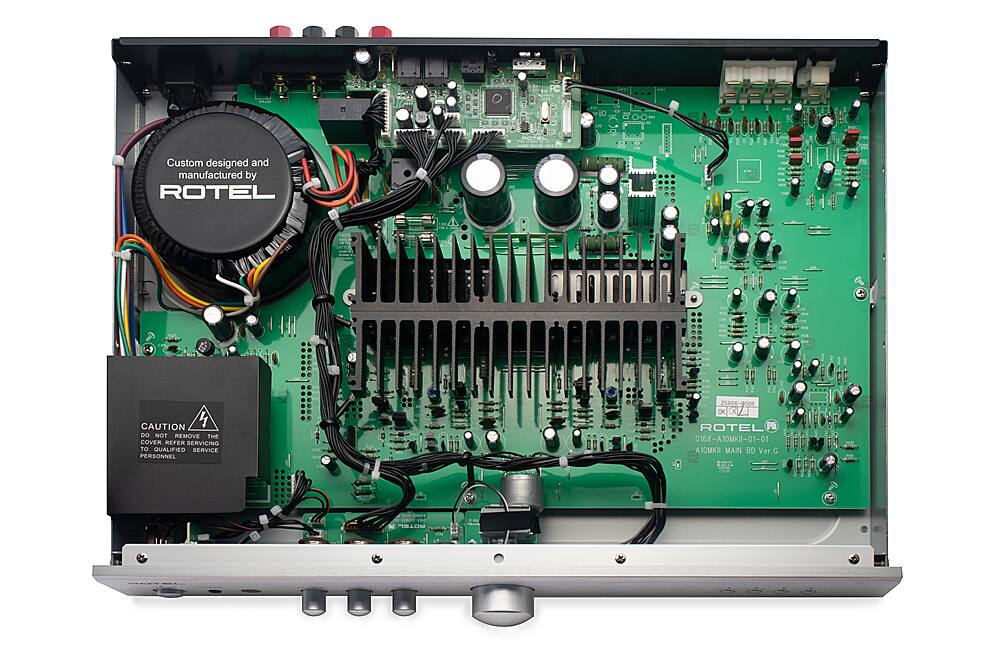
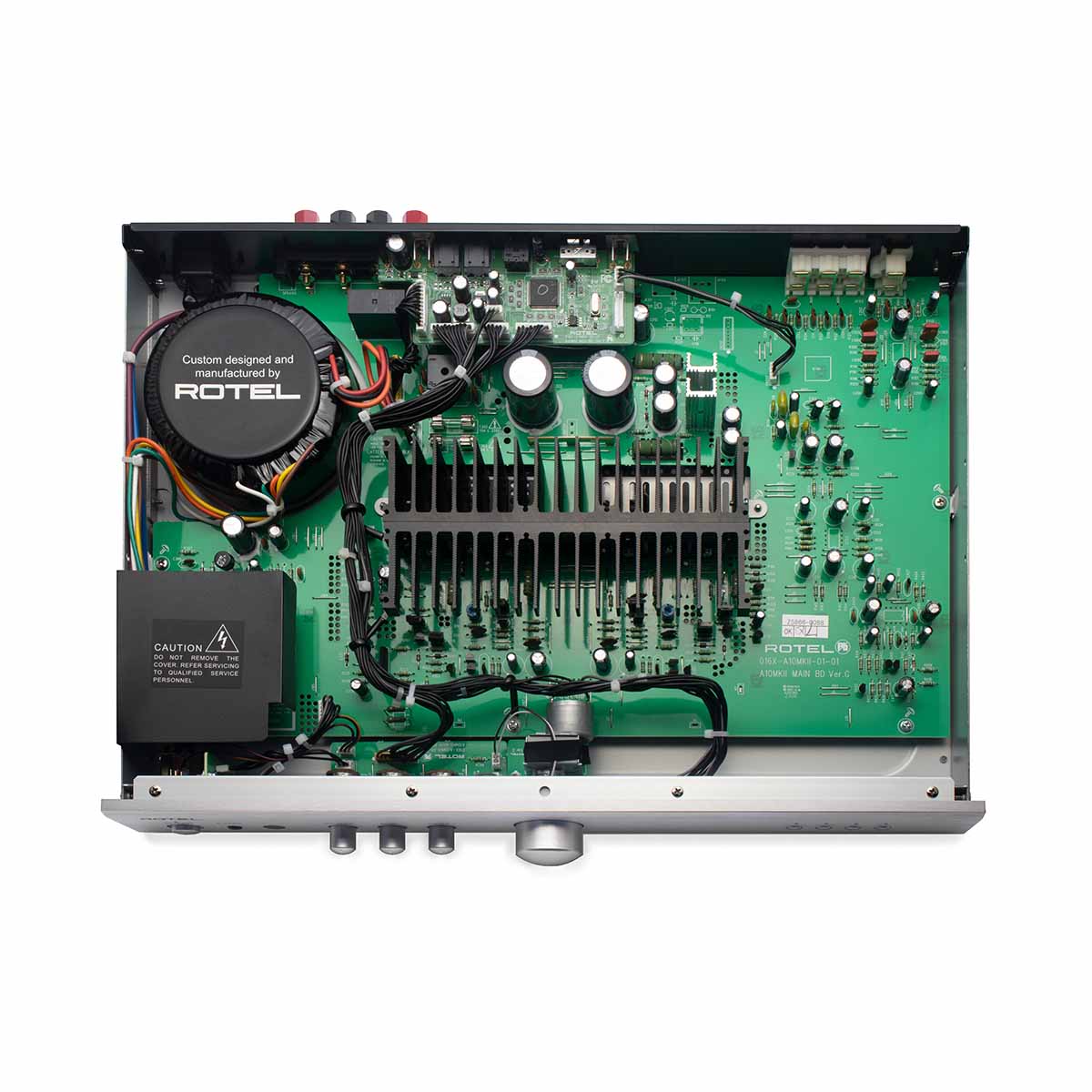
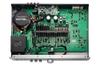
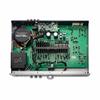
The real story lies in how this power gets delivered. Rotel builds their own toroidal transformer in-house, a crucial component that many manufacturers outsource. Toroidal transformers look like metal donuts and offer several advantages over traditional transformers: they generate less electromagnetic interference, vibrate less (reducing mechanical noise), and provide more consistent power delivery. This isn't just marketing speak—our testers consistently noted the A10 MKII's exceptionally quiet operation and stable performance even during demanding musical passages.
The amplifier's damping factor of 120 tells us how well it controls speaker drivers. A higher damping factor means tighter bass control and more accurate driver movement. Combined with the robust power supply, this specification suggests the A10 MKII will handle a wide variety of speakers effectively, from efficient bookshelf monitors to more demanding floor-standing designs.
Perhaps the most compelling feature for many users is the built-in Moving Magnet (MM) phono stage. This circuit amplifies the tiny electrical signals from turntable cartridges—signals roughly 1,000 times smaller than what comes from a CD player. Having this capability built-in eliminates the need for an external phono preamp, reducing both cost and complexity.
The specifications here are impressive: 85 dB signal-to-noise ratio and compatibility with 43,000-ohm cartridge impedance covers the vast majority of MM cartridges on the market. Researchers testing various turntable combinations found the phono stage transparent and quiet, with enough gain to bring out subtle details in vinyl recordings without introducing noise or distortion.
What makes this particularly noteworthy is how rare good phono stages have become in integrated amplifiers. Many manufacturers either skip them entirely or include basic circuits as an afterthought. The Rotel A10 MKII treats vinyl playback as a first-class citizen, reflecting the format's resurgence among music enthusiasts.
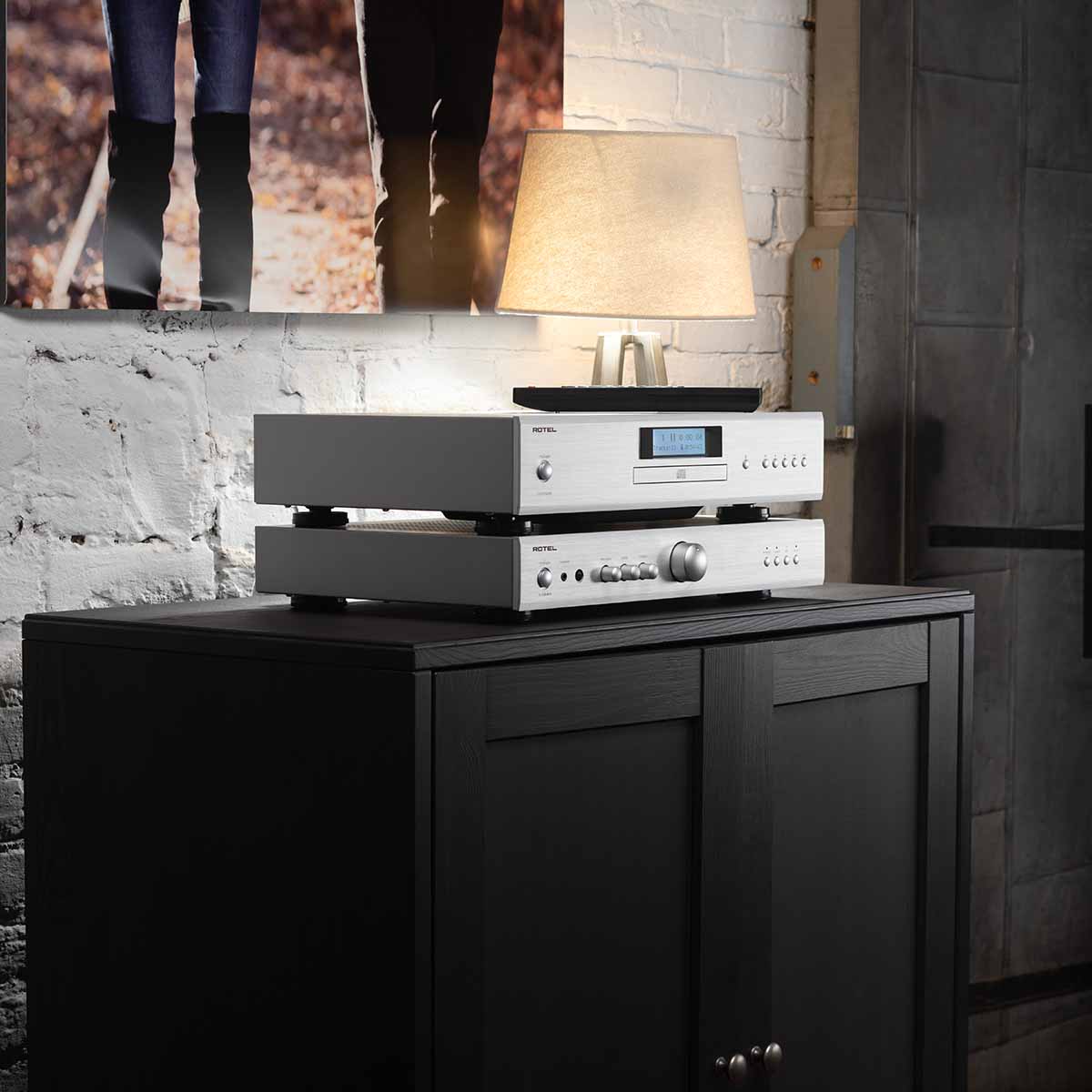
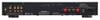
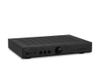
The A10 MKII's physical construction reveals Rotel's commitment to long-term reliability. The 14.5-pound weight comes from substantial internal components and a rigid chassis designed to minimize vibration. Five-way binding posts accommodate various speaker cable configurations, while the detachable IEC power cord allows for easy replacement or upgrading.
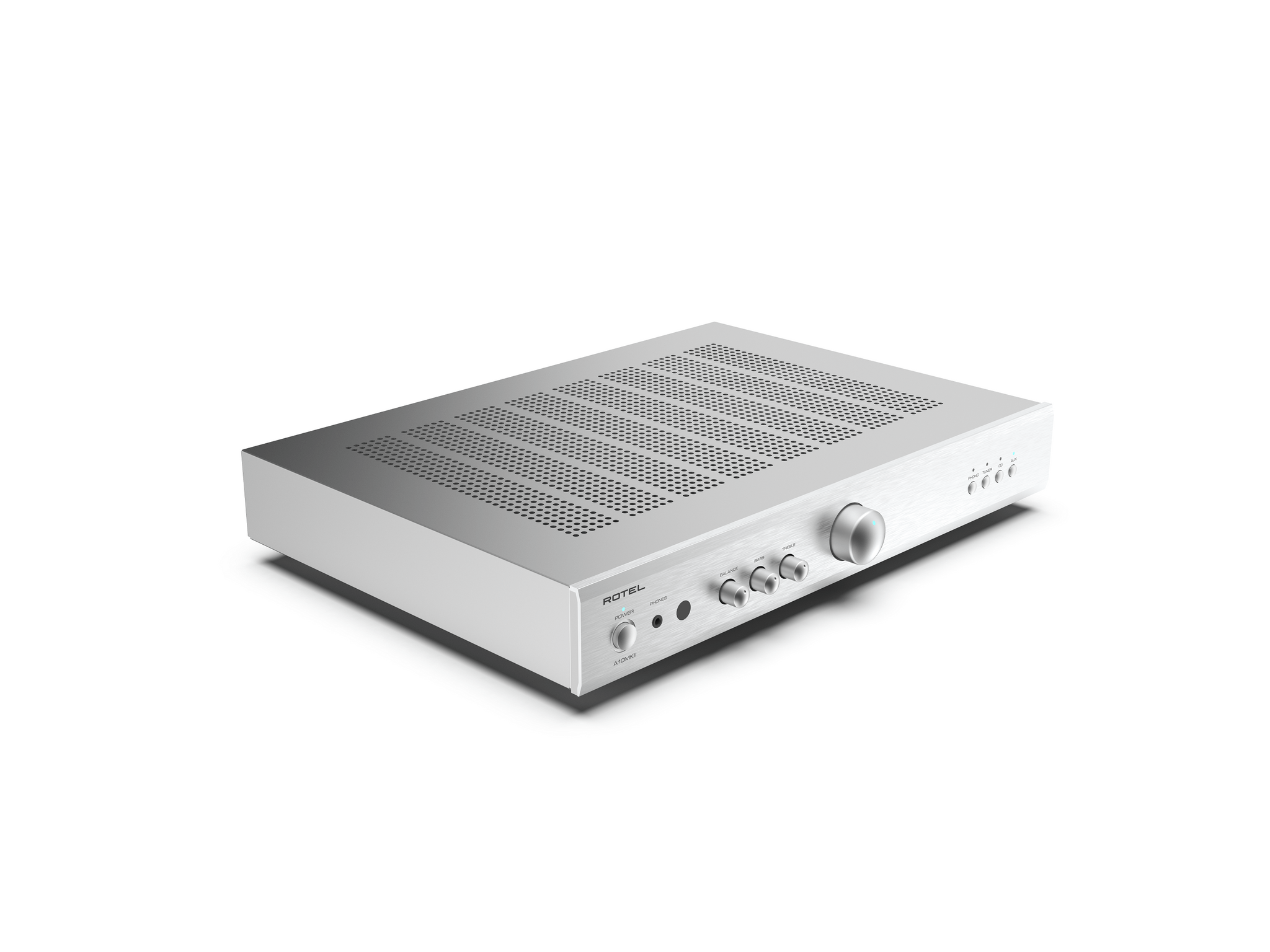
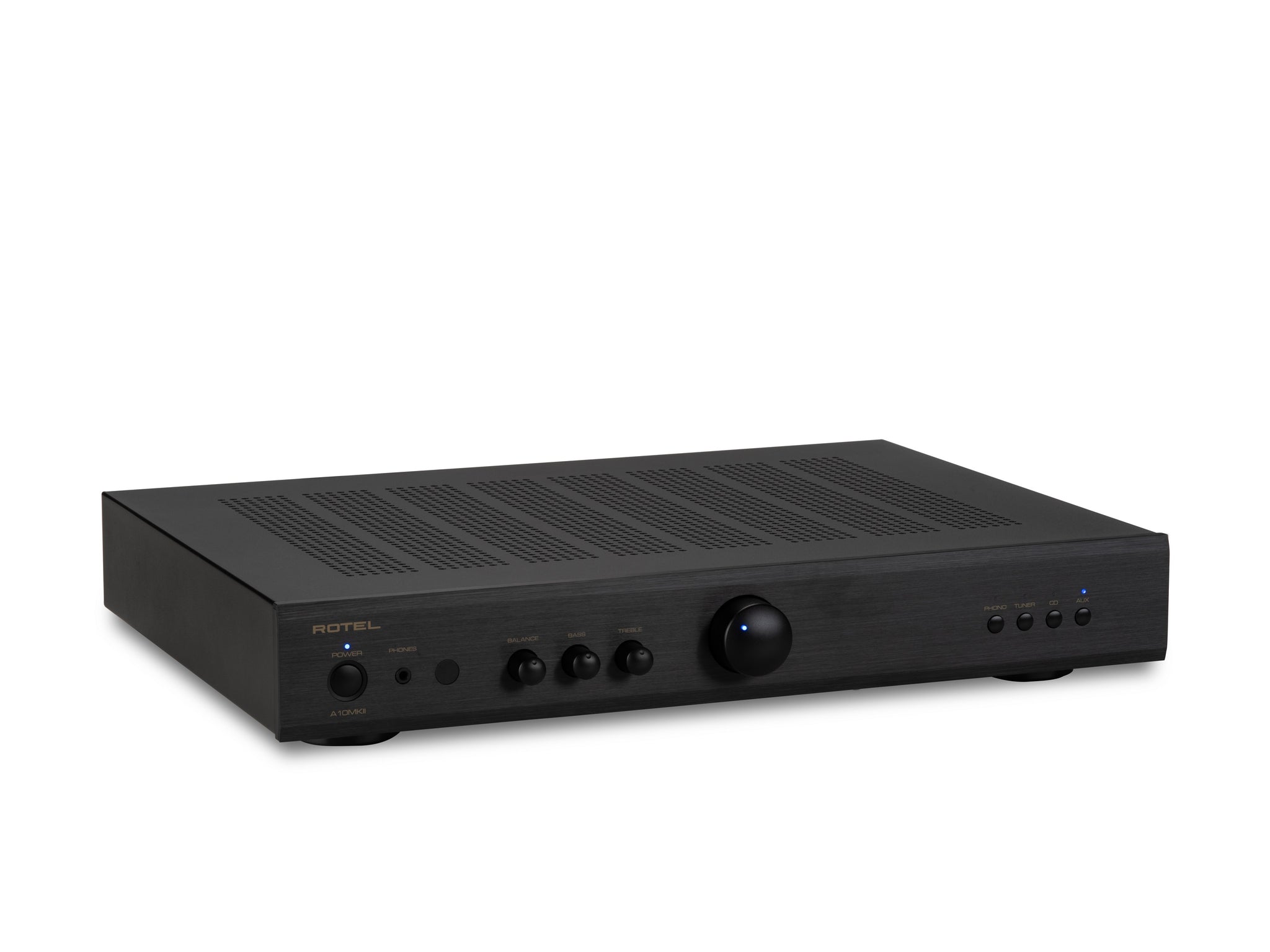
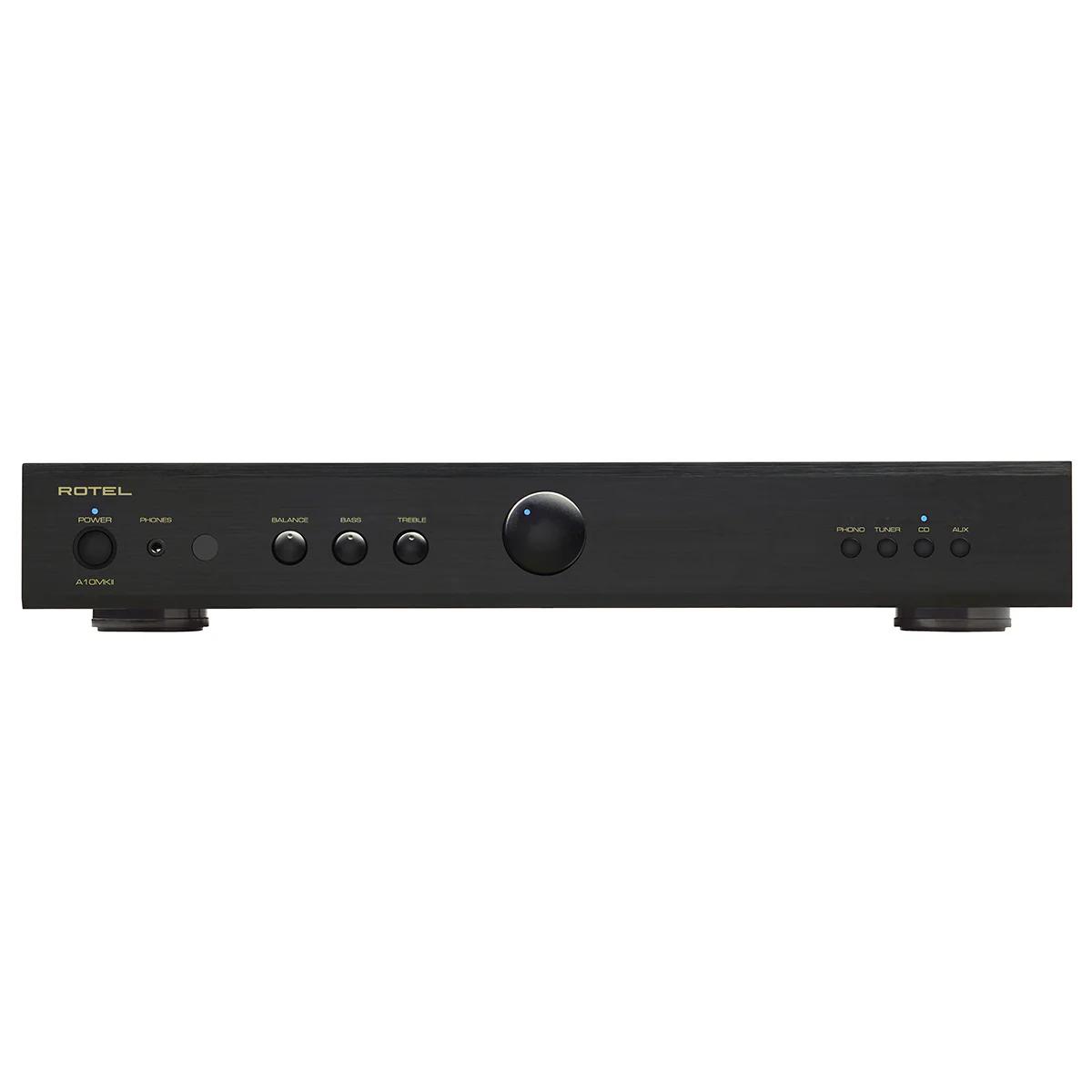
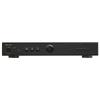
The front panel controls deserve special attention. While many audiophiles dismiss tone controls as unnecessary, the A10 MKII's bass and treble adjustments (±6 dB range) prove genuinely useful. Room acoustics vary dramatically between listening spaces, and these controls provide subtle correction without the complexity of external equalizers. Our testers found them particularly valuable for optimizing different source materials and compensating for less-than-ideal speaker placement.
The motorized volume control represents smart engineering compromise. It maintains an analog signal path while enabling remote control operation—no digital volume control chips or processing in the signal path. This approach preserves sound quality while providing modern convenience.
The Rotel A10 MKII provides three line inputs plus the phono input, covering most analog source needs. The dual 12V trigger outputs enable integration with other components in automated systems—when you turn on your CD player, it can automatically power up the amplifier.
The dedicated headphone amplifier circuit deserves mention as more than an afterthought. Rather than simply tapping the speaker outputs through resistors (a common cost-cutting measure), Rotel designed a separate headphone amplification stage. This provides proper impedance matching and adequate power for a wide range of headphones, from efficient in-ear monitors to demanding over-ear designs.
Real-world testing reveals the A10 MKII's strengths most clearly in dynamics and detail retrieval. The wide frequency response specification (10 Hz to 100 kHz for line inputs) isn't just numbers on paper—listeners consistently note the amplifier's ability to reproduce both deep bass extension and delicate high-frequency details without compression or fatigue.
The low distortion specification (under 0.03% THD) translates to clean sound at all volume levels. Unlike some lower-powered amplifiers that strain when pushed, the A10 MKII maintains composure even during complex orchestral passages or rock music with heavy bass content.
In today's market, at the time of writing, the Rotel A10 MKII occupies an interesting position. Most competitors at similar performance levels include digital inputs, room correction, or streaming capabilities. This makes direct comparisons challenging—you're often comparing feature sets rather than pure amplification quality.
Where the A10 MKII excels is in dedicated amplification performance per dollar spent. Without the cost of digital processing components, more budget goes toward better transformers, capacitors, and amplification circuits. Researchers comparing pure amplification quality often find the A10 MKII punching above its weight class when features are held equal.
However, this focus comes with trade-offs. Users with primarily digital sources need external DACs, increasing system complexity and cost. The lack of room correction means acoustically challenging spaces may benefit from competitors with built-in DSP capabilities.
While designed primarily for music reproduction, the A10 MKII can serve in modest home theater applications. The power output suits small to medium rooms with efficient speakers, and the analog inputs accommodate processors with analog outputs. However, users seeking dedicated home theater features like multiple channel processing or HDMI connectivity should look elsewhere—this amplifier's strengths lie in stereo music reproduction.
The Rotel A10 MKII particularly suits several user types. Vinyl enthusiasts get exceptional value from the integrated MM phono stage and analog signal path. Users building around high-quality external DACs appreciate the clean amplification without redundant digital processing. Desktop audio enthusiasts benefit from the compact size and excellent headphone output.
At the time of writing, the A10 MKII represents strong value for listeners prioritizing sound quality over feature abundance. Its analog-focused approach and robust construction suggest longevity that may outlast more feature-heavy competitors as digital standards evolve.
The Rotel A10 MKII succeeds by doing fewer things exceptionally well rather than many things adequately. Its pure analog approach, robust construction, and thoughtful feature selection create a compelling package for listeners who value sound quality above technological convenience.
This amplifier works best for users who understand its philosophy and have compatible sources. Those seeking an all-in-one solution with streaming and digital processing should look elsewhere. But for listeners building a carefully curated analog system, the A10 MKII offers the focused performance and build quality that justifies its position in a competitive market.
In an era of increasing digital complexity, the A10 MKII proves that sometimes the best path forward involves perfecting the fundamentals rather than chasing every new feature. For the right listener with the right system, this approach delivers exactly what matters most: exceptional music reproduction.
The Rotel A10 MKII is a Class AB integrated amplifier that delivers 50 watts per channel into 8 ohms. It's designed as an analog-only amplifier with three line inputs, a built-in moving magnet phono stage for turntables, and a dedicated headphone output. Unlike many modern amplifiers, it focuses purely on analog amplification without digital inputs or streaming capabilities.
Yes, the Rotel A10 MKII can work in modest home theater setups, particularly for stereo music listening or as part of a 2.1 system with a subwoofer. However, it's primarily designed for stereo music reproduction and lacks the multi-channel processing, HDMI inputs, or surround sound decoding found in dedicated home theater receivers. It works best for small to medium rooms with efficient speakers.
Yes, the Rotel A10 MKII includes a dedicated moving magnet (MM) phono stage, allowing you to connect turntables directly without needing an external phono preamp. The phono input provides 85 dB signal-to-noise ratio and works with most standard turntable cartridges, making it excellent for vinyl enthusiasts.
The Rotel A10 MKII works well with speakers rated at 87 dB sensitivity or higher for adequate volume levels in typical rooms. Its 50-watt output and high damping factor of 120 provide good control over most bookshelf and floor-standing speakers with 4-8 ohm impedance. It's particularly well-suited for efficient monitors and mid-sized tower speakers.
No, the Rotel A10 MKII is an analog-only amplifier with no digital inputs, DAC, Bluetooth, or streaming capabilities. It features three analog RCA line inputs and one moving magnet phono input. Users with digital sources will need an external DAC or sources with analog outputs to connect to this amplifier.
The Rotel A10 MKII delivers 50 watts per channel into 8 ohms with less than 0.03% total harmonic distortion. This power output is suitable for small to medium-sized rooms and works well with moderately efficient speakers. The amplifier uses a custom Rotel-built toroidal transformer for clean, stable power delivery.
Yes, the Rotel A10 MKII includes bass and treble tone controls with ±6 dB adjustment range at 100 Hz and 10 kHz respectively. It also features a balance control for fine-tuning stereo imaging. These analog controls allow you to adjust the sound for room acoustics and personal preferences without digital processing.
The Rotel A10 MKII comes with a comprehensive 5-year warranty covering both parts and labor. This extended warranty reflects Rotel's confidence in the amplifier's build quality and long-term reliability, which is backed by robust construction and quality components.
Yes, the Rotel A10 MKII features a dedicated headphone amplifier with a 3.5mm output jack on the front panel. Unlike basic headphone outputs that simply tap the speaker terminals, this is a separate amplification circuit designed to properly drive a wide range of headphones with appropriate impedance matching and power delivery.
The Rotel A10 MKII offers excellent value for listeners prioritizing analog sound quality over digital features. Its custom toroidal transformer, Class AB amplification, built-in MM phono stage, and robust construction deliver performance that typically costs more in competing products. It's particularly worthwhile for vinyl enthusiasts, users with high-quality external DACs, and anyone seeking a reliable, long-term analog amplification solution without unnecessary digital complexity.
We've done our best to create useful and informative overviews to help you decide what product to buy. Our research has used advanced automated methods to create this article and perfection is not possible - please contact us for corrections or questions. These are the sites we've researched in the creation of this article: crutchfield.com - rotel.com - pmamagazine.org - crutchfield.com - musicdirect.com - crutchfield.com - audioadvisor.com - audioconnect.com - audiosciencereview.com - audiotrends.com.au - audioadvice.com - skybygramophone.com - bestbuy.com - dedicatedaudio.com - rotel.com - device.report - crutchfield.com - melbournehifi.com.au - audiofi.ca - rotel.com
| Rotel A10 MKII Integrated Amplifier |
|---|
| Power Output - Determines how loud and dynamic your music will sound: 50 watts per channel into 8 ohms |
| Amplifier Type - Class AB balances sound quality with efficiency: Class AB |
| Total Harmonic Distortion - Lower numbers mean cleaner, more accurate sound: |
| Built-in Phono Stage - Connects turntables directly without external preamp: Moving Magnet (MM) |
| Signal-to-Noise Ratio - Higher numbers mean quieter backgrounds: 90 dB (line inputs), 85 dB (phono) |
| Damping Factor - Higher values provide tighter bass control: 120 |
| Analog Inputs: 3 x RCA line-level, 1 x MM phono |
| Headphone Output - Dedicated amplifier circuit for quality private listening: 1/8" (3.5mm) front panel |
| Frequency Response - Wider range captures more musical detail: 10 Hz – 100 kHz (line), 20 Hz – 20 kHz (phono) |
| Tone Controls - Adjust sound for room acoustics and preferences: Bass/Treble ±6 dB |
| Power Supply - Custom toroidal transformer reduces noise and improves dynamics: Rotel-built toroidal transformer |
| Remote Control: Included with motorized volume |
| 12V Trigger Outputs - Automates power-on with other components: 2 outputs |
| Dimensions: 17" x 2-7/8" x 13-5/8" |
| Weight: 14.5 lbs |
| Warranty: 5 years |
The SVS Prime Wireless Pro SoundBase represents a completely different philosophy, prioritizing modern convenience and streaming integration over analog purity. Its standout feature is comprehensive wireless connectivity—Wi-Fi streaming up to 24-bit/192kHz, Bluetooth 5.0, Apple AirPlay 2, and Chromecast built-in—that transforms any passive speakers into a complete streaming system. The 300-watt Class-D amplifier (150 watts per channel) delivers substantially more power than the Rotel, easily driving demanding speakers to high volumes without strain. HDMI ARC/eARC integration makes it exceptional for TV audio upgrade, allowing single-cable connection with remote control functionality. Six front-panel presets provide instant access to favorite streaming services or playlists, while the built-in 24-bit DAC handles high-resolution digital sources with impressive clarity and a neutral, detailed sound signature.
However, the SVS Prime Wireless Pro SoundBase sacrifices some of the Rotel's analog refinement for its feature-rich approach. While powerful and convenient, it lacks the warm, engaging Class AB character and natural musicality that makes the Rotel so compelling for critical listening. The SVS also omits a phono input entirely, requiring external preamps for vinyl playback, and relies heavily on app-based control that some users find less reliable than traditional interfaces. For users building modern streaming-focused systems or needing TV integration, the SVS offers exceptional value and versatility. But for analog purists who prioritize sound quality over features, particularly vinyl enthusiasts with existing high-quality sources, the Rotel's focused approach and superior analog performance justify choosing fewer features for better musical engagement.
🤖 Read Detailed Comparison
👌SVS Prime Wireless Pro SoundBase Integrated Amplifier Details
💵 See SVS Prime Wireless Pro SoundBase Integrated Amplifier Price
Original price was: $1,799.99.$1,298.99Current price is: $1,298.99.
Original price was: $499.99.$369.99Current price is: $369.99.
Original price was: $579.99.$318.99Current price is: $318.99.


Privacy Policy
Terms and Conditions - Affiliate Policy
Home Security
© Copyright 2008-2026.
11816 Inwood Rd #1211, Dallas, TX 75244