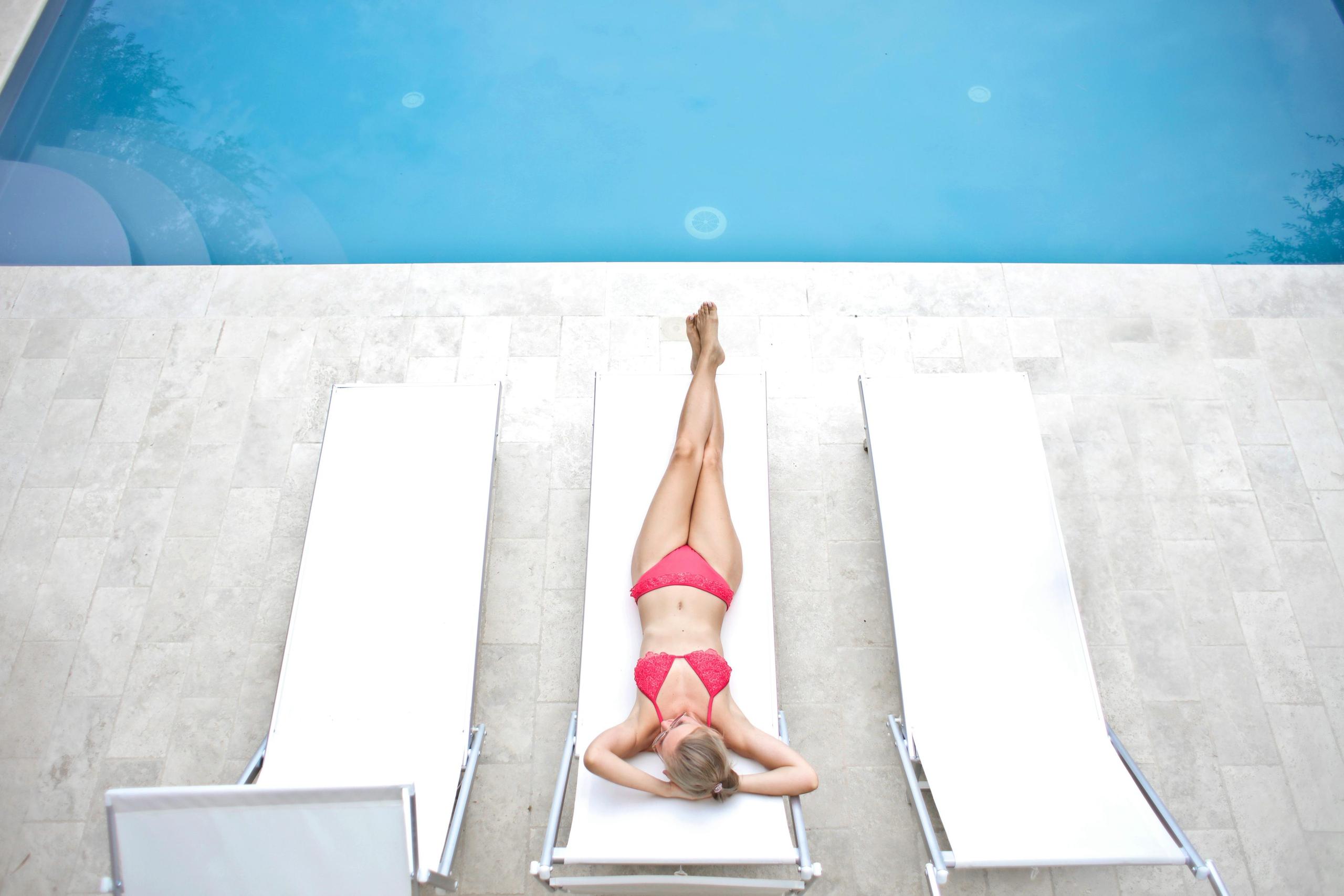
If your pool area is starting to look a little tired — cracked concrete, slippery tiles, scorching surfaces in the summer — it might be time for a change. Rubber surfacing has become a go-to option for homeowners looking for something safer, softer, and just better all around.
But how much does it cost?
That’s the big question. And while there isn’t one flat number that fits everyone, there are some typical price ranges and factors to consider. If you're planning ahead and want to schedule rubber pool decking faster, knowing what drives the cost up — or keeps it down — is a smart place to start.
Let’s break it down in a way that makes budgeting easier and clearer.
If you’re new to this type of surface, here’s the gist: rubber decking is a poured-in-place layer made from small rubber granules mixed with a binder. When applied, it creates a smooth, seamless surface that’s slip-resistant and gentle on bare feet. It’s soft without being squishy and holds up really well to water, sun, and constant traffic.
People like it not just for how it feels but because it covers up worn-out or damaged concrete. In many cases, there’s no need to tear out what’s underneath — the rubber goes right over the top, saving time and mess.
Average Price Per Square Foot
Most rubber pool decks cost somewhere between $6 and $12 per square foot for professional installation. That includes everything — the materials, labor, prep work, and finishing.
Here’s a closer look at how the numbers stack up:
Of course, these are ballpark figures. Your total will depend on your space, your location, and how much customization you want.
What Factors Affect the Price?
The numbers above are helpful, but they don’t tell the whole story. Here are some of the biggest things that impact the final cost.
The larger your deck, the more material and labor you’ll need. But there’s a twist — sometimes, doing a bigger area means a slightly lower cost per square foot. That’s because setup time and crew expenses spread out better across large projects.
The typical residential install is about a quarter-inch thick. That’s enough for most homes. But if you want a thicker layer — say for added cushion or commercial use — it’ll cost more. More rubber equals more dollars, simple as that.
Straightforward decks with clean edges are easier and faster to cover. Curved areas, built-in benches, or decorative designs take more time and skill. If your space has a complex layout, you might see a slight bump in the quote.
If your existing surface is smooth and level, you’re in luck. But if it’s cracked, chipped, or sinking in spots, the crew will need to patch or prep it first. Expect to pay extra for leveling or repairs — usually another $1 to $3 per sq. ft.
Single-color installations are typically the most budget-friendly. Want a swirl pattern or multiple colors? That adds to the material cost and time on site. Some contractors also charge more for logos or custom inlays.
Yes — and no. A good contractor will be up front with everything. But here are some things people sometimes forget to budget for:
It’s a good idea to ask about these when getting your quote.
Can You DIY Rubber Pool Decking?
Technically, yes. But it’s not for the faint of heart.
The material sets quickly, and you need to mix, pour, and spread it with precision. If you mess up — uneven areas, air bubbles, thin spots — you might end up redoing the whole thing. That’s not fun or cheap.
Materials for a DIY job might run $2.50–$5 per sq. ft., but you’ll also need mixing tools, gloves, a mask, and something (or someone) to help. For small areas, maybe it’s worth a try. For anything bigger? Most folks are happier leaving it to the pros.
How Does Rubber Decking Stack Up Against Other Options?
If you’re still weighing the choices, here’s a quick comparison of popular pool deck surfaces:
| Material | Average Cost (Per Sq. Ft.) | Pros | Cons |
| Rubber | $6–$12 | Soft, slip-resistant, cooler underfoot | Requires skilled installation |
| Concrete | $4–$9 | Affordable, widely available | Can crack and gets hot in sun |
| Stone or Tile | $10–$25 | High-end look, durable | Expensive, slippery when wet |
| Pavers | $8–$15 | Classic appearance, easy to repair pieces | Can shift over time if not installed well |
Rubber tends to land in the middle for cost but is hard to beat for comfort and safety.
For many homeowners, yes. Here’s why:
If you spend a lot of time by the pool, rubber decking doesn’t just look good — it feels good. And it stays looking fresh for years with minimal upkeep.
Rubber pool decking is a solid choice if you want something safe, soft, and attractive that holds up under pressure — and weather. Most installations run between $6 and $12 per square foot, depending on what you want and what’s already in place.
The best way to get an accurate price? Measure your space, think through your design, and get a few quotes. And don’t be afraid to ask questions — a good installer will walk you through the process and point out where you can save.If you’re curious about where else rubber surfacing makes sense — like playgrounds or public walkways — take a look at how it’s used at https://safestep.pro/poured-in-place-rubber-playground/.





Privacy Policy
Terms and Conditions - Affiliate Policy
Home Security
© Copyright 2008-2026.
11816 Inwood Rd #1211, Dallas, TX 75244