

When robot vacuums first hit the market, they were expensive novelties that bumped around randomly, often missing entire rooms. Fast forward to 2024, and we're looking at sophisticated cleaning machines that can navigate your home like a GPS, recognize your pet's toys, and even wash their own mops. The category has exploded with options ranging from basic models under $300 to premium flagship units costing over $1,500.
Today we're comparing two robots that represent opposite ends of this spectrum: the Eufy S1 Pro Omni launched in 2024 as a premium flagship, and the ECOVACS Deebot N20 Pro Plus, also released in 2024 as a high-value budget option. At the time of writing, you'll pay roughly 2.5 times more for the Eufy, but the question is whether those premium features justify the significant price jump.
Before diving into specifics, let's establish what actually matters when choosing a robot vacuum. The most important factors break down into four main categories:
Cleaning Performance is obviously crucial - how well does it actually pick up dirt, pet hair, and debris? This includes both vacuuming power (measured in Pascals or "Pa") and mopping effectiveness for wet cleaning.
Navigation Intelligence determines whether your robot cleans efficiently or gets lost in your kitchen. Modern robots use either laser mapping (LiDAR) or camera-based systems to create maps of your home and avoid obstacles.
Automation Level affects how much work you'll still need to do. Basic models require you to empty the dustbin and refill water tanks manually, while premium units handle these tasks automatically.
Value Proposition isn't just about upfront cost - it includes ongoing expenses like replacement bags, filters, and specialized cleaning solutions, plus the time you'll save or spend maintaining the device.
Both robots we're examining excel in different areas, making this comparison particularly interesting for understanding where your money goes in this rapidly evolving category.
The Eufy S1 Pro Omni positions itself as a premium flagship, competing directly with top-tier models from Roomba and Roborock. At launch, it commanded a significant premium over mid-range options, targeting consumers who want the latest technology and maximum convenience.
The ECOVACS Deebot N20 Pro Plus, meanwhile, aims to democratize premium features. ECOVACS has aggressively priced this model to deliver flagship-level suction power and auto-emptying capabilities at roughly 60% less than premium competitors.
This price gap creates fundamentally different value propositions. The Eufy asks you to pay significantly more for cutting-edge technology and convenience features that may feel like luxury items. The ECOVACS focuses on delivering core functionality exceptionally well while keeping costs reasonable for mainstream buyers.
Since 2024, both companies have refined their approaches based on user feedback, with software updates improving navigation and cleaning patterns. However, the fundamental hardware differences we'll discuss remain unchanged.
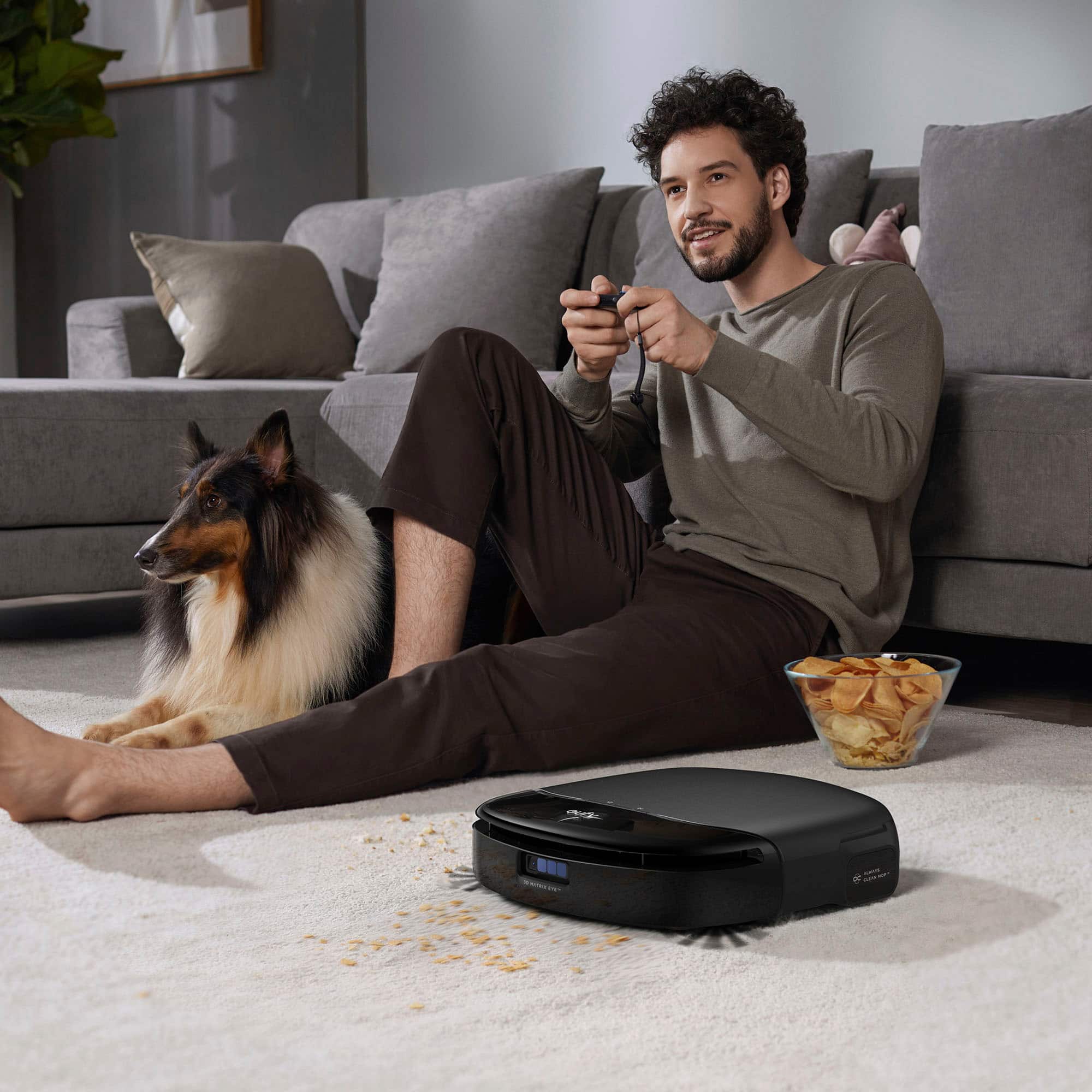
Both robots pack identical 8,000 Pa suction motors, putting them in the top tier for raw power. To put this in perspective, most budget robots offer 2,000-4,000 Pa, while premium models typically range from 6,000-10,000 Pa. This high suction rating means both can tackle embedded pet hair in carpets and fine dust on hard floors effectively.
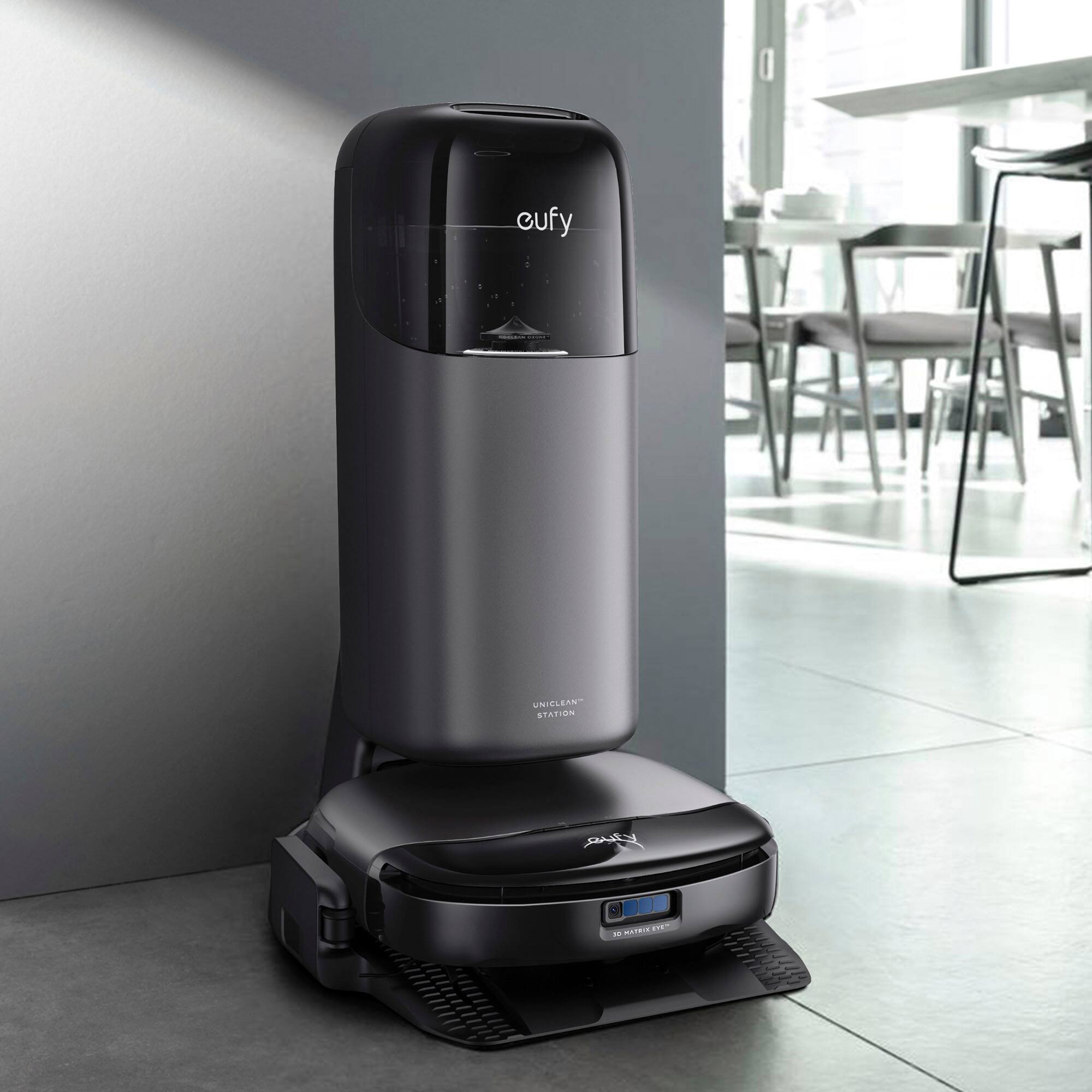
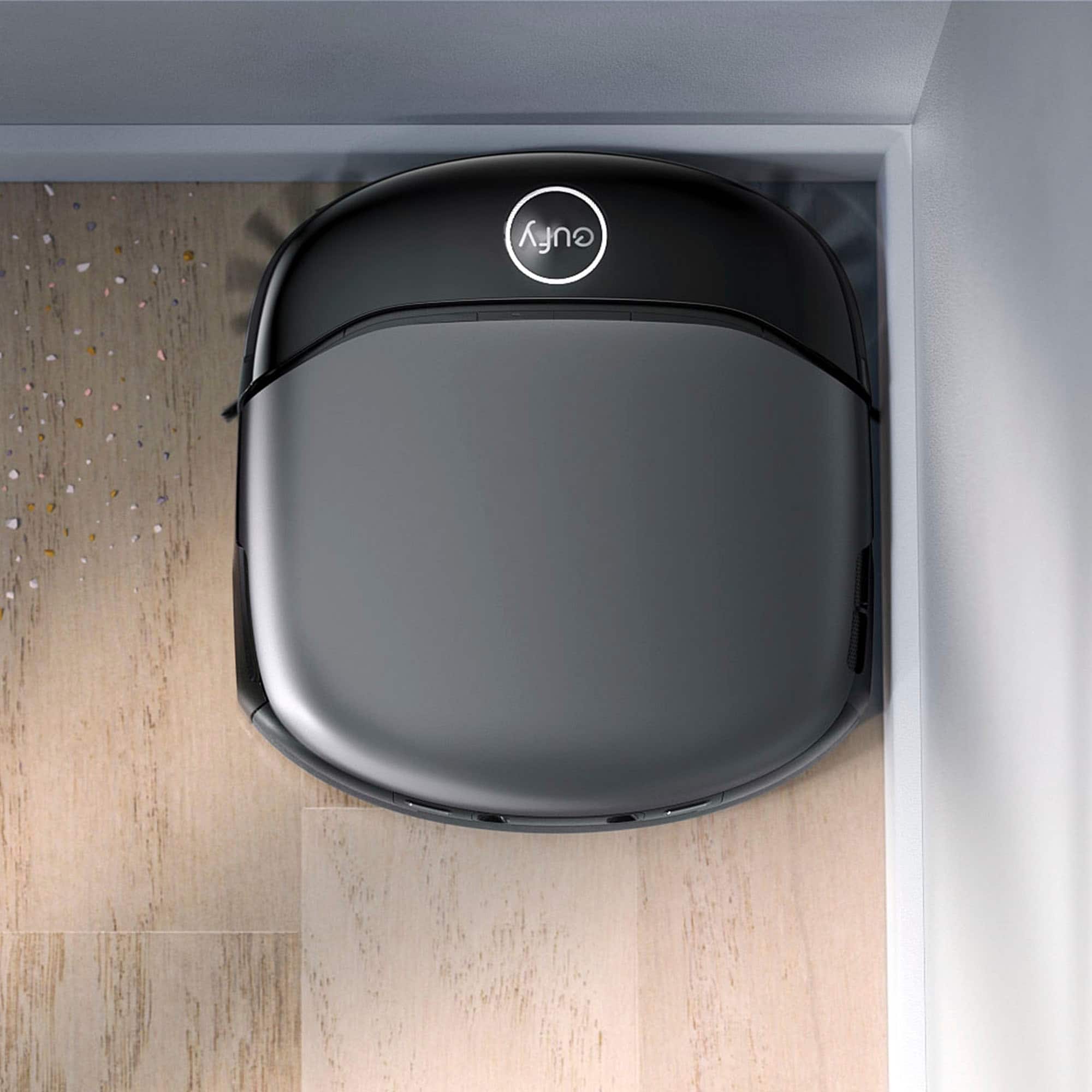
However, suction numbers only tell part of the story. The Eufy S1 Pro Omni benefits from its unique square chassis design, which allows it to get closer to walls and into corners where debris typically accumulates. Most robot vacuums are round, leaving a gap along walls that requires multiple passes to clean thoroughly.
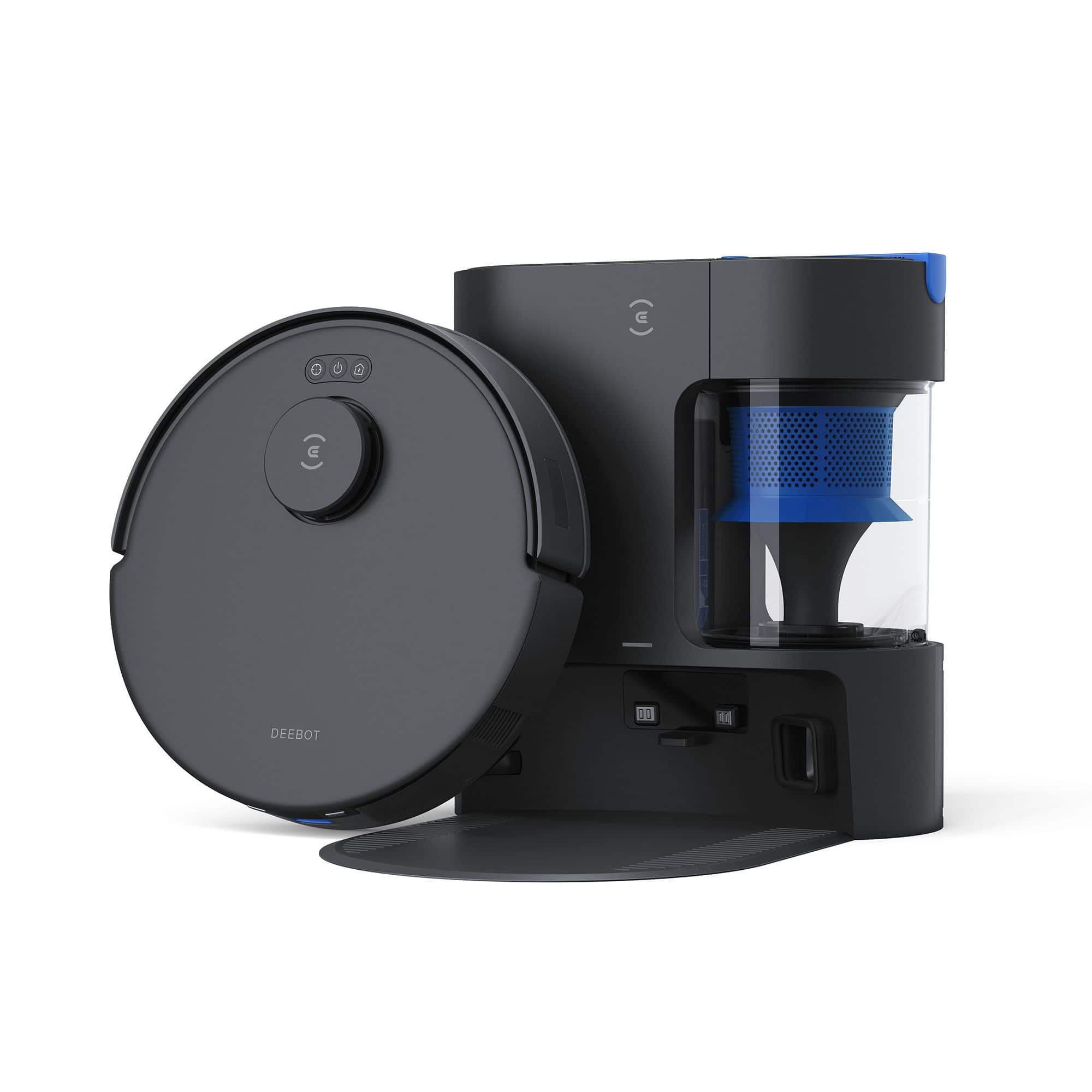
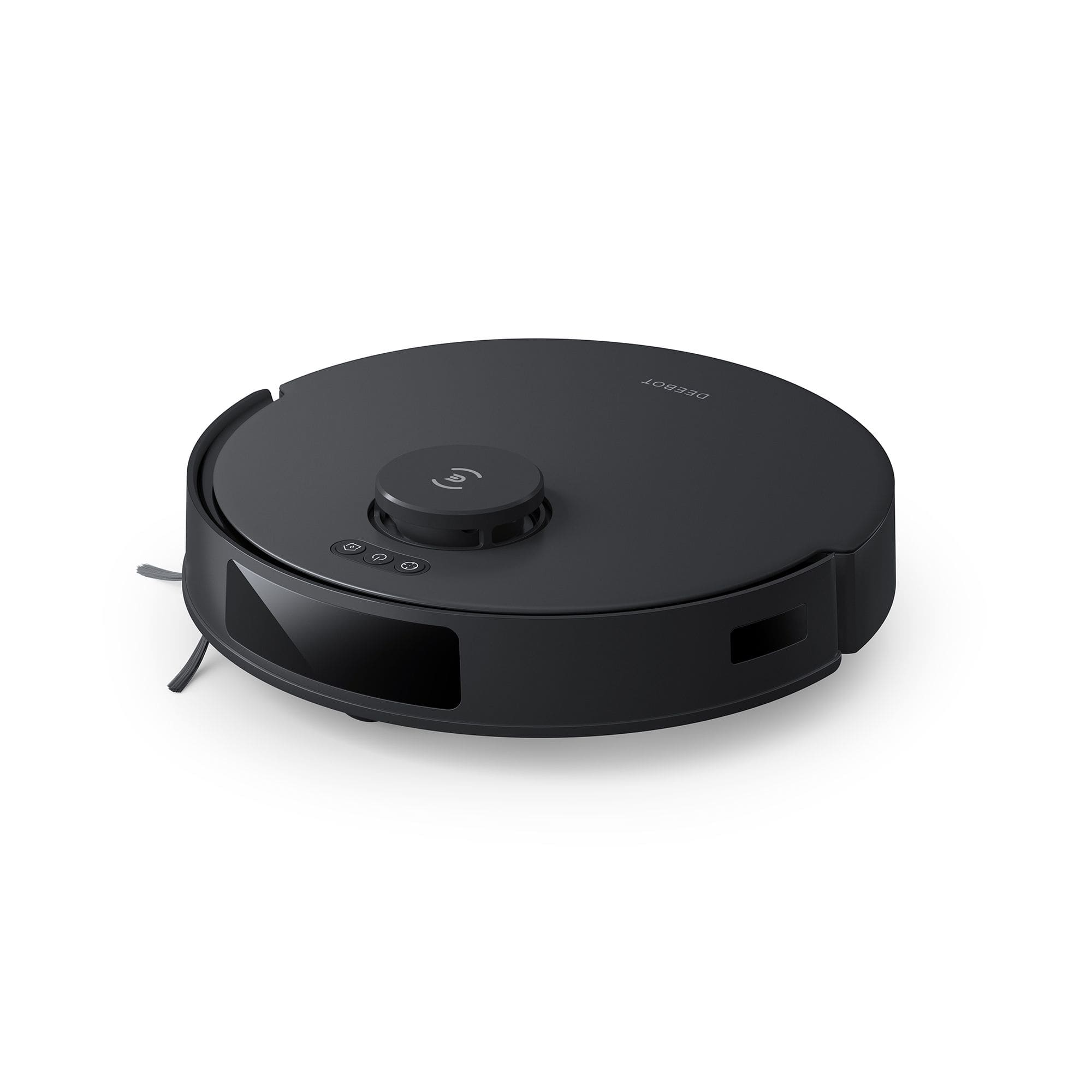
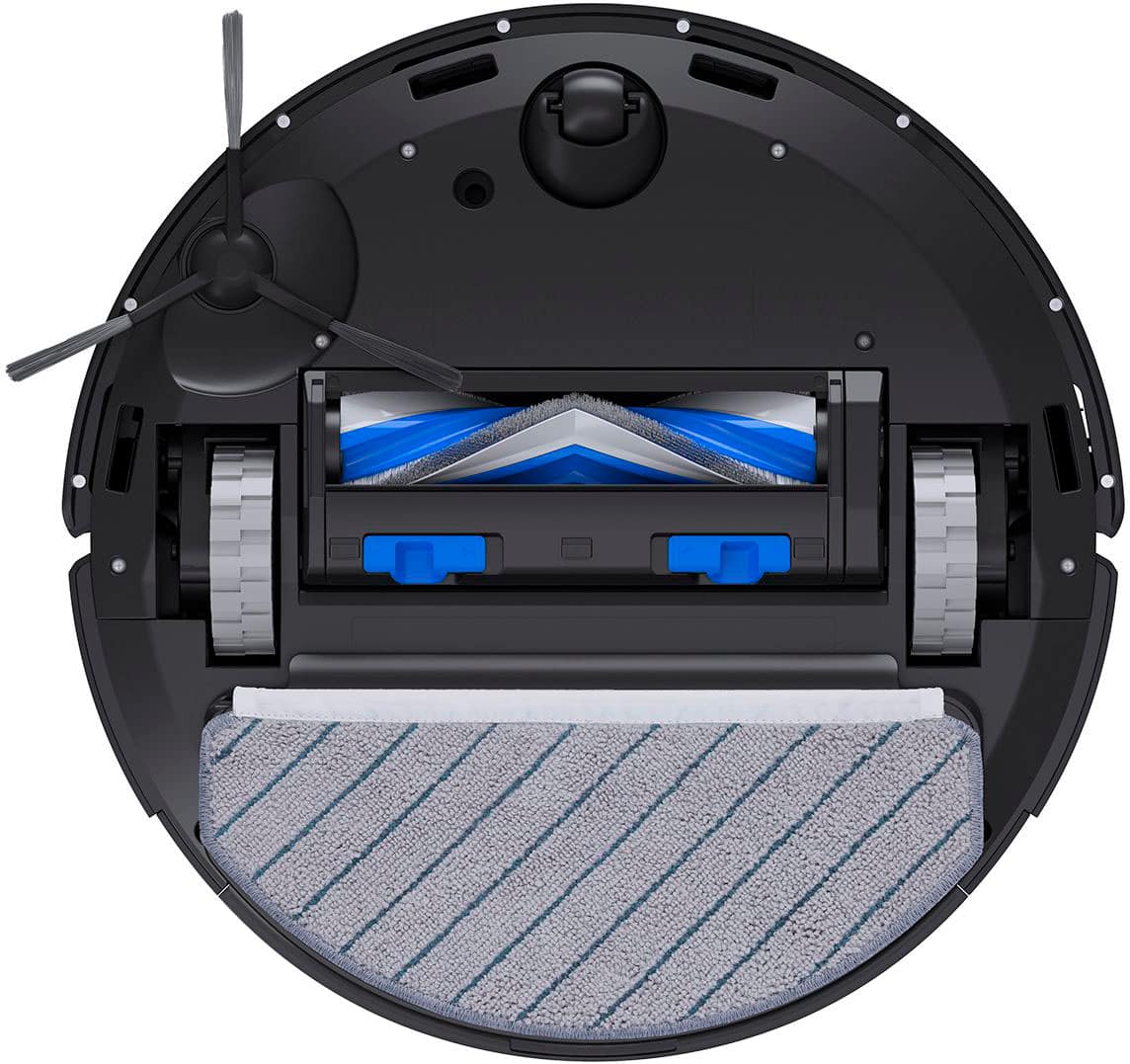
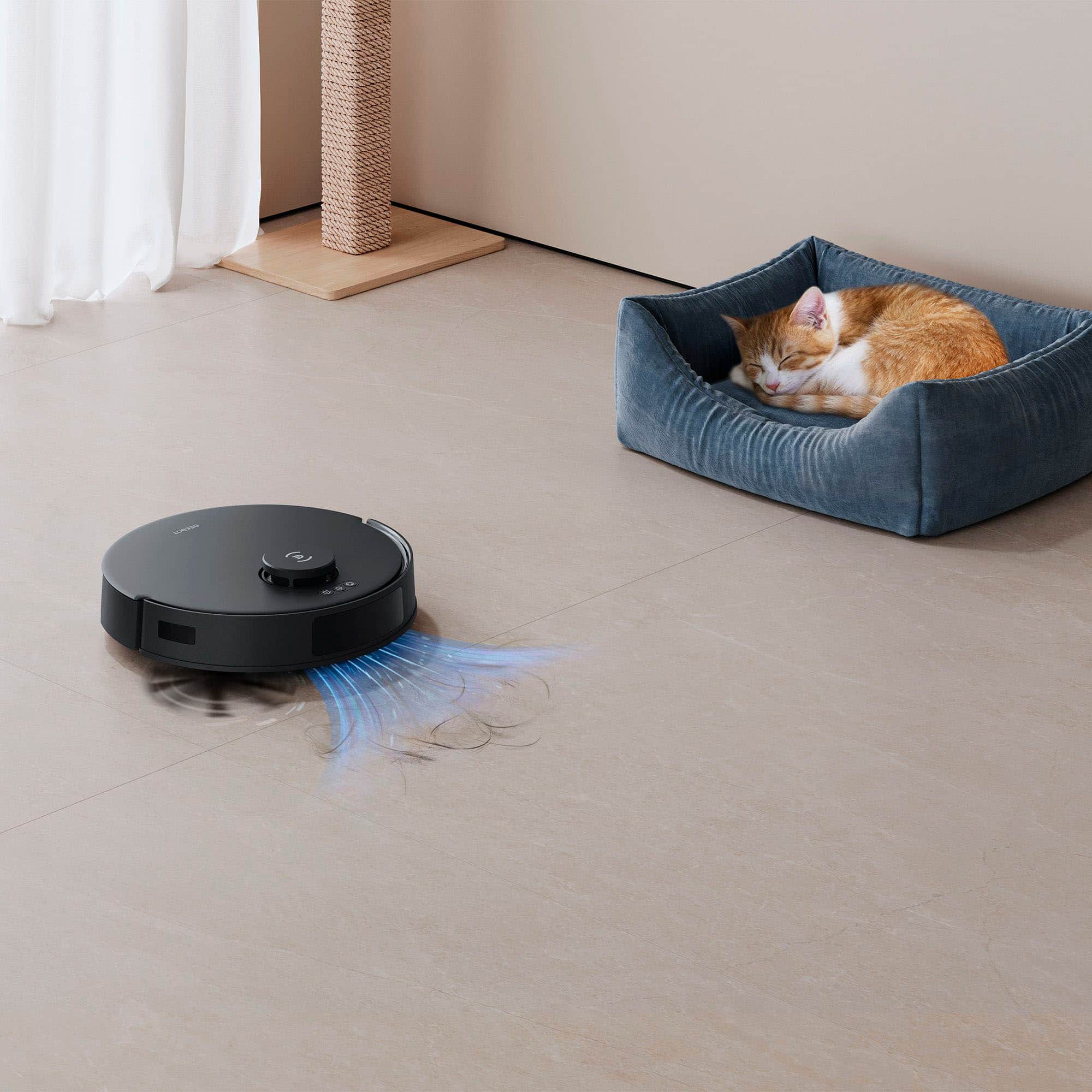
The ECOVACS Deebot N20 Pro Plus uses a traditional round design but compensates with efficient brush patterns and ZeroTangle technology - a specialized brush design that prevents hair from wrapping around the main roller. In practice, this means less maintenance for pet owners, though some manual untangling is still occasionally necessary.
Based on user reviews and expert testing, both robots excel at picking up surface debris on hard floors and perform well on low-pile carpets. The Eufy edges ahead slightly on deep carpet cleaning due to its advanced carpet detection algorithms that automatically boost suction when needed.
This is where we see the most dramatic difference between these robots, and honestly, it's not even close.
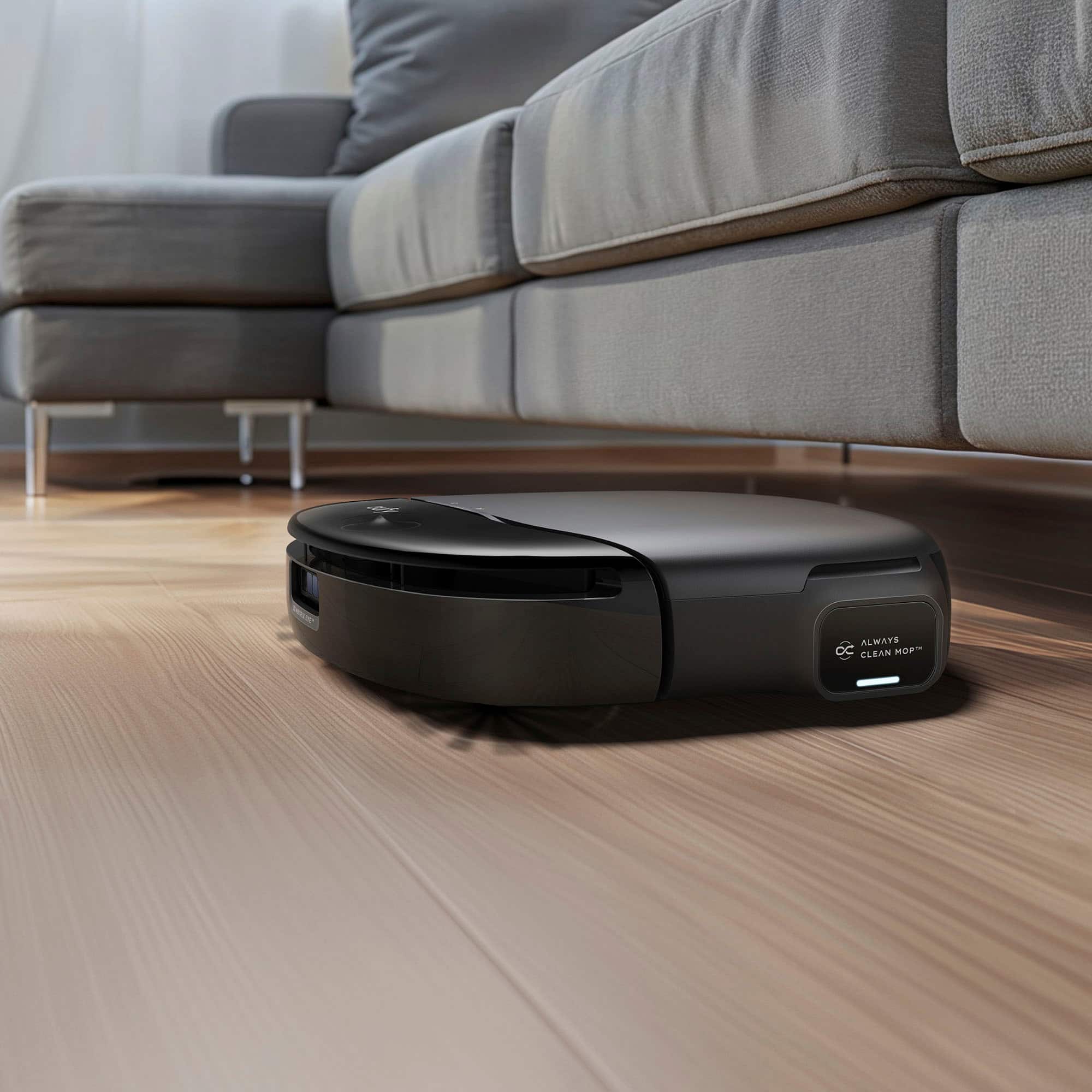
The Eufy S1 Pro Omni features what they call the HydroJet system - essentially a miniature version of a commercial floor scrubber. Instead of dragging a damp pad across your floors like traditional robot mops, it uses an 11.4-inch roller mop that spins at 170 RPM while applying 1 kilogram of downward pressure. Think of it like a tiny version of those rotating brushes at a car wash.
But here's the really clever part: the Eufy carries two separate water tanks onboard. One holds clean water mixed with detergent, while the other collects dirty water. As the mop roller spins, it's continuously cleaned with fresh water, meaning it's never just pushing dirty water around your floors. The system even includes ozone generation (a sanitizing process that kills bacteria) in the clean water supply.
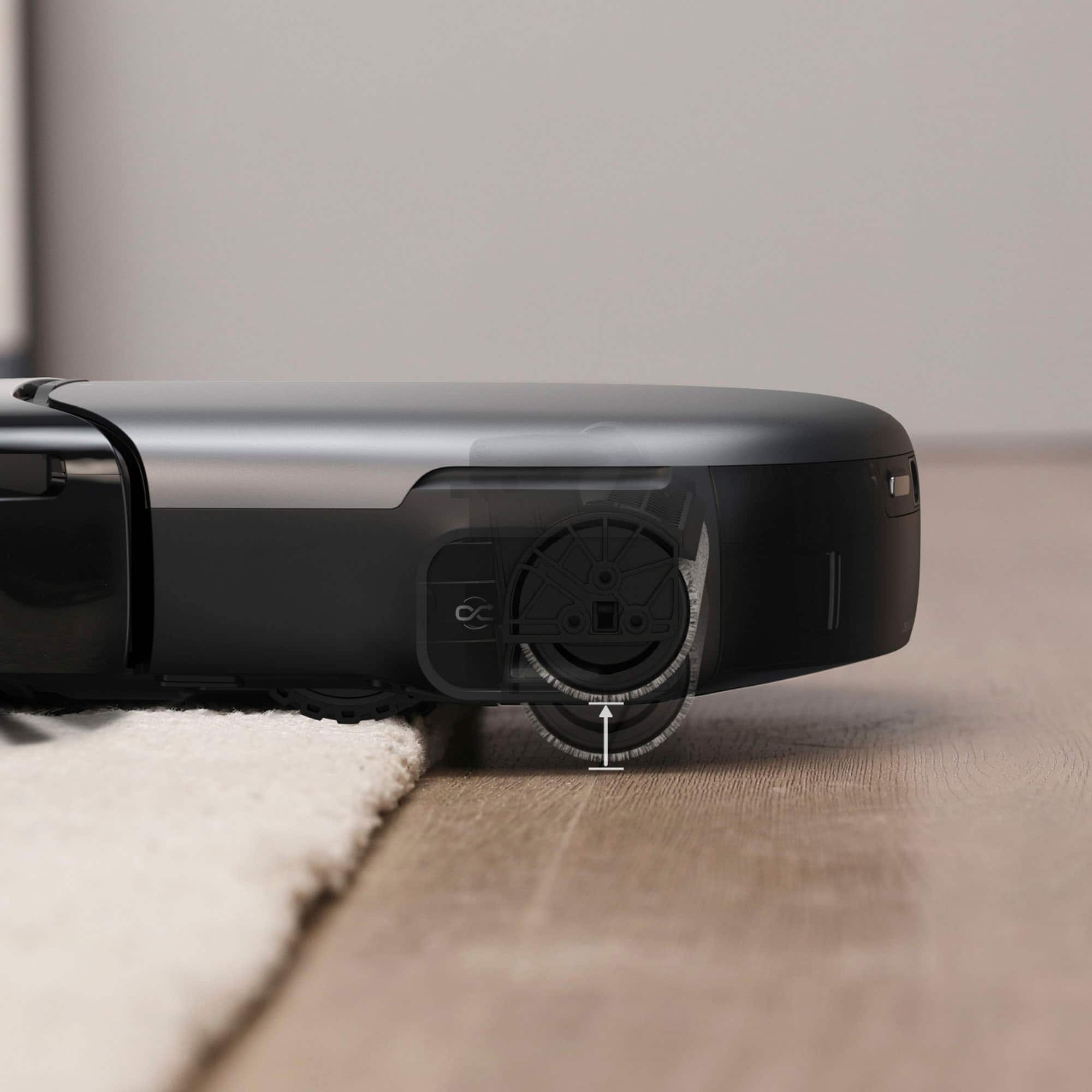
When the robot encounters carpet, the entire mop assembly automatically lifts 12mm off the floor to prevent wet carpet damage. This isn't just a slight raise like some competitors - it's a complete separation that protects your rugs.
The ECOVACS Deebot N20 Pro Plus takes a more traditional approach with its OZMO Pro 2.0 system. It uses a vibrating mop pad that oscillates to help break up stuck-on dirt, which is certainly better than just dragging a static pad around. You can adjust water flow through three levels via the app, and it includes carpet detection to avoid mopping rugs.
However, this system requires manual setup - you need to attach the mop pad and fill the water tank yourself. There's no automatic mop cleaning during operation, and no hot air drying when finished. It's effective for maintenance cleaning and light spills, but it won't tackle dried-on stains or sticky messes like the Eufy's system.
From our research into user experiences and professional reviews, the difference in mopping performance is substantial. The Eufy consistently outperforms not just the ECOVACS but most competitors in stain removal tests. If mopping is important to you - and it should be for complete floor care - this alone might justify the price difference.
Both robots use sophisticated navigation systems, but they take different technological approaches that reveal their target markets.
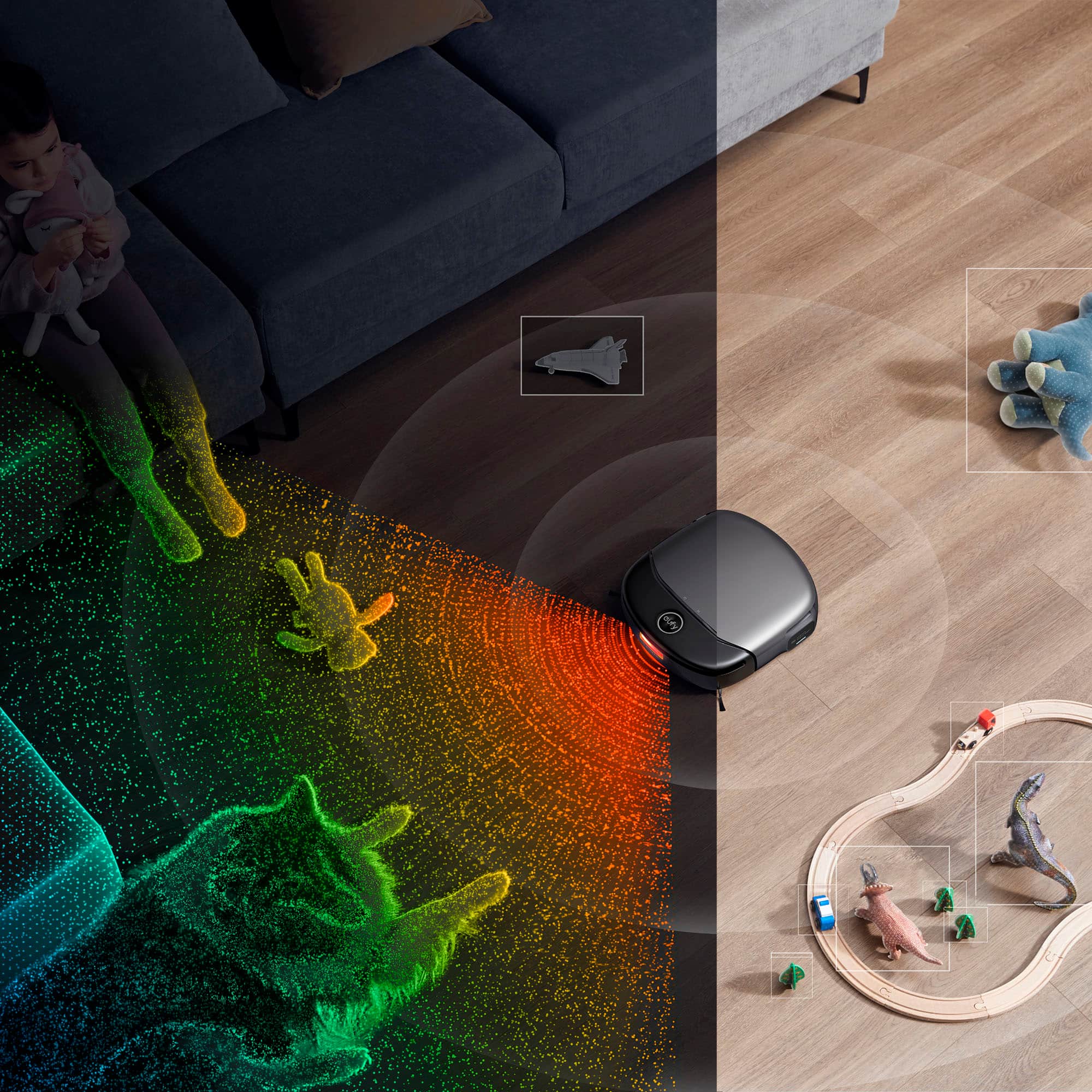
The Eufy S1 Pro Omni employs what they call 3D MatrixEye obstacle avoidance - a system that combines dual cameras with active infrared depth sensing. This is similar to how self-driving cars "see" the world around them.
The active binocular infrared imaging works like having two eyes that can judge depth and distance accurately. Combined with an RGB camera for color recognition, the system can identify and avoid over 100 different object types including cables, pet waste, shoes, and furniture legs. It even works in low light conditions thanks to the infrared sensors.
This sophisticated vision system creates real-time 3D maps of obstacles, allowing the robot to navigate around them rather than just bumping into things and backing away. It's particularly impressive with pet waste avoidance - a feature that becomes critically important if you have dogs or cats that might have accidents.
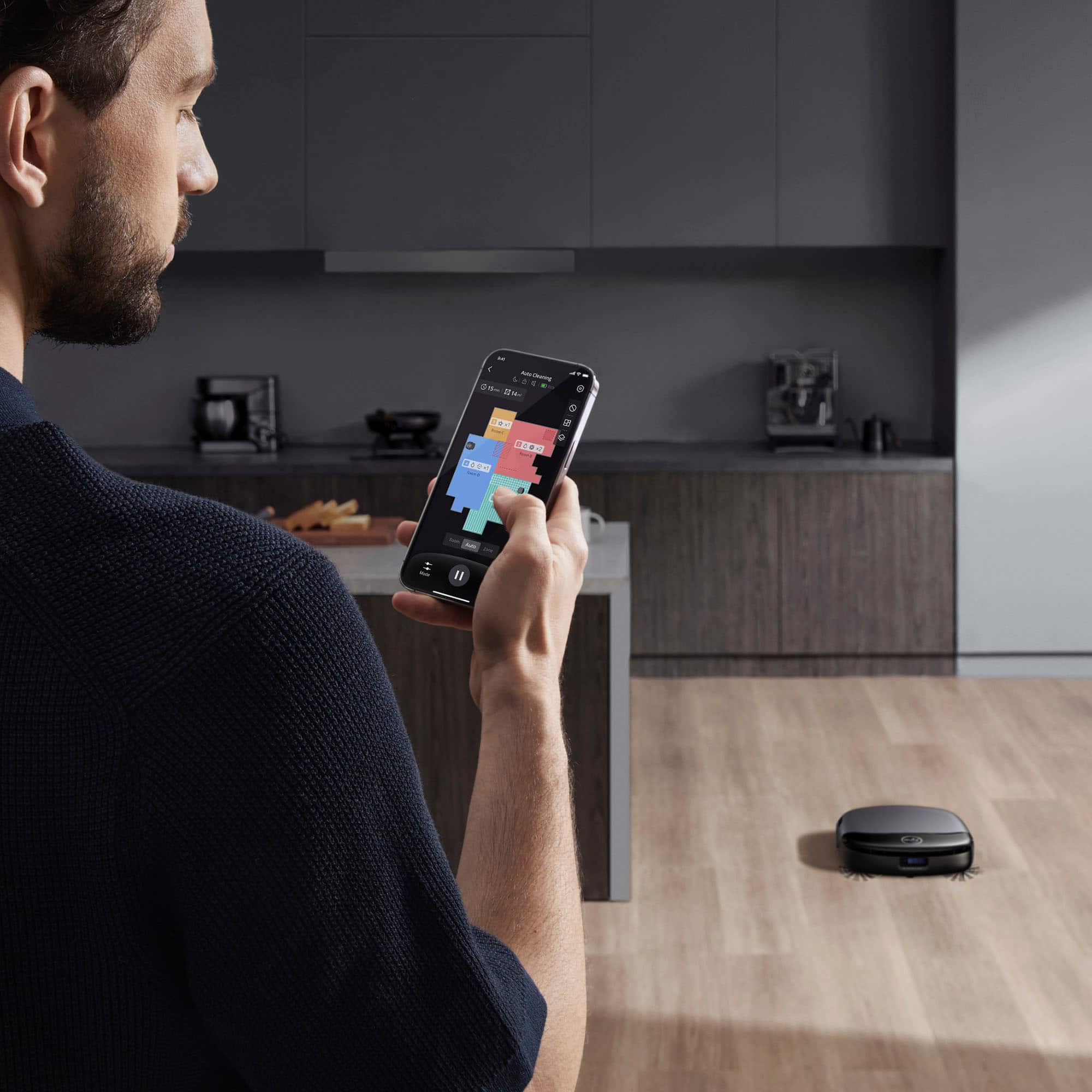
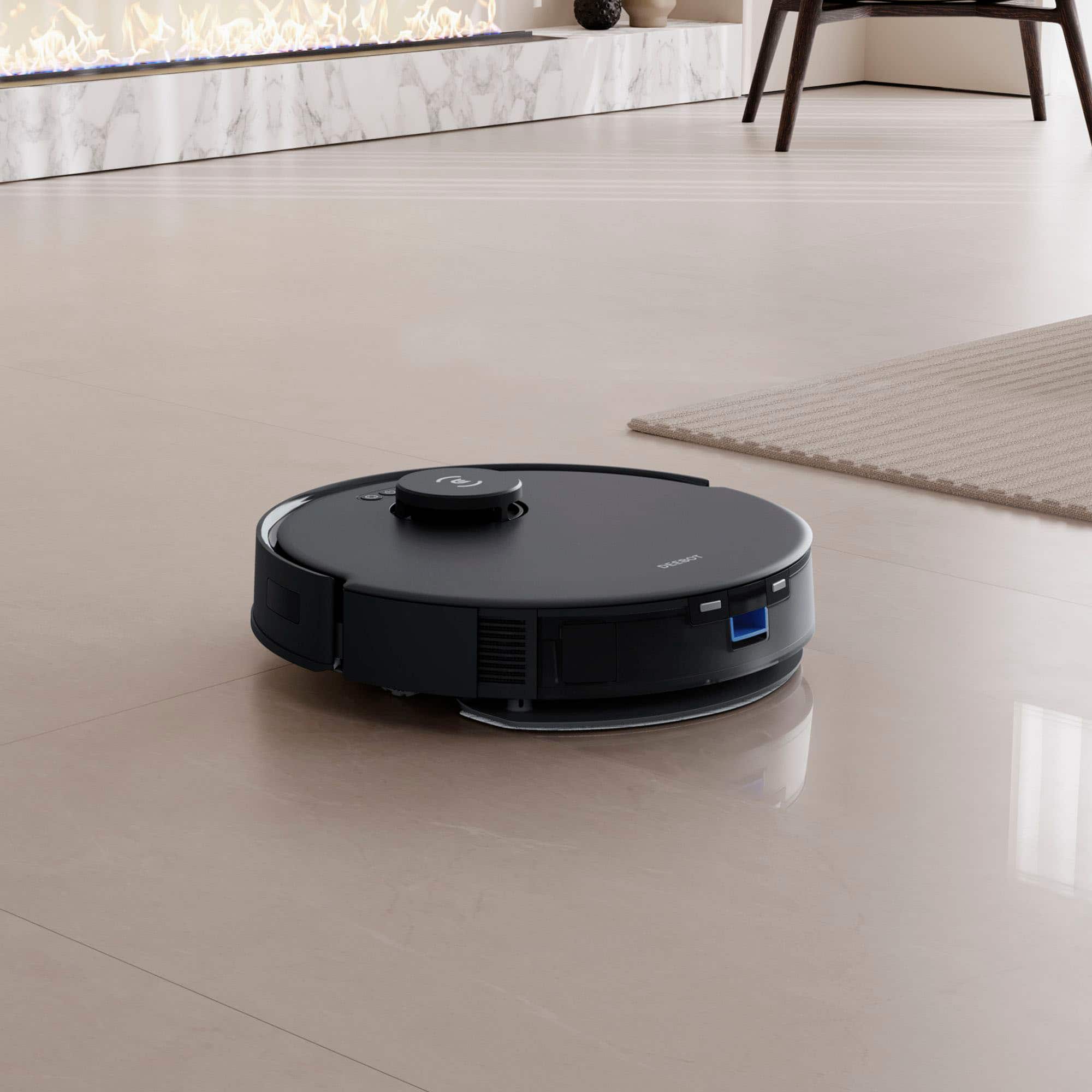
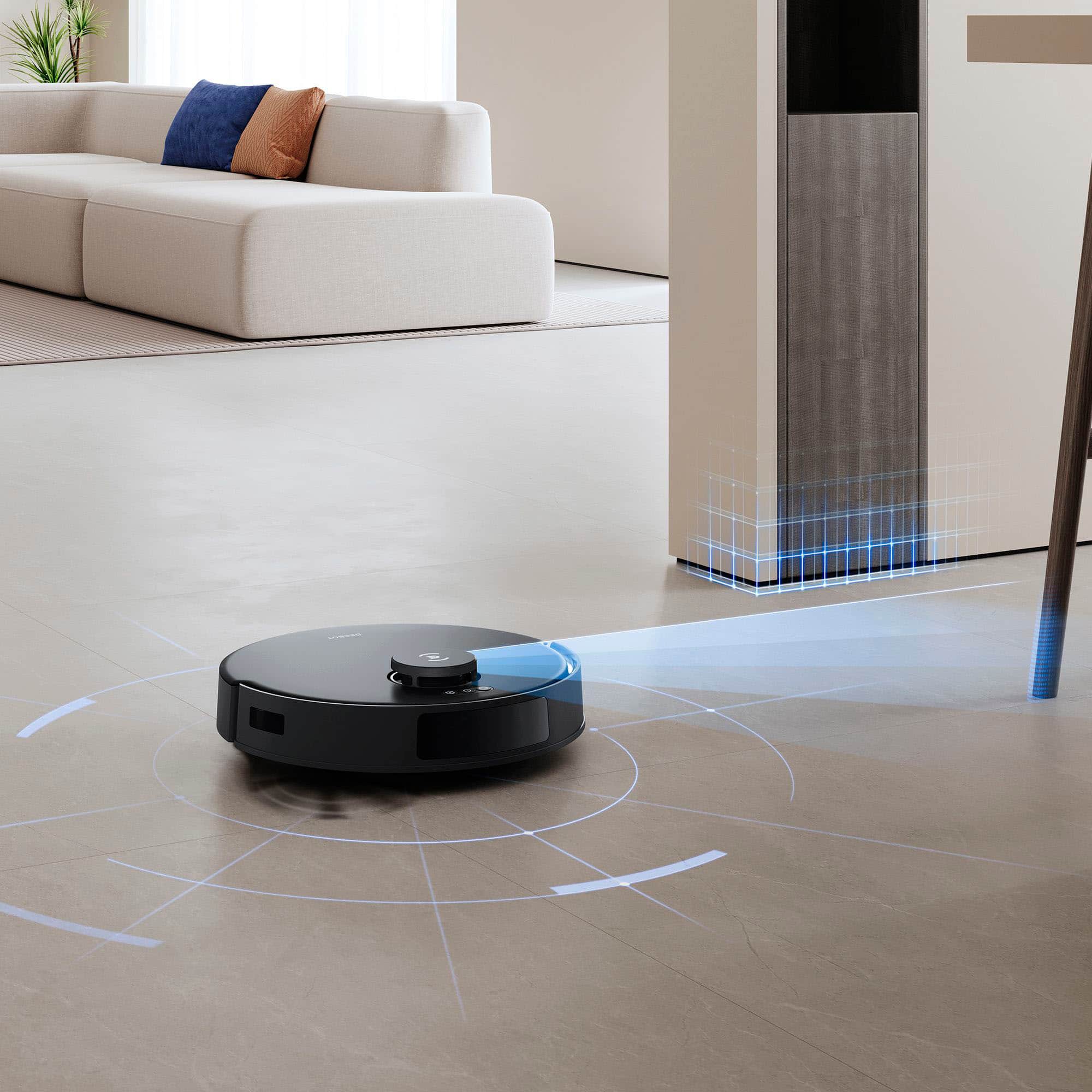
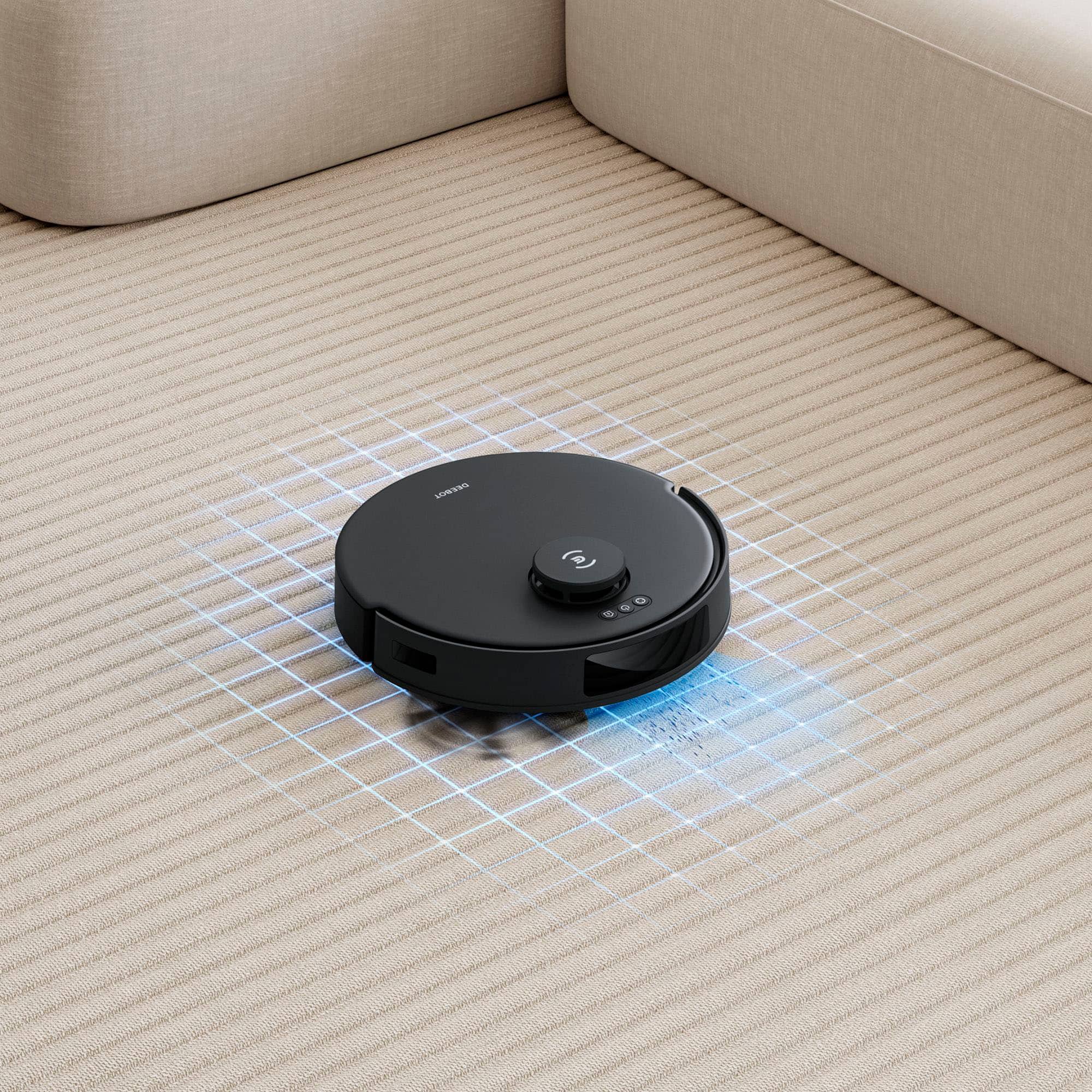
The ECOVACS Deebot N20 Pro Plus uses TrueMapping 2.0 based on laser radar (LiDAR) technology. A spinning laser sensor on top of the robot continuously measures distances to walls and furniture, creating precise maps accurate to within 10 millimeters.
This laser-based system excels at efficient room-to-room navigation and can complete initial mapping in just 5-8 minutes - significantly faster than camera-based systems. It's incredibly reliable for basic navigation and rarely gets lost or confused about its location.
However, laser systems have limitations. They can detect large obstacles but struggle with smaller objects like cables, pet toys, or low-hanging furniture that might trap the robot. The ECOVACS includes basic carpet detection but lacks the sophisticated object recognition of the Eufy's camera system.
Based on user feedback and testing, both systems navigate efficiently in typical homes. The Eufy's advanced obstacle avoidance makes it better suited for homes with pets, children, or cluttered environments. It's particularly valuable in home theater setups where you might have multiple cables running between components, as it can identify and navigate around them rather than getting tangled.
The ECOVACS system works excellently in straightforward home layouts and is actually preferred by some users who find the Eufy's obstacle avoidance overly cautious in certain situations. It's fast, reliable, and gets the job done without overthinking the process.
This category showcases the clearest difference between premium and budget philosophies.
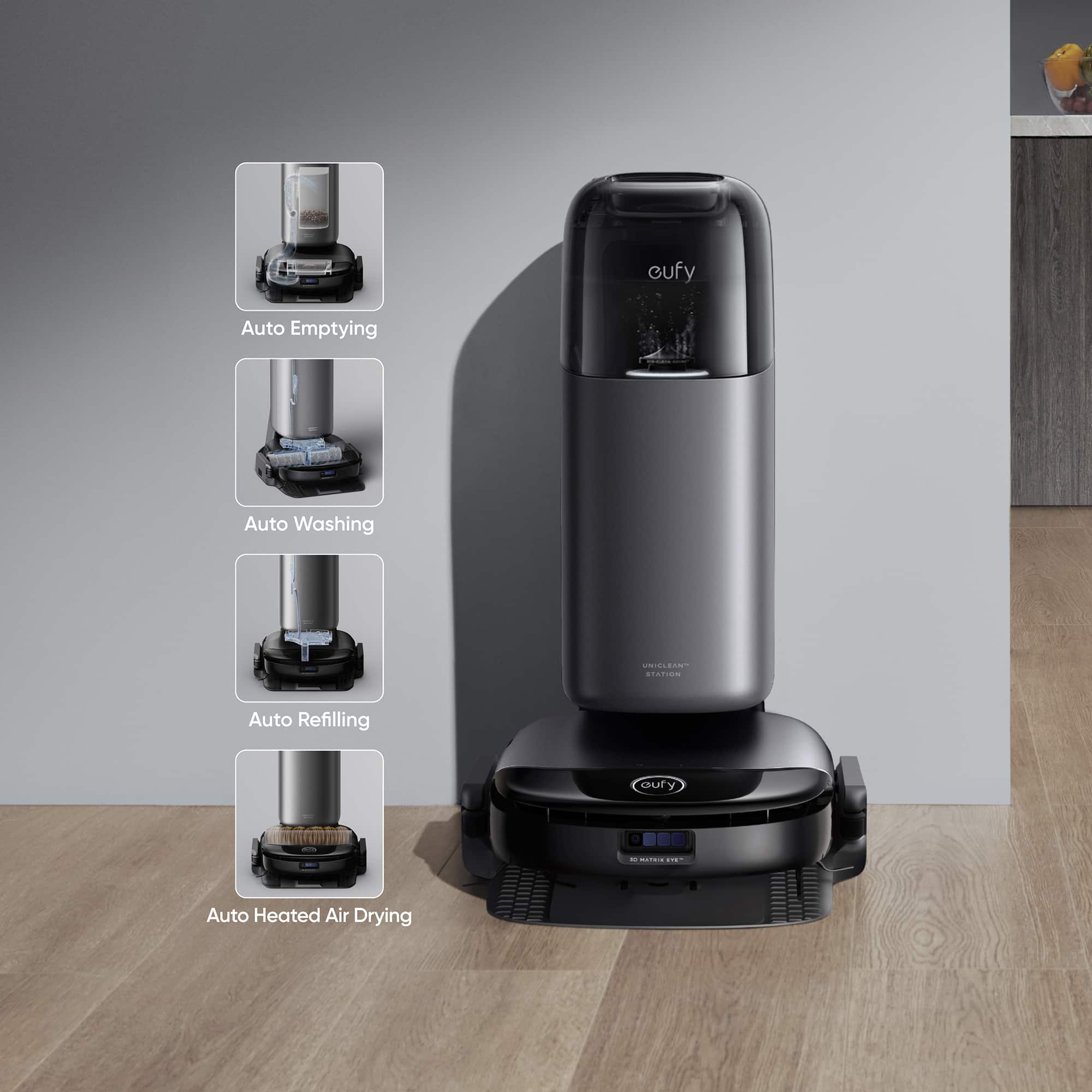
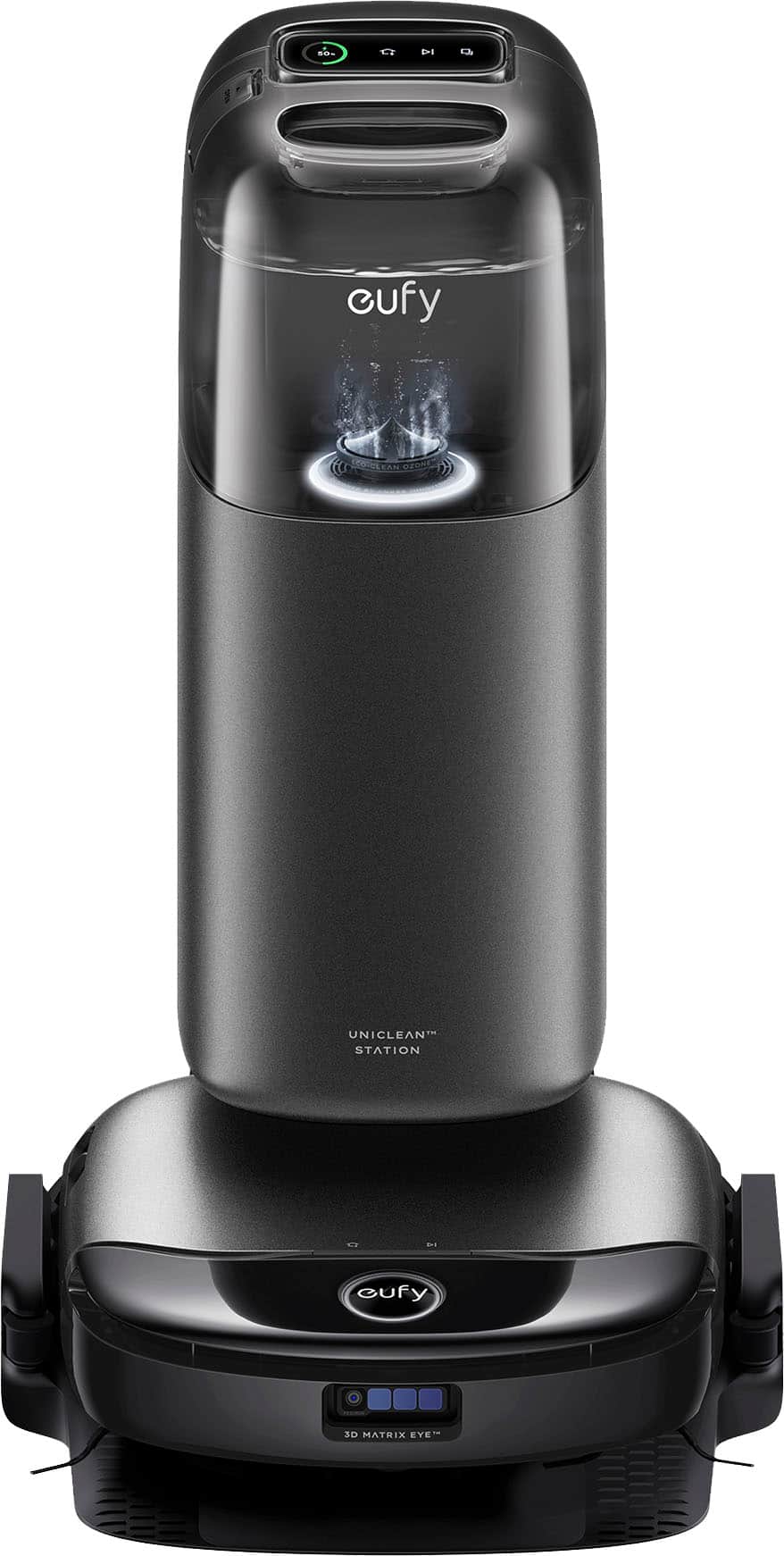
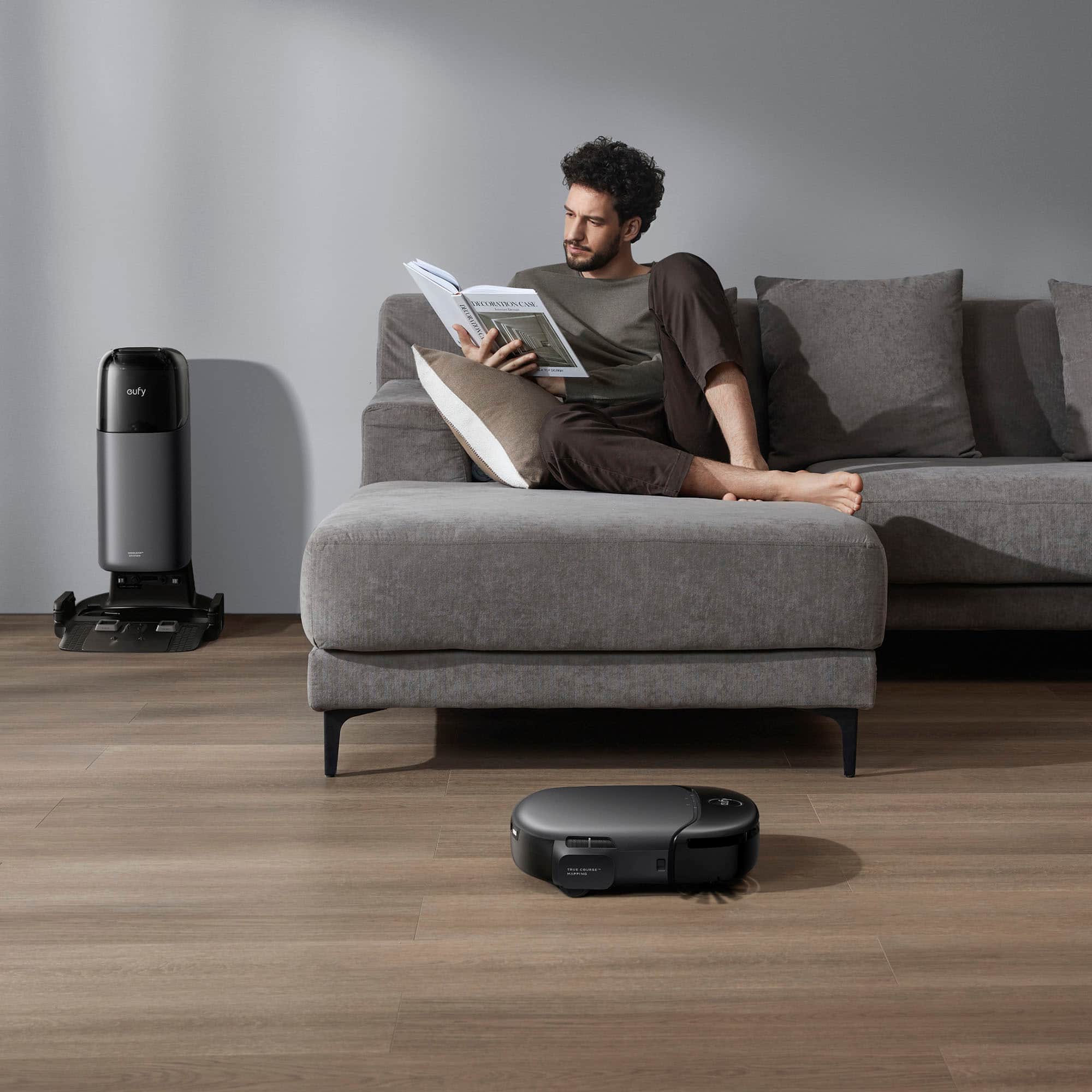
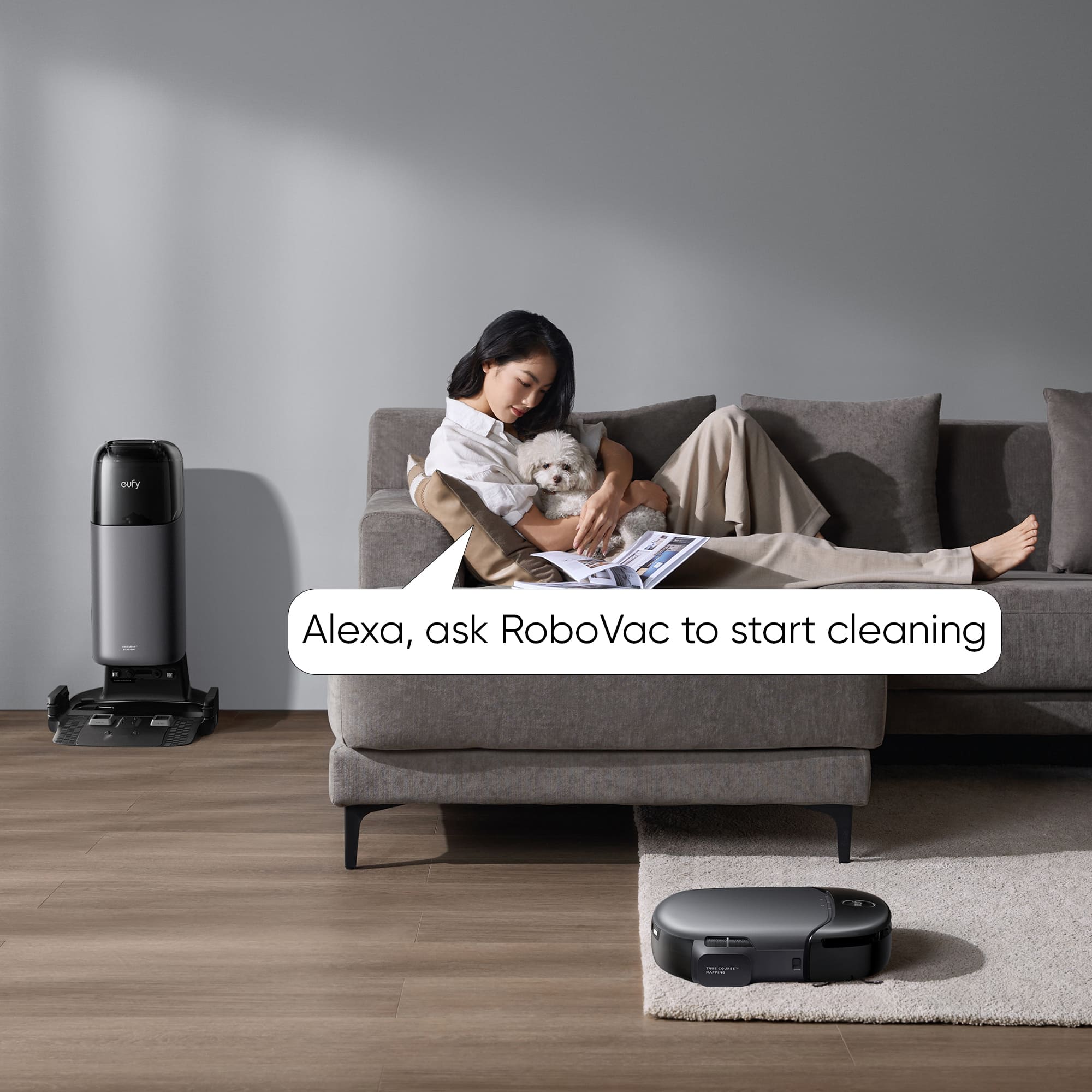
The Eufy S1 Pro Omni comes with what they call the UniClean Station - essentially a mini cleaning facility for your robot. When the robot returns to dock, the station automatically:
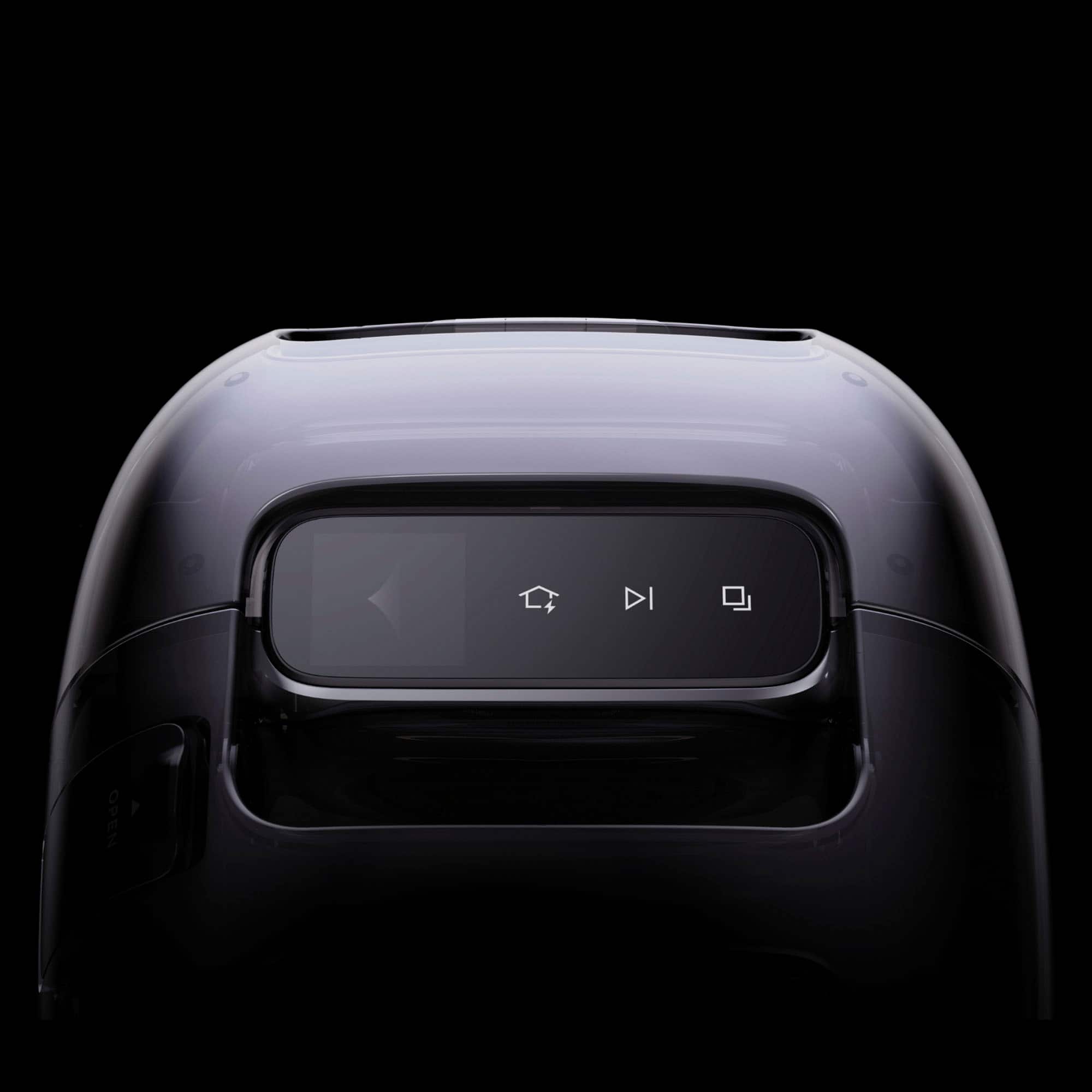
The station even includes an LCD touch panel for starting cleaning cycles without using your phone. From a user maintenance perspective, you'll add detergent about once a month and empty the dirty water tank occasionally. That's it.
This level of automation comes at a cost beyond the initial purchase price. The Eufy requires proprietary detergent (around $20 per bottle at the time of writing), and replacement parts like dust bags, filters, and mop components carry premium pricing. However, the intervals between replacements are longer due to the system's efficiency.
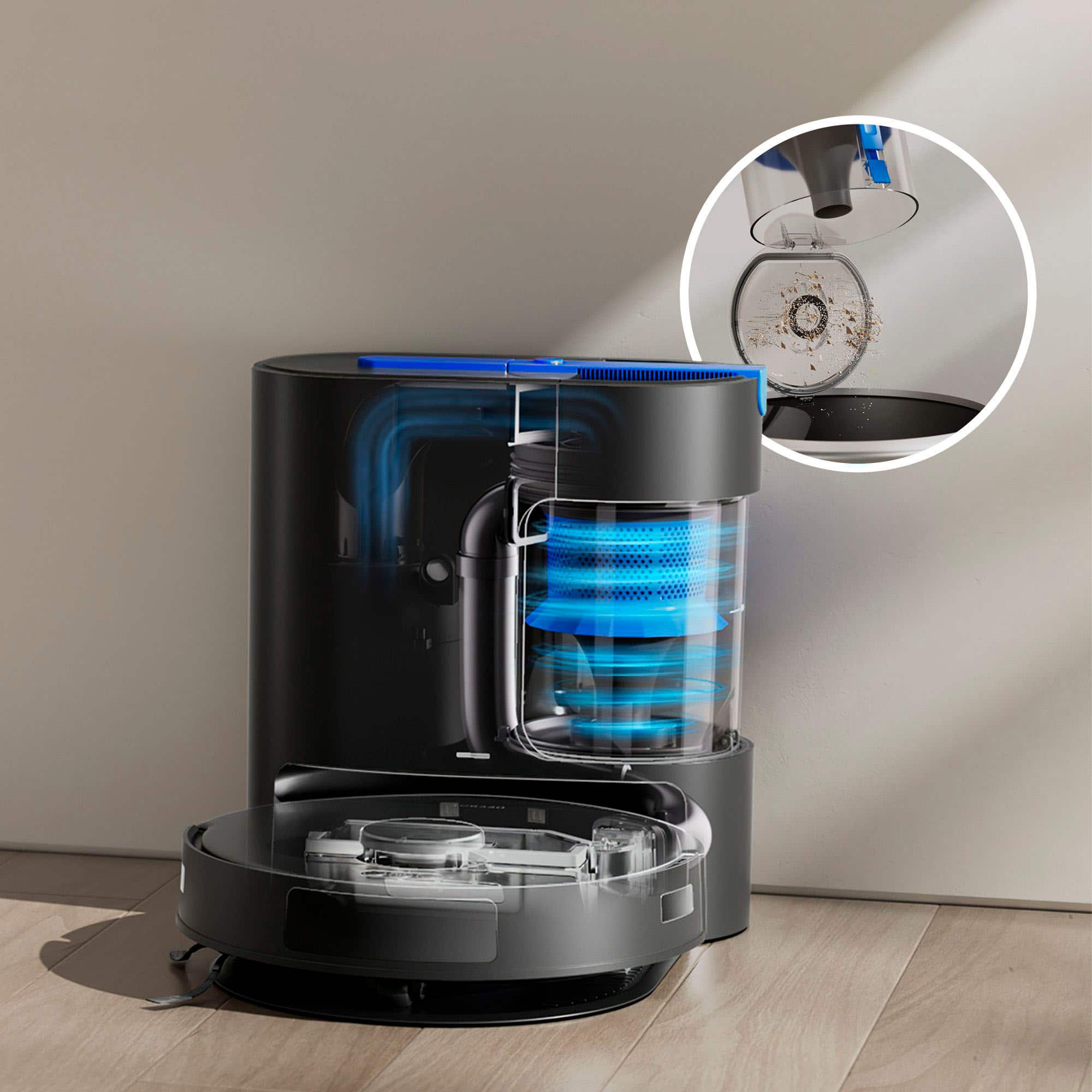
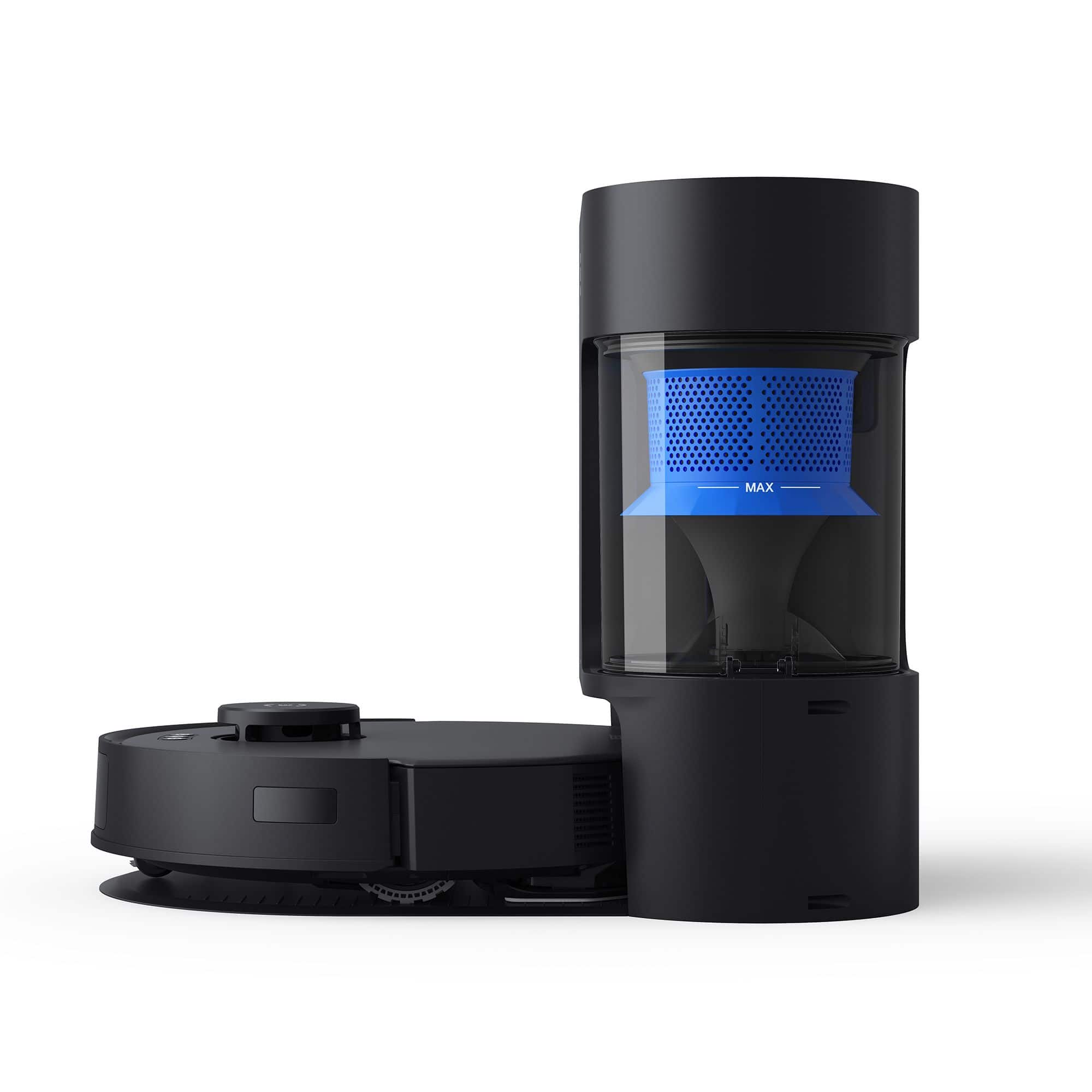
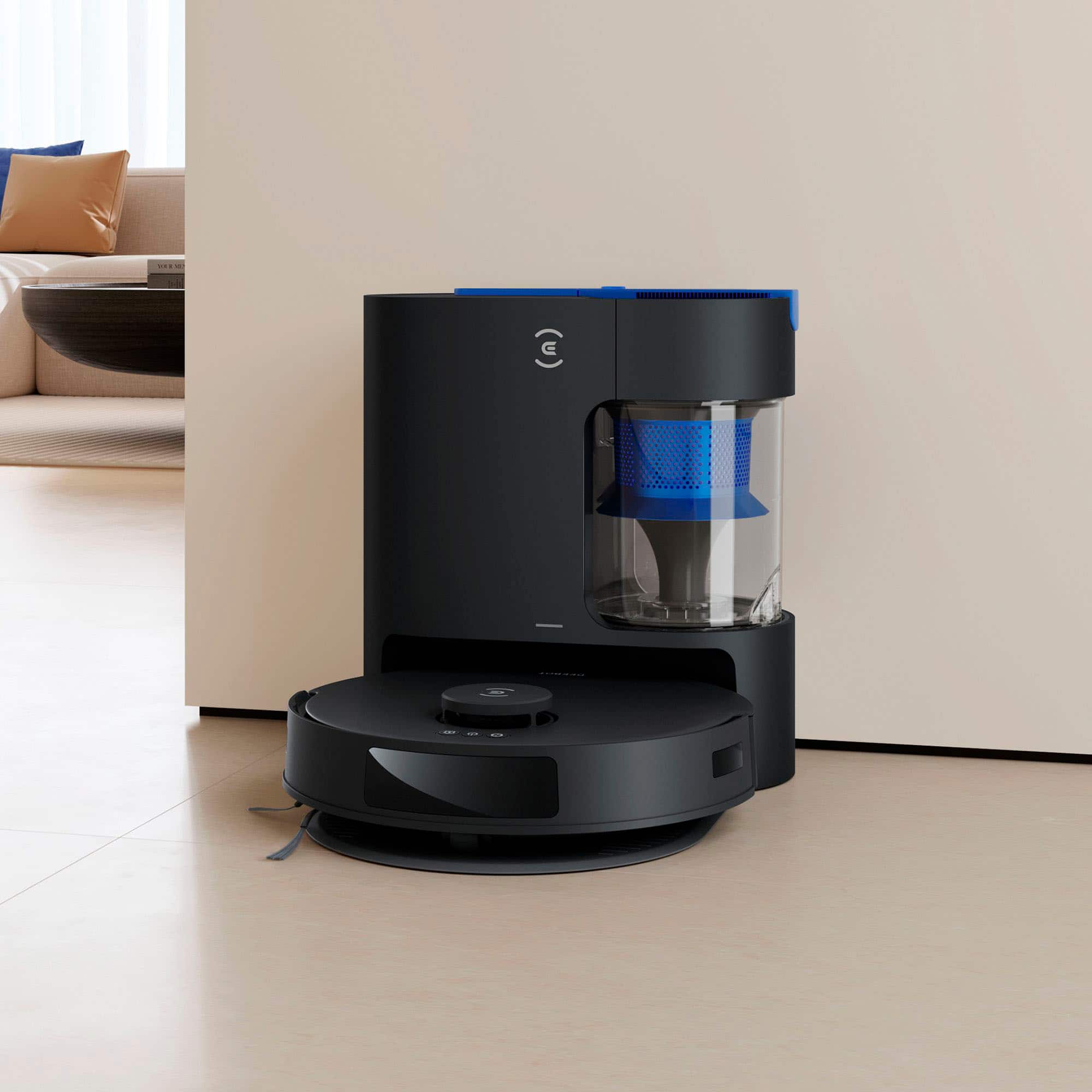
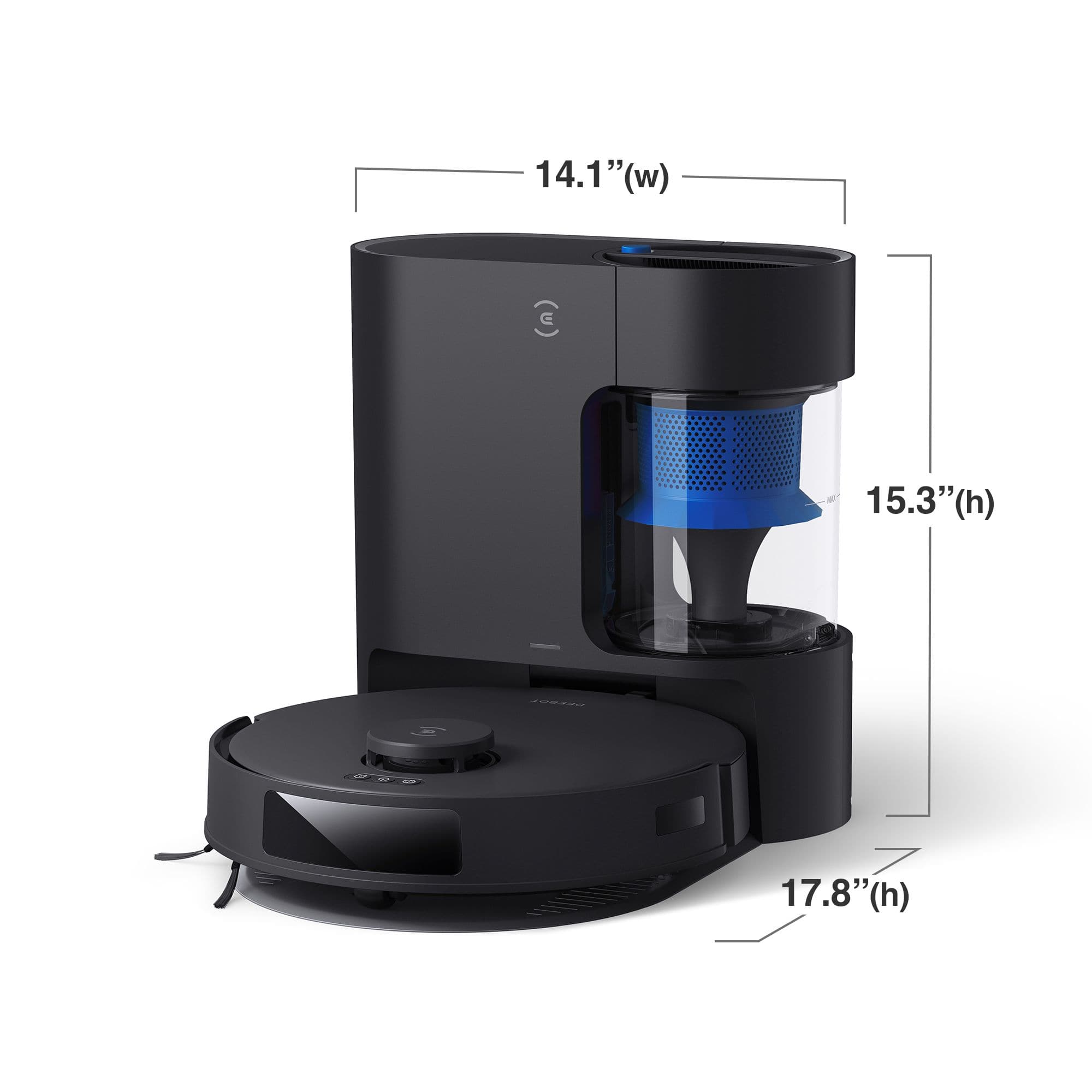
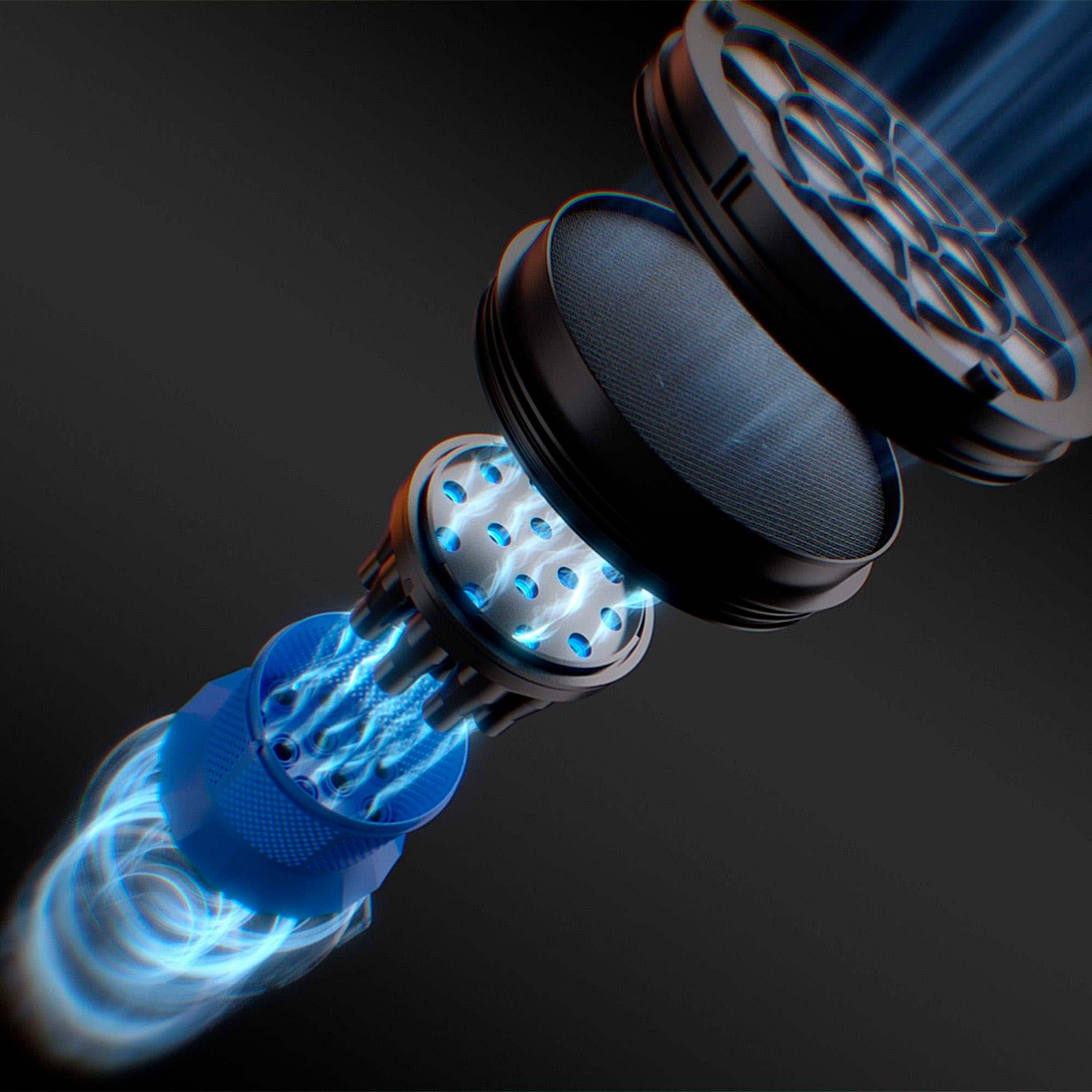
The ECOVACS Deebot N20 Pro Plus includes a bagless auto-empty station using what they call PureCyclone technology. This creates a cyclone effect (like a Dyson vacuum) to separate dust and debris without requiring replacement bags - a significant cost saving over time.
The station handles dustbin emptying reliably, but everything else requires manual intervention. You'll need to:
This approach keeps ongoing costs lower since you're not buying specialized detergents or premium replacement parts. Standard mop pads and filters are widely available and reasonably priced. However, it requires more hands-on involvement - you can't truly set it and forget it.
The ECOVACS Deebot N20 Pro Plus actually has an advantage here with its exceptional 300-minute runtime (though real-world usage typically sees 170 minutes). This extended battery life, combined with fast laser mapping, makes it well-suited for large single-level homes or apartment cleaning.
The Eufy S1 Pro Omni offers a shorter but still substantial 3.6-hour runtime, covering up to 1,976 square feet per charge. However, its efficient cleaning patterns and advanced navigation often complete the same space faster than competitors.
Both robots support multi-level mapping, so they can remember different floor layouts in multi-story homes.
For homes with pets, the Eufy's advanced obstacle avoidance and continuous mop cleaning provide clear advantages. The ability to recognize and avoid pet waste is invaluable, and the ozone sanitization helps eliminate odors and bacteria from accidents.
The ECOVACS performs well for pet hair pickup thanks to its ZeroTangle brush design, but the manual mop maintenance becomes more burdensome when dealing with pet-related messes regularly.
Both robots work well in home theater environments, but the Eufy S1 Pro Omni edges ahead due to its sophisticated cable detection and quiet operation. The camera-based navigation can identify and carefully navigate around entertainment center cables without getting tangled.
The laser-based navigation of the ECOVACS Deebot N20 Pro Plus works fine in clean, organized theater spaces but may struggle if cables are loose or if you have equipment on the floor.
Both robots demonstrate solid construction quality, though they target different durability expectations. The Eufy S1 Pro Omni uses premium materials throughout and includes sophisticated mechanical systems like the mop lifting mechanism and dual water pumps. This complexity potentially creates more failure points over time, but also delivers more functionality when working properly.
The ECOVACS Deebot N20 Pro Plus employs simpler, proven technologies that should require less maintenance over time. The bagless cyclone system has fewer moving parts than complex water management systems, potentially offering better long-term reliability.
Since their 2024 launches, both manufacturers have provided regular software updates improving navigation algorithms, cleaning patterns, and app functionality. The Eufy's advanced hardware benefits more from AI improvements, while the ECOVACS focuses on optimizing efficiency and reliability.
After extensively researching both options, here's how I'd recommend approaching this decision:
Value convenience above all else. If you want to set up automated cleaning schedules and basically forget about floor maintenance for weeks at a time, the Eufy's comprehensive automation justifies its premium pricing. The combination of superior mopping, automatic maintenance, and advanced obstacle avoidance creates a genuinely hands-off experience.
Have a complex home environment. Homes with pets, children, multiple cable runs, or frequently changing layouts benefit enormously from the advanced vision system. The ability to recognize and adapt to obstacles rather than just avoiding them makes cleaning more thorough and reliable.
Prioritize cleaning performance. The HydroJet mopping system delivers genuinely superior results on hard floors. If you currently mop manually and want a robot that can actually replace that task rather than just supplement it, the Eufy is worth the investment.
Want excellent value without compromises on core functionality. At roughly 60% less than premium competitors, this robot delivers flagship-level suction power and auto-emptying in a reliable package. It's an excellent introduction to high-end robot vacuum features without the premium price tag.
Prefer straightforward, reliable operation. The laser navigation is fast, accurate, and doesn't overthink obstacles. Some users actually prefer this approach over more complex systems that can occasionally be overly cautious.
Have predictable cleaning needs. If your primary need is regular vacuuming with occasional light mopping, the ECOVACS handles these tasks excellently while keeping ongoing costs reasonable through its bagless design and standard replacement parts.
The Eufy S1 Pro Omni represents genuine innovation in robot cleaning technology. Its mopping system, comprehensive automation, and advanced AI justify the premium pricing for users who value convenience and cleaning performance above cost considerations.
The ECOVACS Deebot N20 Pro Plus offers remarkable value by delivering core premium features at mainstream pricing. It's proof that you don't need to spend flagship money to get flagship suction power and basic automation.
Your choice ultimately depends on whether you're buying a cleaning appliance or a cleaning service. The ECOVACS is an excellent appliance that will require some involvement from you. The Eufy aspires to be a cleaning service that operates largely independently. Both approaches have merit, but they serve different needs and budgets.
In my view, first-time robot vacuum buyers should strongly consider starting with the ECOVACS to understand how these devices fit into their routine. If you find yourself wanting more automation and better mopping after using it, the premium features of robots like the Eufy will feel more justified. However, if ultimate convenience and cleaning performance are worth the premium to you, the Eufy delivers on its promises in ways that genuinely improve daily life.
| Eufy S1 Pro Omni | ECOVACS Deebot N20 Pro Plus |
|---|---|
| Suction Power - Higher numbers mean better debris pickup, especially on carpets | |
| 8,000 Pa (flagship-level performance) | 8,000 Pa (identical raw power) |
| Mopping System - The biggest differentiator between these models | |
| HydroJet rotating roller with dual water tanks, continuous self-cleaning, ozone sanitization | OZMO Pro 2.0 vibrating pad system, manual setup required |
| Navigation Technology - Affects cleaning efficiency and obstacle avoidance | |
| 3D MatrixEye dual cameras + infrared depth sensing (recognizes 100+ objects) | TrueMapping 2.0 laser radar (fast, reliable basic navigation) |
| Base Station Automation - Determines how hands-off your cleaning experience will be | |
| 10-in-1 UniClean Station: auto-empty, mop wash/dry, water refill, detergent dispensing | Bagless cyclone auto-empty only (manual mop washing and water refill) |
| Runtime and Coverage - Important for larger homes | |
| Up to 3.6 hours, covers 1,976 sq ft | Up to 300 minutes advertised (170 practical), covers 5,900 sq ft |
| Ongoing Costs - Factor in long-term expenses beyond purchase price | |
| Requires proprietary detergent, premium replacement parts but longer intervals | No bags needed (bagless), standard parts available, lower individual costs |
| Design and Cleaning Reach - Affects how thoroughly corners and edges get cleaned | |
| Square chassis for superior corner cleaning | Traditional round design with efficient brush patterns |
| Obstacle Avoidance Sophistication - Critical for homes with pets, cables, or clutter | |
| Advanced AI recognition including pet waste detection, works in low light | Basic laser obstacle detection, reliable but limited object recognition |
| Mop Maintenance - How much work you'll do maintaining the mopping function | |
| Fully automated: hot water washing, heated drying, automatic lifting for carpets | Manual pad attachment/removal, sink washing required, basic carpet detection |
| Target User - Who each robot serves best | |
| Premium users wanting maximum automation and superior mopping performance | Budget-conscious buyers seeking excellent value with core premium features |
Both the Eufy S1 Pro Omni and ECOVACS Deebot N20 Pro Plus deliver identical 8,000 Pa suction power, putting them in the top tier for debris pickup. The difference lies in their design - the Eufy S1 Pro Omni uses a square chassis that reaches corners better, while the ECOVACS Deebot N20 Pro Plus has anti-tangle technology that's great for pet hair.
The Eufy S1 Pro Omni features a revolutionary HydroJet system with a spinning roller mop, dual water tanks, and continuous self-cleaning during operation. The ECOVACS Deebot N20 Pro Plus uses a traditional vibrating mop pad that requires manual setup and washing. For serious mopping needs, the Eufy S1 Pro Omni significantly outperforms the ECOVACS model.
The Eufy S1 Pro Omni is superior for pet owners due to its advanced camera system that can recognize and avoid pet waste, plus ozone sanitization for bacteria elimination. While the ECOVACS Deebot N20 Pro Plus has good pet hair pickup with its ZeroTangle brush, it lacks the sophisticated obstacle avoidance and sanitization features of the Eufy S1 Pro Omni.
The Eufy S1 Pro Omni offers nearly hands-free operation with its 10-in-1 base station that automatically empties, washes the mop, and refills water tanks. The ECOVACS Deebot N20 Pro Plus requires more manual work - you'll need to attach mop pads, fill water tanks, and wash components yourself, though it does auto-empty the dustbin.
The Eufy S1 Pro Omni uses advanced 3D MatrixEye technology with dual cameras and infrared sensors to recognize over 100 object types. The ECOVACS Deebot N20 Pro Plus relies on laser radar mapping that's fast and reliable but less sophisticated for obstacle avoidance. Both create accurate maps, but the Eufy S1 Pro Omni handles complex environments better.
Yes, both work well around entertainment centers, but the Eufy S1 Pro Omni excels here due to its camera-based navigation that can identify and carefully navigate around cables without getting tangled. The ECOVACS Deebot N20 Pro Plus works fine in organized spaces but may struggle with loose cables since it relies on laser detection rather than visual recognition.
The ECOVACS Deebot N20 Pro Plus offers longer runtime with up to 300 minutes of operation (170 minutes in practice), making it better for very large homes. The Eufy S1 Pro Omni provides up to 3.6 hours of runtime but cleans more efficiently, often completing the same space faster due to its advanced navigation patterns.
The ECOVACS Deebot N20 Pro Plus provides exceptional value, offering flagship-level suction and auto-emptying at a significantly lower price point. The Eufy S1 Pro Omni costs considerably more but justifies the premium with superior mopping, advanced AI, and comprehensive automation that saves significant time and effort.
Both the Eufy S1 Pro Omni and ECOVACS Deebot N20 Pro Plus excel on hard floors and perform well on low-pile carpets with their 8,000 Pa suction. The Eufy S1 Pro Omni has an advantage with automatic mop lifting when it detects carpet, while the ECOVACS Deebot N20 Pro Plus includes carpet detection that boosts suction power automatically.
The Eufy S1 Pro Omni requires proprietary detergent and premium replacement parts but offers longer intervals between replacements. The ECOVACS Deebot N20 Pro Plus has lower ongoing costs with its bagless design, no required specialized solutions, and widely available standard replacement parts.
The ECOVACS Deebot N20 Pro Plus is ideal for first-time robot vacuum buyers, offering premium features like 8,000 Pa suction and auto-emptying at an accessible price point. The Eufy S1 Pro Omni is better suited for users who want the most advanced technology and are willing to invest significantly more for maximum convenience and performance.
The Eufy S1 Pro Omni features sophisticated obstacle avoidance with dual cameras that can identify specific objects like shoes, cables, and pet waste, even in low light. The ECOVACS Deebot N20 Pro Plus uses reliable laser-based detection for basic obstacle avoidance but cannot recognize specific object types, making the Eufy S1 Pro Omni better for cluttered or complex home environments.
We've done our best to create useful and informative comparisons to help you decide what product to buy. Our research uses advanced automated methods to create this comparison and perfection is not possible - please contact us for corrections or questions. These are the sites we've researched in the creation of this article: techradar.com - youtube.com - bestbuy.com - bestbuy.com - vacuumwars.com - youtube.com - rtings.com - thesmarthomehookup.com - youtube.com - youtube.com - youtube.com - youtube.com - qwertycompare.com - homedepot.com - manuals.plus - bestbuy.com - service.eufy.com - eufy.com - homedepot.com - eufy.com - cybershack.com.au - qwertycompare.com - eftm.com - versus.com - reviews.org - vacuumwars.com - vacuumwars.com - versus.com - youtube.com - rtings.com - youtube.com - youtube.com - vacuumwars.com - youtube.com - manuals.plus - ecovacs.com - youtube.com - ecovacs.com - ecovacs.com - bestbuy.com - youtube.com - chewy.com - smart-dots.com - ecovacs.com - youtube.com - ecovacs.com - ecovacs.com - device.report - ecovacsindia.in - youtube.com - techsalesonline.com.au

Privacy Policy
Terms and Conditions - Affiliate Policy
Home Security
© Copyright 2008-2026.
11816 Inwood Rd #1211, Dallas, TX 75244