

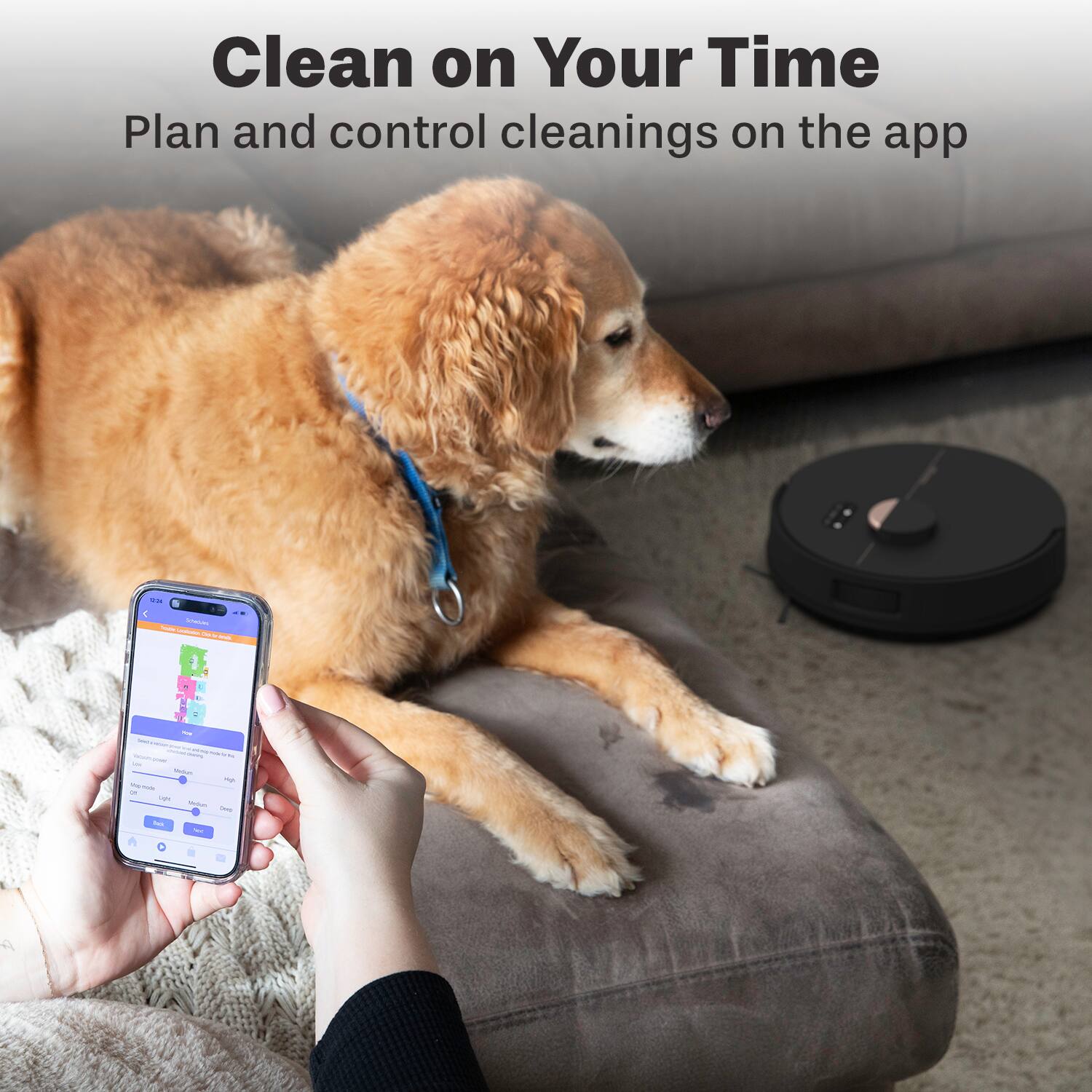
The robot vacuum market has exploded over the past few years, transforming from basic bump-and-go machines to sophisticated mapping devices that can handle complex cleaning routines. If you're a pet owner looking to automate your floor cleaning, you've probably noticed that not all robot vacuums are created equal – especially when it comes to dealing with pet hair, dander, and the inevitable accidents that come with furry family members.
Today we're comparing two pet-focused models from bObsweep: the PetHair Appetite APP220022 released in 2023, and the Dustin Plus PET24-7-214 that hit the market in 2024. While both are designed as vacuum-mop combos for pet owners, they take fundamentally different approaches to automated cleaning, and understanding these differences is crucial for making the right choice.
Before diving into specifics, let's establish what really matters in a robot vacuum. The most critical factors are cleaning performance (how much dirt and debris it actually picks up), navigation intelligence (how efficiently it moves around your home), and maintenance requirements (how much work it creates for you).
Suction power gets a lot of marketing attention, but it's not the whole story. A vacuum with 8,000 Pa (pascals – the unit measuring suction pressure) might sound impressive, but if its brush system can't direct debris into the suction path effectively, that power goes to waste. Similarly, advanced mapping technology is only valuable if it translates to better cleaning coverage and fewer missed spots.
For pet owners specifically, the ability to handle hair without tangling, manage fine particles like litter and dander, and maintain performance over time becomes even more important. The dustbin capacity and how often you need to empty it also plays a major role in the real-world convenience these machines provide.
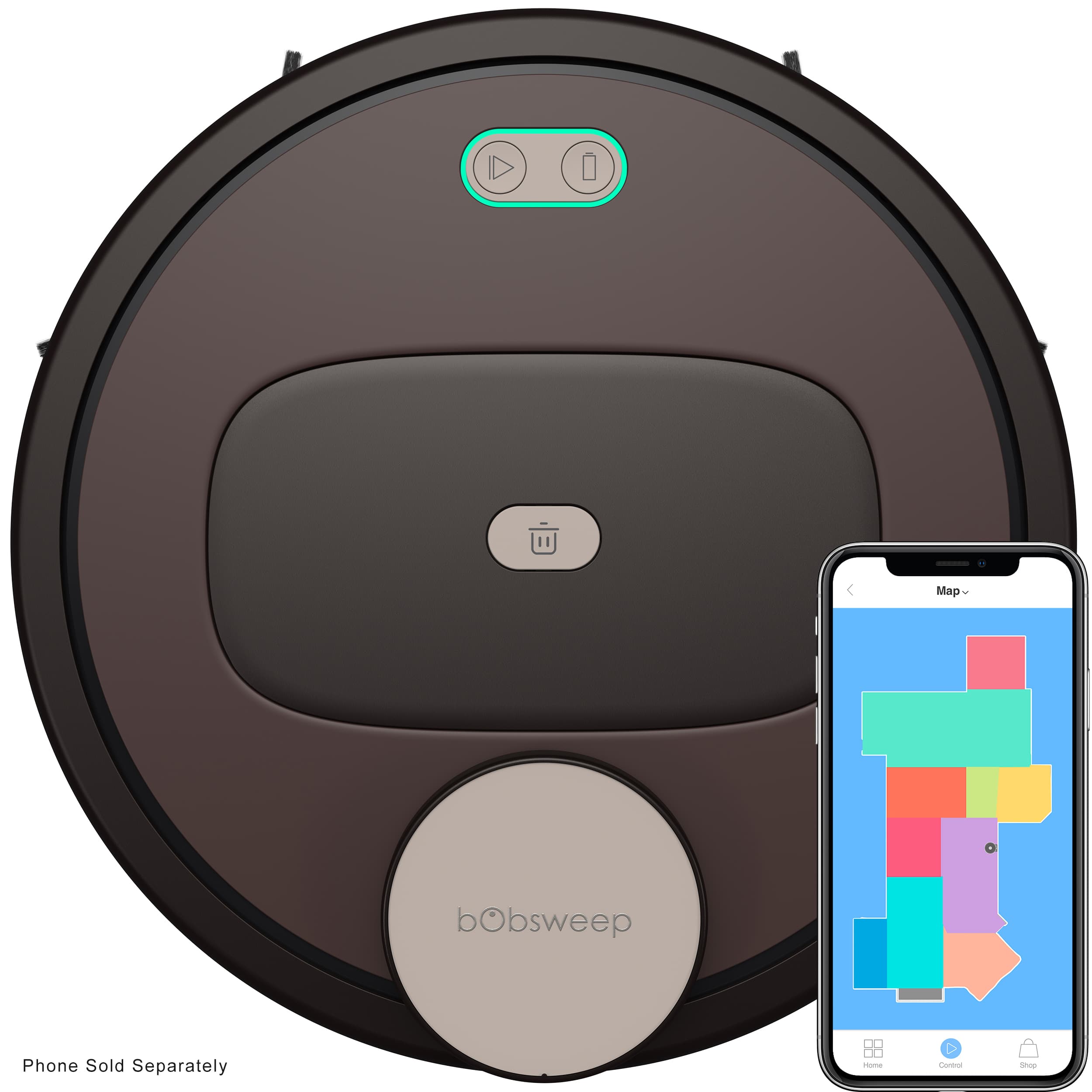
The PetHair Appetite represents bObsweep's philosophy that smart home devices shouldn't compromise your privacy. Released in 2023, it uses what the company calls "Realtime SLAM" (Simultaneous Localization and Mapping) – a technology that allows the robot to create and update maps of your home without sending any data to external servers.
This privacy-first approach means all the computational work happens locally on the robot itself. When the PetHair Appetite maps your living room, identifies your kitchen, or learns to avoid your pet's food bowls, that information stays in your home. No images, no floor plans, no cleaning patterns get transmitted to bObsweep's servers or anyone else's. In an era where smart devices are increasingly connected and data-hungry, this local processing approach is refreshingly straightforward.
The mapping technology itself is quite sophisticated. Unlike older robots that need multiple "training runs" to learn your home's layout, the PetHair Appetite can identify and map different rooms instantly on its first cleaning cycle. The SLAM technology continuously updates its understanding of your space, adapting to moved furniture or opened doors without getting confused.
From a performance standpoint, our research into professional testing reveals the PetHair Appetite excels on hard floors. Independent lab tests show it achieving 96-100% debris pickup rates for common household messes like spilled rice, breakfast cereal, and even kitty litter on hardwood surfaces. This level of performance puts it among the better performers in its price category, particularly for homes that are primarily hard flooring.
However, the picture becomes more complicated on carpets. On low-pile carpeting, the PetHair Appetite maintains good performance with larger debris (91-100% pickup) but struggles more with fine particles, managing only about 66% removal of sugar in testing. High-pile carpet performance drops further, with fine debris pickup falling to around 51%. This isn't uncommon for robot vacuums in this price range, but it's important to understand if your home has significant carpeted areas.
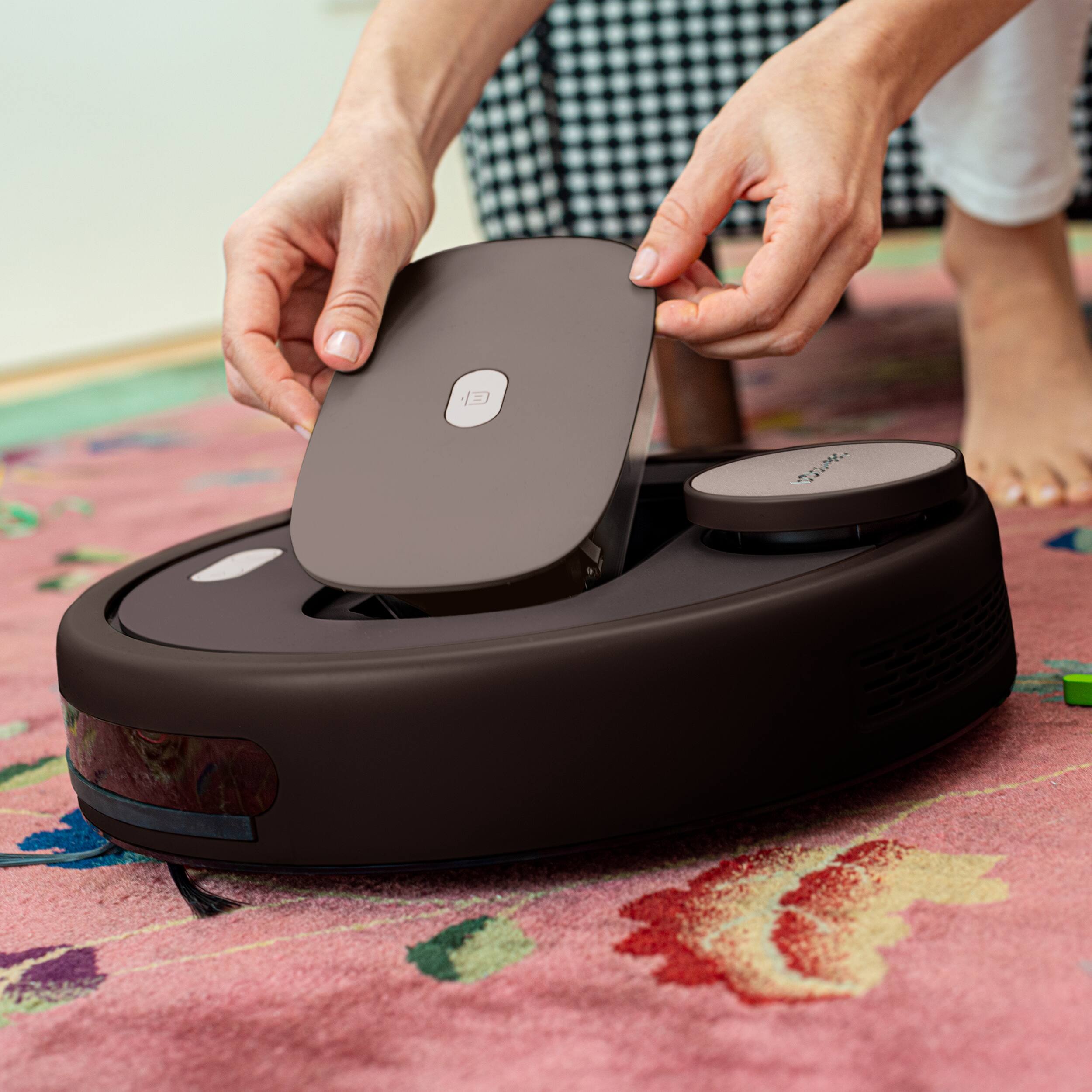
The 450mL dustbin is reasonably sized and washable, which helps with maintenance. The robot runs for about 70 minutes per charge and takes approximately 4.5 hours to fully recharge. If it runs out of battery mid-cleaning, it returns to its dock, charges up, and resumes where it left off – a feature that's become standard but remains genuinely useful for larger homes.
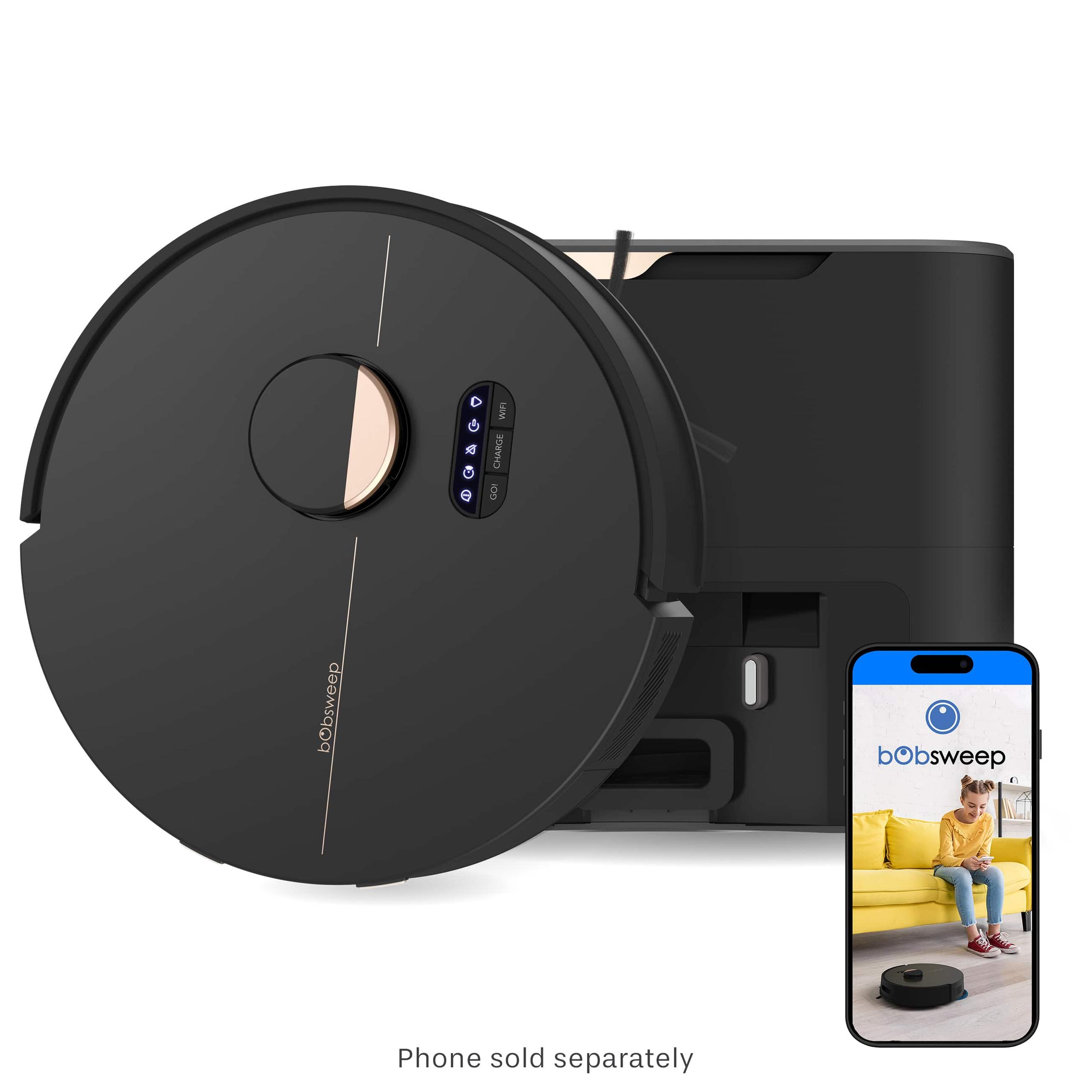
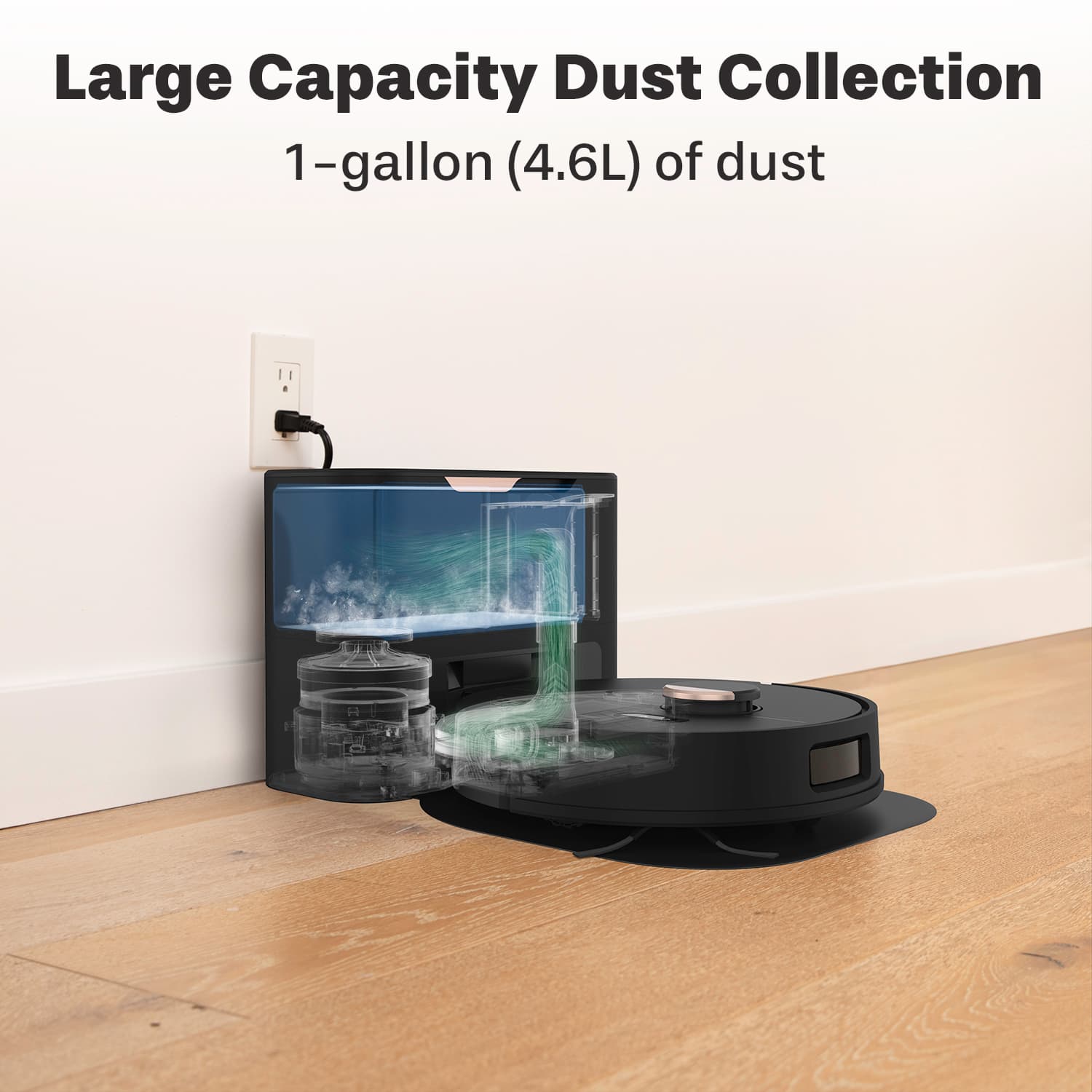
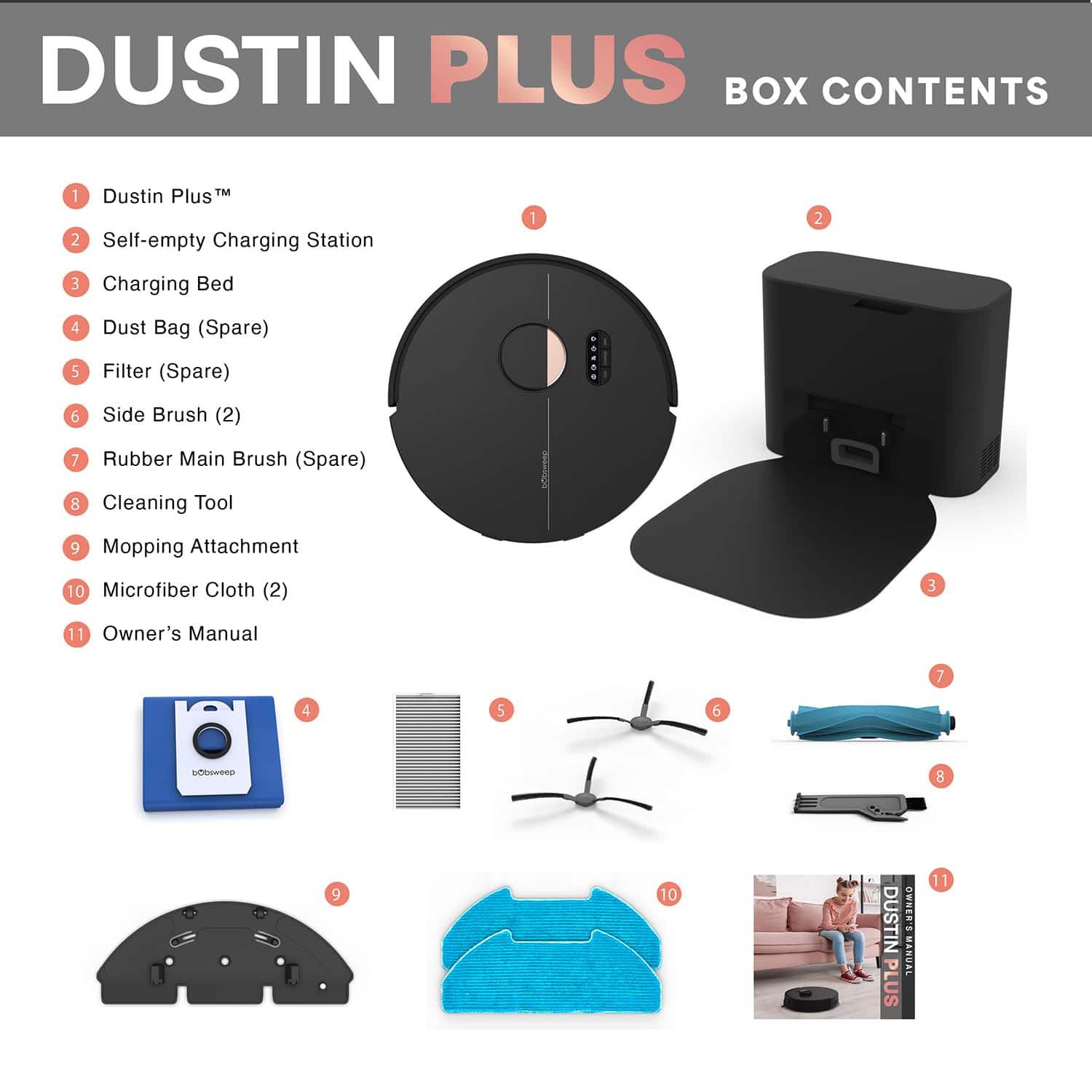
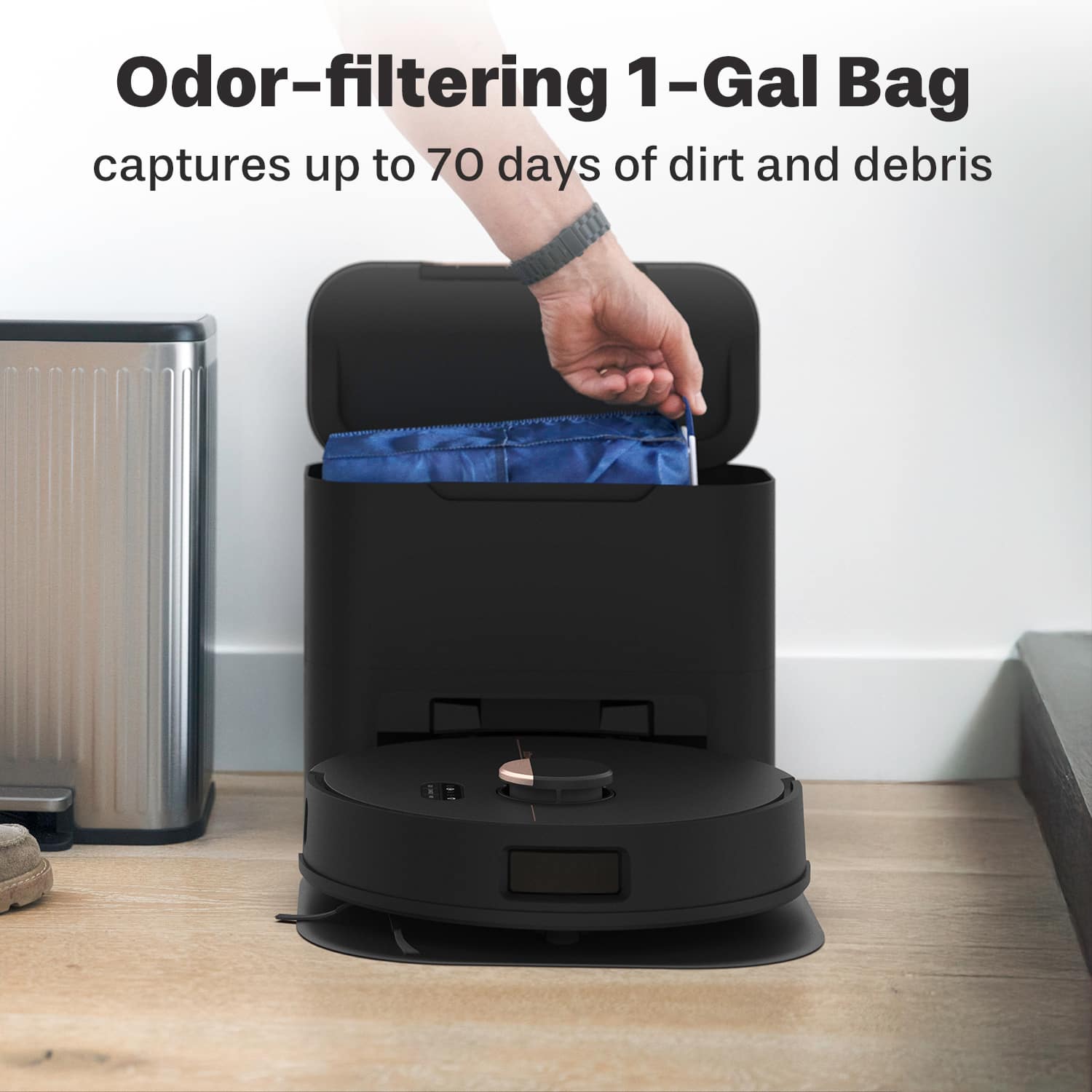
The Dustin Plus, launched in 2024, takes a completely different approach. Instead of focusing primarily on privacy and proven cleaning methods, it emphasizes convenience and raw specifications. The headline feature is its self-emptying base station with a massive 1-gallon capacity – more than double what most competing self-emptying models offer.
This isn't just about size, though. The Dustin Plus uses disposable dust bags reinforced with activated charcoal, which helps control odors – a particularly valuable feature for pet owners dealing with hair, dander, and occasional accidents. The company claims these bags only need changing every 100 days, which would make this one of the lowest-maintenance robot vacuums on the market.
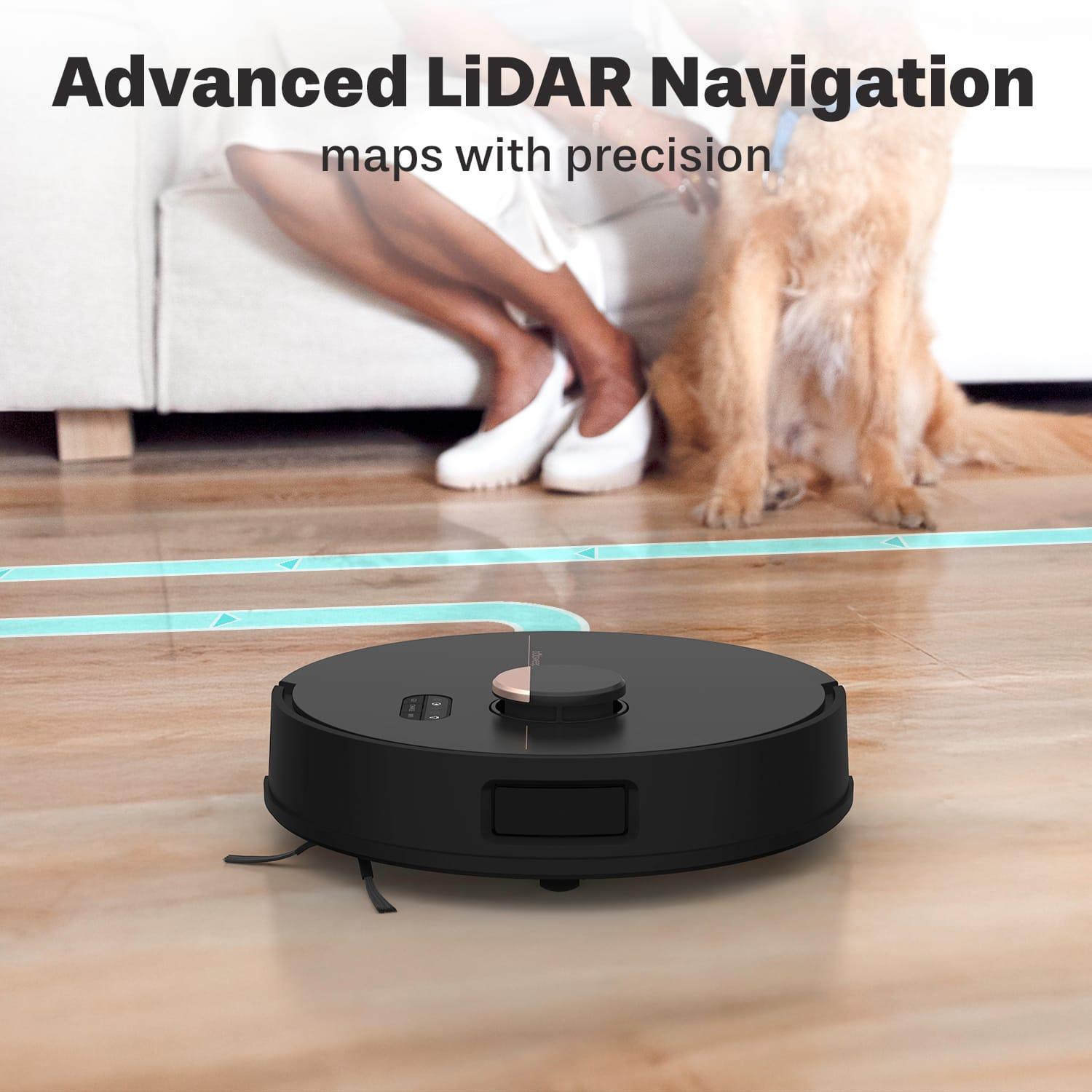
The navigation system combines LiDAR (Light Detection and Ranging) sensors with what bObsweep calls "Quantum SLAM" or QSLAM. LiDAR uses laser pulses to measure distances and create detailed environmental maps, similar to how self-driving cars navigate. This typically provides more precise mapping than camera-based systems, especially in low-light conditions.
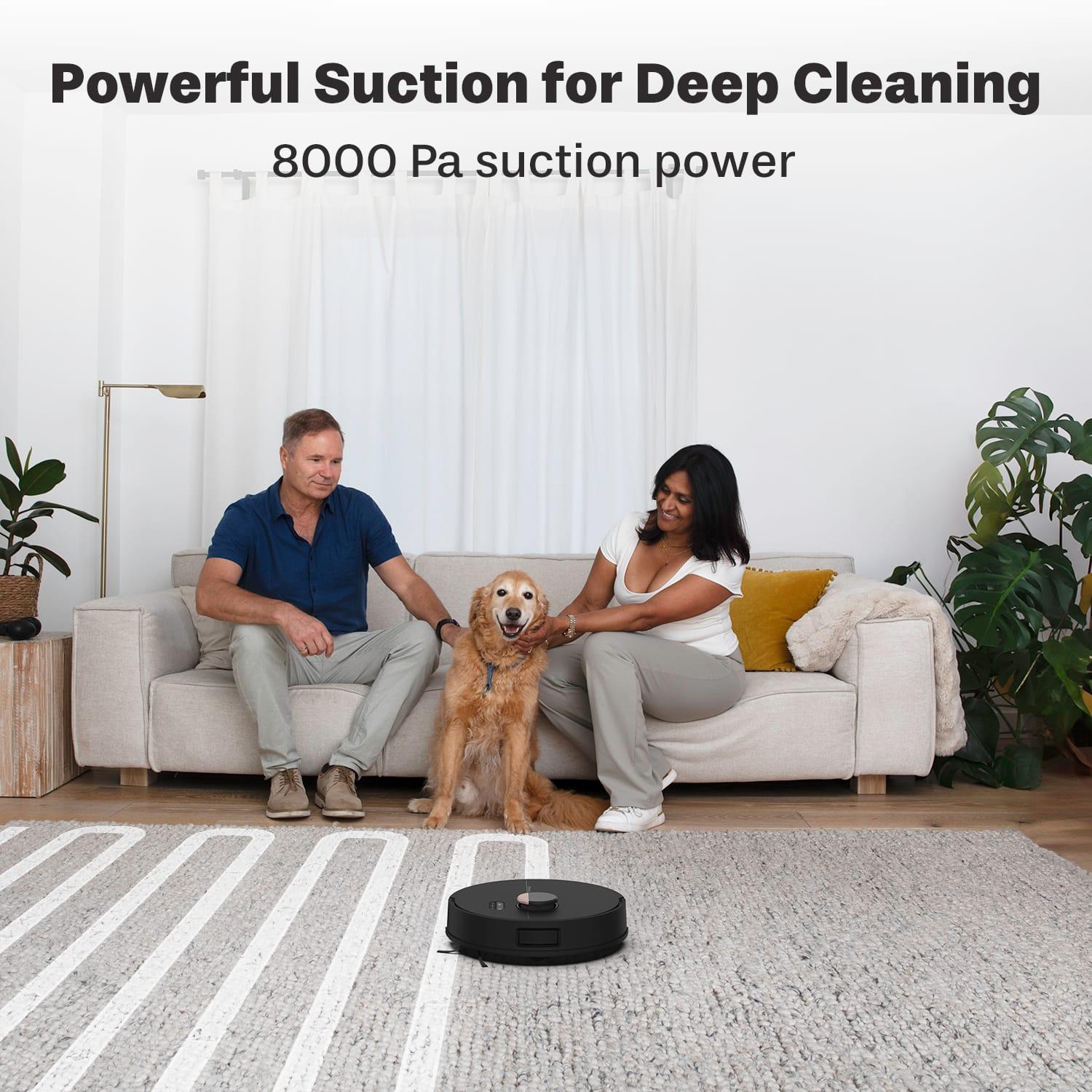
The 8,000 Pa suction specification is genuinely impressive on paper – most robot vacuums operate between 2,000-4,000 Pa. However, our analysis of professional testing reveals a significant disconnect between these impressive specs and real-world performance. Despite the high suction power, the Dustin Plus actually underperforms in debris pickup testing across multiple surface types.
On hard floors, the Dustin Plus struggles particularly with fine debris like sand, largely due to its side brush design that tends to fling lightweight particles away from the suction path rather than directing them inward. This is a fundamental engineering issue that high suction power alone can't overcome. The cleaning performance is inconsistent and generally disappointing given the specifications.
Carpet performance is even more problematic. Professional testing shows the Dustin Plus is inadequate at picking up fine debris on carpets and particularly poor with pet hair – often smearing and redistributing hair rather than collecting it effectively. This is particularly disappointing for a model specifically marketed to pet owners.
The battery life is stronger, offering 90-150 minutes of runtime depending on the power setting used. The robot will automatically adjust its route and resume cleaning after recharging if needed, which helps offset any single-session limitations.
Both robots include mopping functionality, but it's important to set realistic expectations. Our research into professional and user reviews consistently shows that the mopping systems on both models are largely ineffective for anything beyond picking up light dust.
Neither the PetHair Appetite nor the Dustin Plus can handle actual stains, sticky spills, or dried-on dirt. The mopping is more of a light damp-wiping that might help with surface dust but won't replace manual mopping for any serious cleaning tasks. This isn't uncommon in robot vacuum-mop combos, but it's worth understanding that you're essentially buying these for their vacuuming capabilities.
When evaluating these robots, focus on debris pickup rates rather than suction specifications. The PetHair Appetite's proven 96-100% pickup rate on hard floors tells you much more about its cleaning effectiveness than any Pa rating could.
For pet owners, hair handling is crucial. Based on user feedback and professional testing, the PetHair Appetite handles pet hair reasonably well on hard floors but can experience tangling on carpets – requiring regular brush maintenance. The Dustin Plus actually performs worse with pet hair, often redistributing it rather than collecting it effectively.
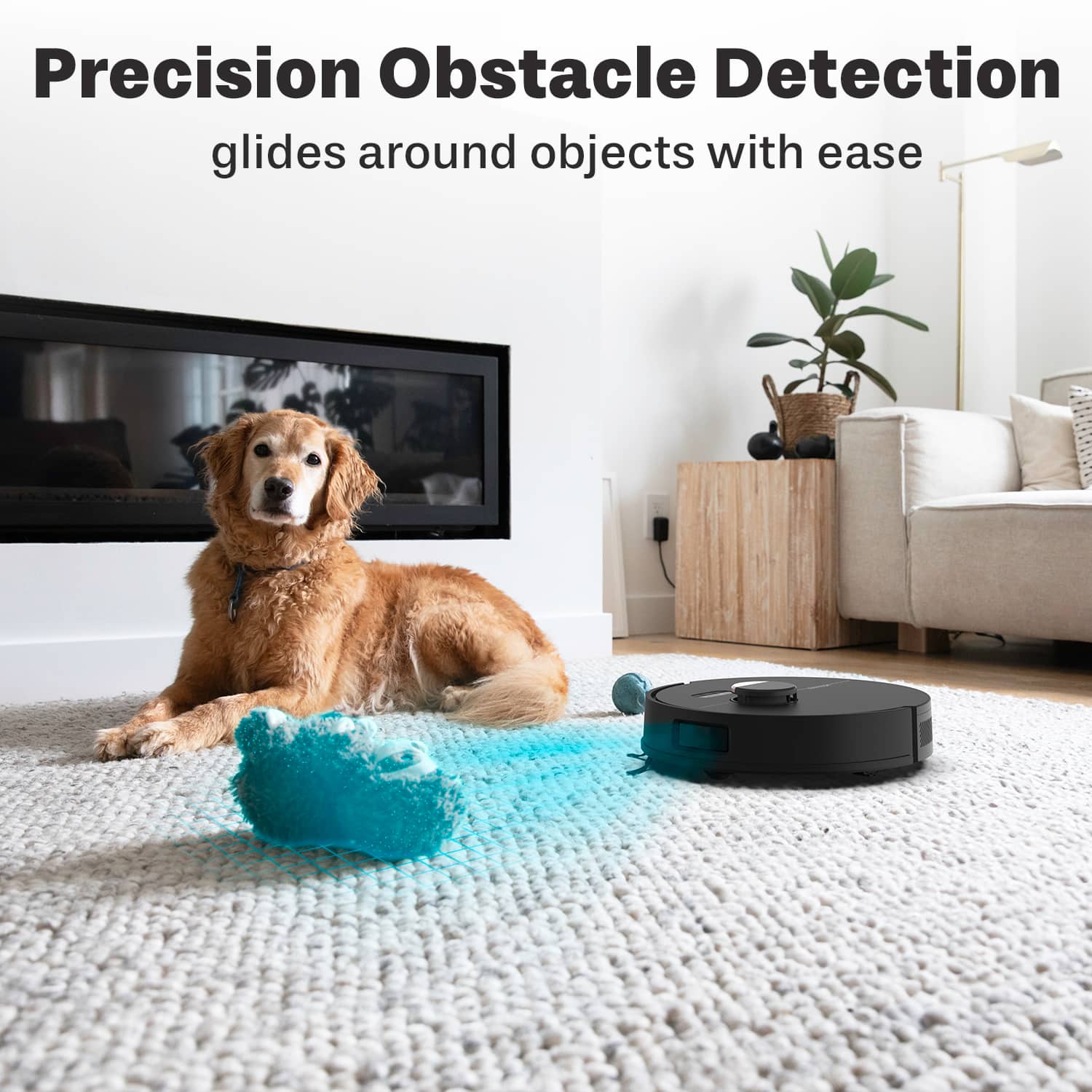
Coverage efficiency – how thoroughly the robot cleans your entire floor area – depends heavily on navigation quality. Both models offer good mapping capabilities, though they achieve this through different technological approaches. The PetHair Appetite's SLAM system provides reliable, privacy-focused navigation, while the Dustin Plus's LiDAR offers potentially more precise mapping when it works properly.
Maintenance frequency is where these models diverge significantly. The PetHair Appetite requires manual dustbin emptying every few cleaning sessions but has lower ongoing costs. The Dustin Plus promises hands-off operation for months at a time but requires purchasing replacement dust bags.
At the time of writing, the PetHair Appetite positions itself as the more budget-friendly option with a lower upfront cost. However, estimated annual maintenance costs are higher – around $112 per year based on replacement filters, brushes, and other consumables. The comprehensive 2-year warranty covering parts, labor, and even the battery helps offset some long-term cost concerns.
The Dustin Plus requires a significantly higher initial investment due to the self-emptying station. Ongoing costs include replacement dust bags, though daily maintenance is minimal. The shorter 1-year warranty (2-year on battery) is less comprehensive than the PetHair Appetite's coverage.
From a pure value standpoint, the PetHair Appetite offers better cleaning performance per dollar spent, especially if your home is primarily hard flooring. The Dustin Plus charges a premium for convenience features that don't translate to better cleaning results.
The PetHair Appetite's local processing approach represents a more sustainable technological philosophy. As privacy concerns about smart home devices continue growing, having a robot that doesn't depend on cloud services or external data processing becomes increasingly valuable. The technology is also less susceptible to connectivity issues or changes in manufacturer cloud service policies.
The Dustin Plus's LiDAR navigation represents current industry trends toward more sophisticated sensor technology. However, this advanced hardware needs to translate into better real-world performance to justify its complexity and cost – something our research suggests it fails to achieve consistently.
For home theater enthusiasts, noise levels during operation become important. The PetHair Appetite operates at around 67 decibels – slightly quieter than many competitors and comparable to normal conversation levels. This makes it suitable for running during movie watching, though you'll still notice it during quiet scenes.
The Dustin Plus claims operation under 60 decibels on default settings, which would be excellent for home theater environments. However, achieving maximum suction performance likely increases noise levels significantly. The self-emptying process, when it occurs, is typically much louder than regular operation on any self-emptying model.
The PetHair Appetite makes sense for households with primarily hard flooring who value proven cleaning performance over convenience features. If you have hardwood, tile, or laminate throughout most of your home, its excellent debris pickup rates justify the manual maintenance requirements. The privacy-focused approach and comprehensive warranty make it particularly appealing for tech-conscious buyers who prefer devices that don't require constant internet connectivity.
Pet owners with moderate shedding will find the PetHair Appetite handles hair well on hard surfaces, though regular brush maintenance is necessary. The washable dustbin is convenient for dealing with pet-related messes that might create odors in disposable bags.
The Dustin Plus theoretically suits busy households willing to pay premium prices for maximum convenience. The self-emptying feature with 100-day capacity would be genuinely valuable – if the cleaning performance lived up to the specifications. Unfortunately, our research suggests the poor debris pickup and pet hair handling undermines the convenience benefits.
Homes with significant carpeting should probably avoid both models, as neither performs well on high-pile surfaces. The Dustin Plus is particularly disappointing in this regard given its high-end positioning.
After analyzing professional testing, user feedback, and technical specifications, the PetHair Appetite emerges as the better overall value. Its proven cleaning performance on hard floors, privacy-focused design, and comprehensive warranty outweigh the convenience advantages of the Dustin Plus's self-emptying system.
The Dustin Plus represents a common problem in the robot vacuum market: impressive specifications that don't translate to real-world performance. The 8,000 Pa suction sounds powerful, but if the engineering doesn't properly utilize that power, it's meaningless marketing.
For most pet owners with mixed flooring, the PetHair Appetite offers the better combination of cleaning effectiveness, reasonable maintenance requirements, and long-term value. The manual dustbin emptying is a minor inconvenience compared to the peace of mind that comes with a robot that actually picks up the dirt it encounters.
However, if your cleaning standards are flexible and maximum convenience trumps performance, the Dustin Plus might still appeal to some buyers. Just understand you're paying a significant premium for self-emptying functionality while accepting compromised cleaning effectiveness.
Both models represent the reality that robot vacuum mopping remains largely ineffective, so focus your decision on vacuuming performance and the features that matter most to your specific household needs.
| bObsweep PetHair Appetite APP220022 | bObsweep Dustin Plus PET24-7-214 |
|---|---|
| Suction Power - Higher numbers don't always mean better cleaning | |
| Adjustable suction (Pa rating not specified) | 8,000 Pa (impressive spec but poor real-world performance) |
| Hard Floor Cleaning Performance - Most important metric for actual debris pickup | |
| Excellent: 96-100% debris removal in testing | Poor: Struggles with fine debris due to side brush flinging particles |
| Carpet Cleaning Performance - Critical if you have rugs or carpeted areas | |
| Adequate on low-pile (91-100% large debris), poor on high-pile (51% fine debris) | Inadequate across all carpet types, especially poor with pet hair |
| Pet Hair Handling - Essential feature for the target audience | |
| Good on hard floors, tangles on carpets requiring maintenance | Poor performance, often smears and redistributes hair instead of collecting |
| Dustbin Management - Affects daily convenience and maintenance | |
| 450mL manual emptying every few cleaning cycles | 1-gallon self-emptying station, claims 100 days between bag changes |
| Navigation Technology - Determines mapping accuracy and cleaning coverage | |
| Realtime SLAM with local processing (privacy-focused) | LiDAR + Quantum SLAM (more advanced sensors but inconsistent performance) |
| Privacy and Data Security - Important for smart home integration | |
| All processing local, no cloud dependency, zero external data transmission | Privacy-focused design, no image capture or cloud transmission |
| Battery Life and Runtime - Affects coverage area per cleaning cycle | |
| 70 minutes runtime, 270-minute charge time, auto-resume | 90-150 minutes depending on power setting, auto-resume |
| Mopping Effectiveness - Secondary feature but often marketed prominently | |
| Ineffective beyond light dust pickup (consistent with category limitations) | Ineffective beyond light dust pickup (consistent with category limitations) |
| Warranty Coverage - Protection for your investment | |
| 2-year parts/labor/battery, 5-year subsidized repair, lifetime support | 1-year parts/labor, 2-year battery, 5-year subsidized repair |
| Annual Maintenance Costs - Ongoing ownership expenses beyond purchase price | |
| Higher estimated costs (~$112/year) but no consumable bags | Lower daily maintenance but ongoing replacement dust bag costs |
| Release Date and Technology Maturity - Indicates proven vs. cutting-edge approach | |
| 2023 release with proven, reliable technology stack | 2024 release with newer hardware but inconsistent performance |
| Best Use Case - Who should choose each model | |
| Homes with primarily hard floors wanting proven cleaning performance | Busy households prioritizing convenience over cleaning effectiveness |
The bObsweep PetHair Appetite is generally better for pet owners, especially those with hard floors. It achieves 96-100% debris pickup on hardwood and handles pet hair effectively on non-carpeted surfaces. The bObsweep Dustin Plus actually performs poorly with pet hair, often smearing and redistributing it rather than collecting it properly.
No, they handle dustbin management very differently. The PetHair Appetite requires manual emptying of its 450mL dustbin every few cleaning cycles. The Dustin Plus features a self-emptying station with a 1-gallon capacity that claims to go 100 days between bag changes, making it much more hands-off.
The Dustin Plus has impressive 8,000 Pa suction power specifications, while the PetHair Appetite doesn't specify exact Pa ratings. However, suction power doesn't translate to cleaning performance - the PetHair Appetite actually cleans more effectively despite lower specifications due to better engineering and brush design.
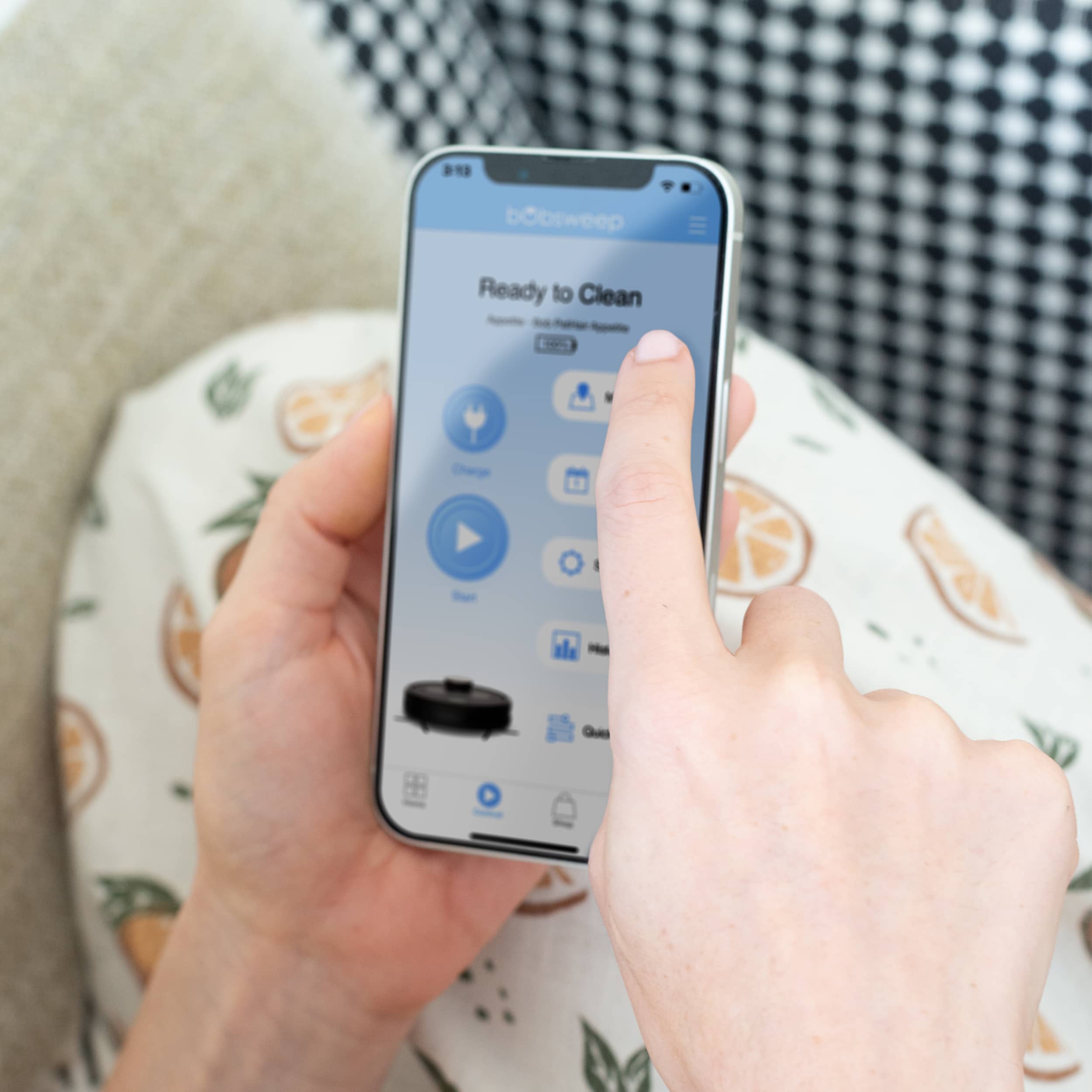
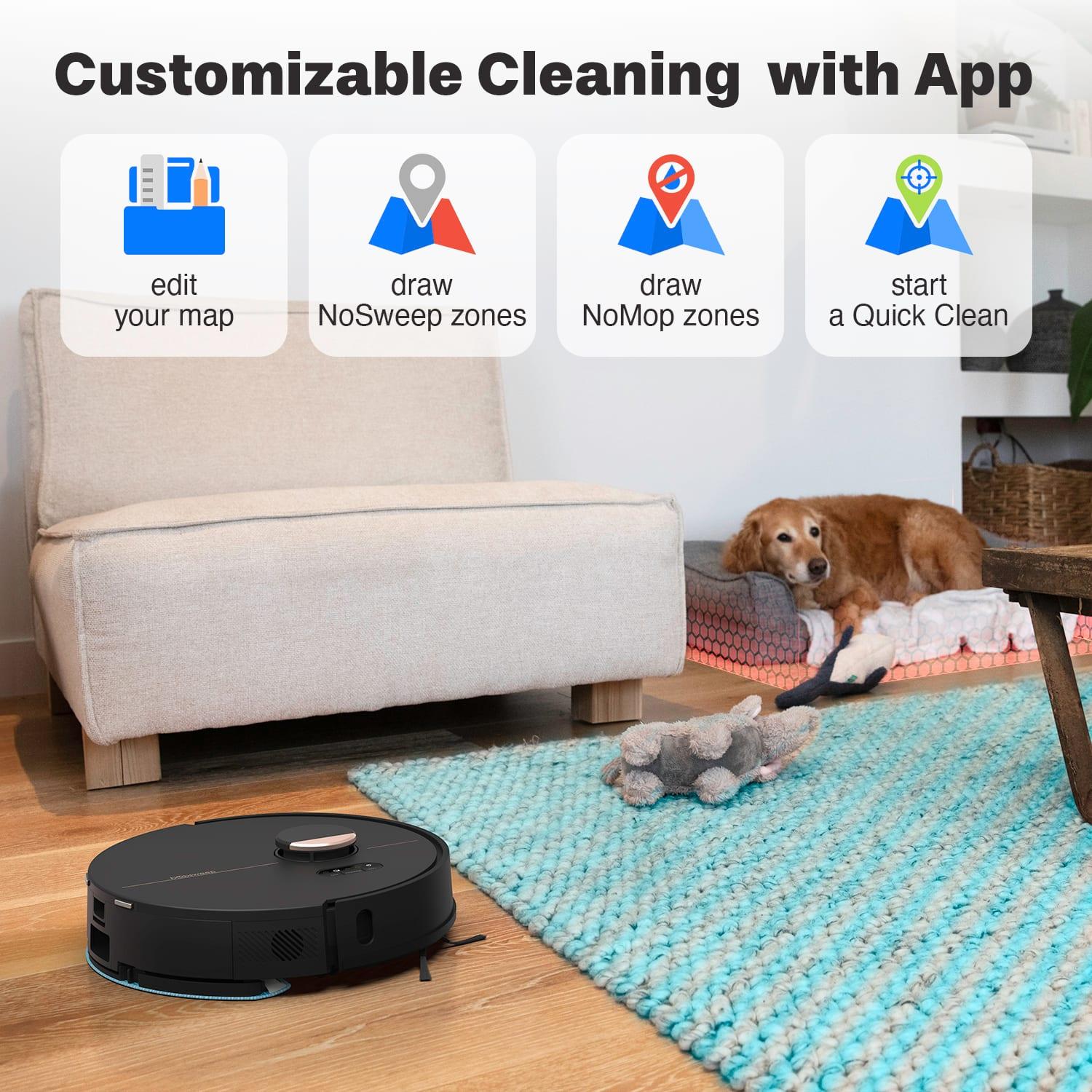
Both use advanced mapping but with different approaches. The PetHair Appetite uses Realtime SLAM technology that processes everything locally for privacy, while the Dustin Plus combines LiDAR sensors with Quantum SLAM for potentially more precise mapping. Both create detailed floor plans and support custom cleaning zones through their mobile apps.
Neither model excels on carpets, but the PetHair Appetite performs better overall. It manages 91-100% pickup of large debris on low-pile carpets, though it struggles with fine particles. The Dustin Plus is inadequate across all carpet types and particularly poor with pet hair on carpeted surfaces.
No, both the PetHair Appetite and Dustin Plus have largely ineffective mopping systems. They can handle light dust pickup but won't clean actual stains, sticky spills, or dried-on dirt. The mopping is more of a bonus feature rather than a replacement for manual mopping.
The PetHair Appetite offers superior privacy protection with all processing done locally and zero external data transmission. The Dustin Plus also emphasizes privacy with no image capture or cloud transmission, but the PetHair Appetite goes further by eliminating any cloud dependency entirely.
The Dustin Plus has longer battery life at 90-150 minutes depending on power settings, compared to the PetHair Appetite's 70-minute runtime. However, the PetHair Appetite charges in about 270 minutes while specific charging times for the Dustin Plus aren't specified. Both models auto-resume cleaning after recharging if needed.
The PetHair Appetite offers significantly better warranty protection with 2-year coverage on parts, labor, and battery, plus lifetime customer support and a 5-year subsidized repair plan. The Dustin Plus provides only 1-year parts and labor coverage (2-year battery) with the same repair plan but less comprehensive initial protection.
The PetHair Appetite operates at about 67 decibels, which is relatively quiet and suitable for running during movie watching, though you'll notice it during quiet scenes. The Dustin Plus claims under 60 decibels on default settings, potentially making it better for home theater environments, though maximum suction likely increases noise levels significantly.
The PetHair Appetite offers better overall value with superior cleaning performance, comprehensive warranty coverage, and proven reliability at a lower upfront cost. While it has higher estimated annual maintenance costs, its effective cleaning justifies the investment. The Dustin Plus charges a premium for convenience features that don't translate to better cleaning results.
Definitely choose the PetHair Appetite for homes with primarily hard flooring. Its excellent 96-100% debris pickup rate on hardwood, tile, and laminate makes it ideal for these surfaces. The Dustin Plus actually struggles with fine debris on hard floors due to its side brush design that flings particles away from the suction path.
We've done our best to create useful and informative comparisons to help you decide what product to buy. Our research uses advanced automated methods to create this comparison and perfection is not possible - please contact us for corrections or questions. These are the sites we've researched in the creation of this article: bestbuy.com - moderncastle.com - rtings.com - bobsweep.com - layawayland.com - bestbuy.com - moderncastle.com - bobsweep.com - consumerreports.org - youtube.com - youtube.com - bobsweep.com - youtube.com - qwertycompare.com - homedepot.com - newegg.com - bobsweep.com - batteryclerk.com - ebay.com - walmart.ca - bobsweep.com - device.report - bedbathandbeyond.com - layawayland.com - e-catalog.com - rtings.com - bobsweep.com - bestbuy.com - bobsweep.com - rtings.com - homedepot.com - bobsweep.com - rtings.com - youtube.com - homedepot.com - vacuumwars.com - redditrecs.com - bestbuy.com - youtube.com - samsclub.com - bobsweep.com - accio.com - youtube.com - moderncastle.com - walmart.com - target.com - owners.bobsweep.com - bestbuy.com - manuals.plus - target.com - youtube.com - samsclub.com - homedepot.com - owners.bobsweep.com - qvc.com

Privacy Policy
Terms and Conditions - Affiliate Policy
Home Security
© Copyright 2008-2026.
11816 Inwood Rd #1211, Dallas, TX 75244