




The smart doorbell market has evolved significantly in recent years, with manufacturers racing to solve common problems like package theft and limited viewing angles. Today, we're comparing two innovative approaches: the recently released Wyze Duo Cam Video Doorbell ($89.98) and the Ring Battery Doorbell Plus ($89.99), which hit the market in early 2023.
Smart doorbells have come a long way from simple video feeds. Today's devices act as sophisticated security monitors, complete with AI-powered detection, advanced motion sensing, and integration with broader smart home systems. The key improvements have been in video quality, field of view, and intelligent features that help you better monitor your entrance.
Both of our contenders represent the latest thinking in doorbell design, but they take notably different approaches to solving common problems.
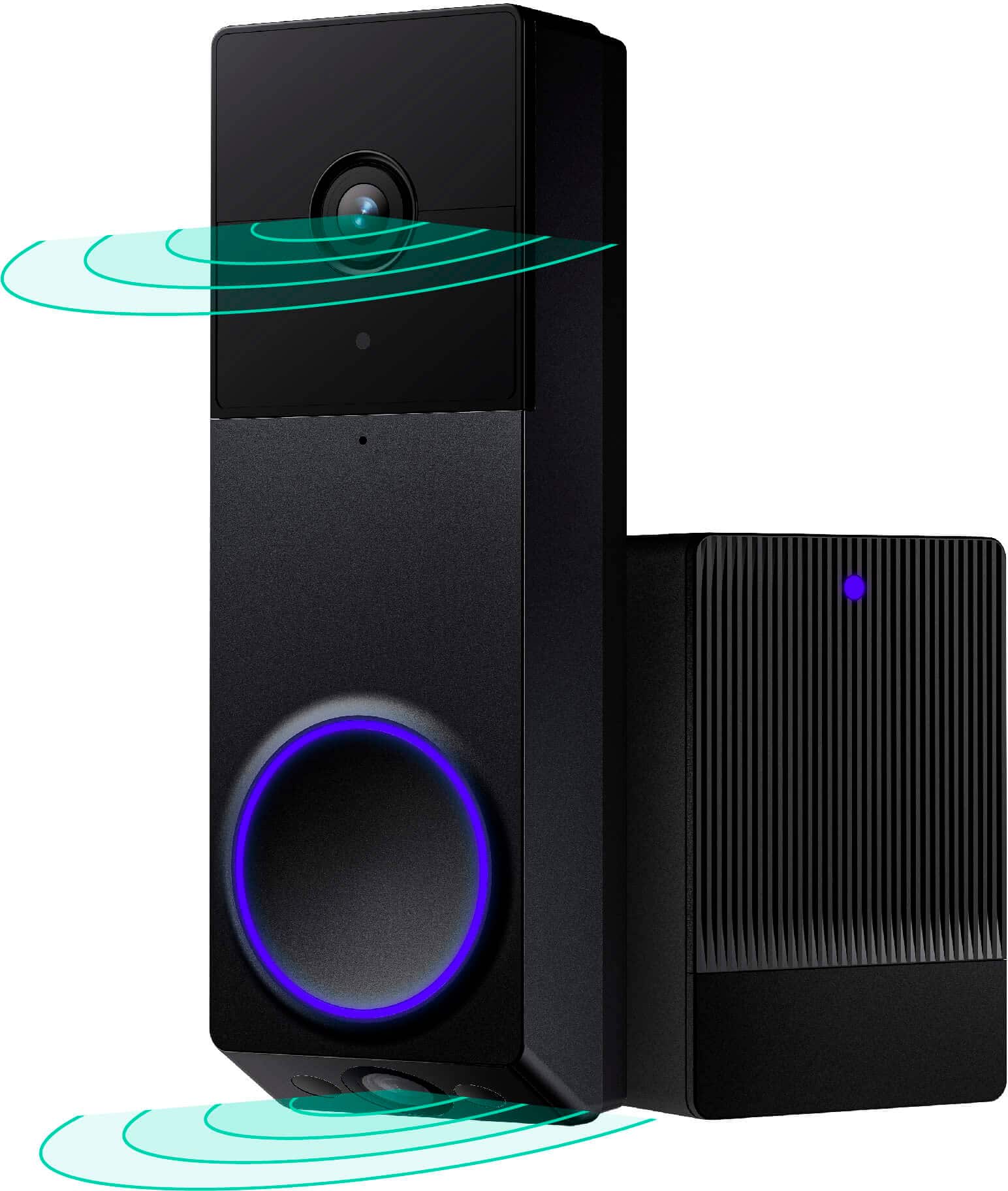
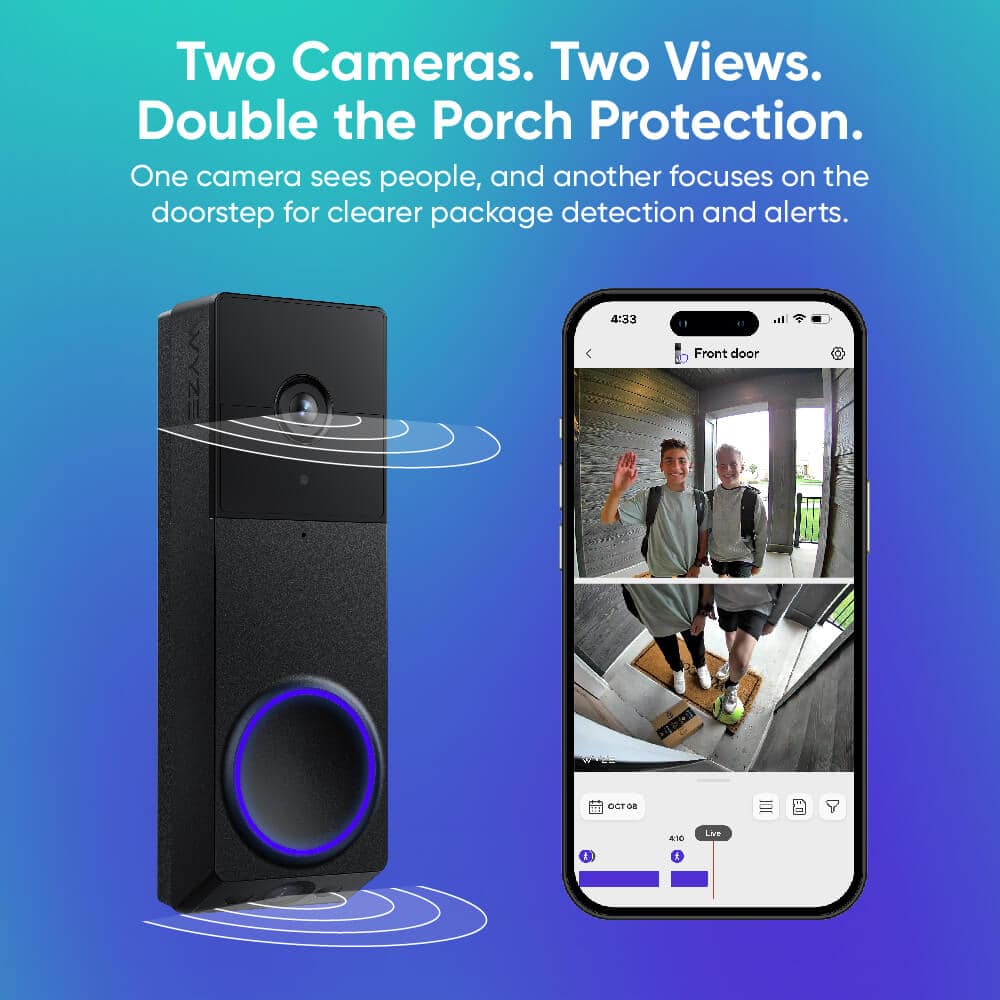
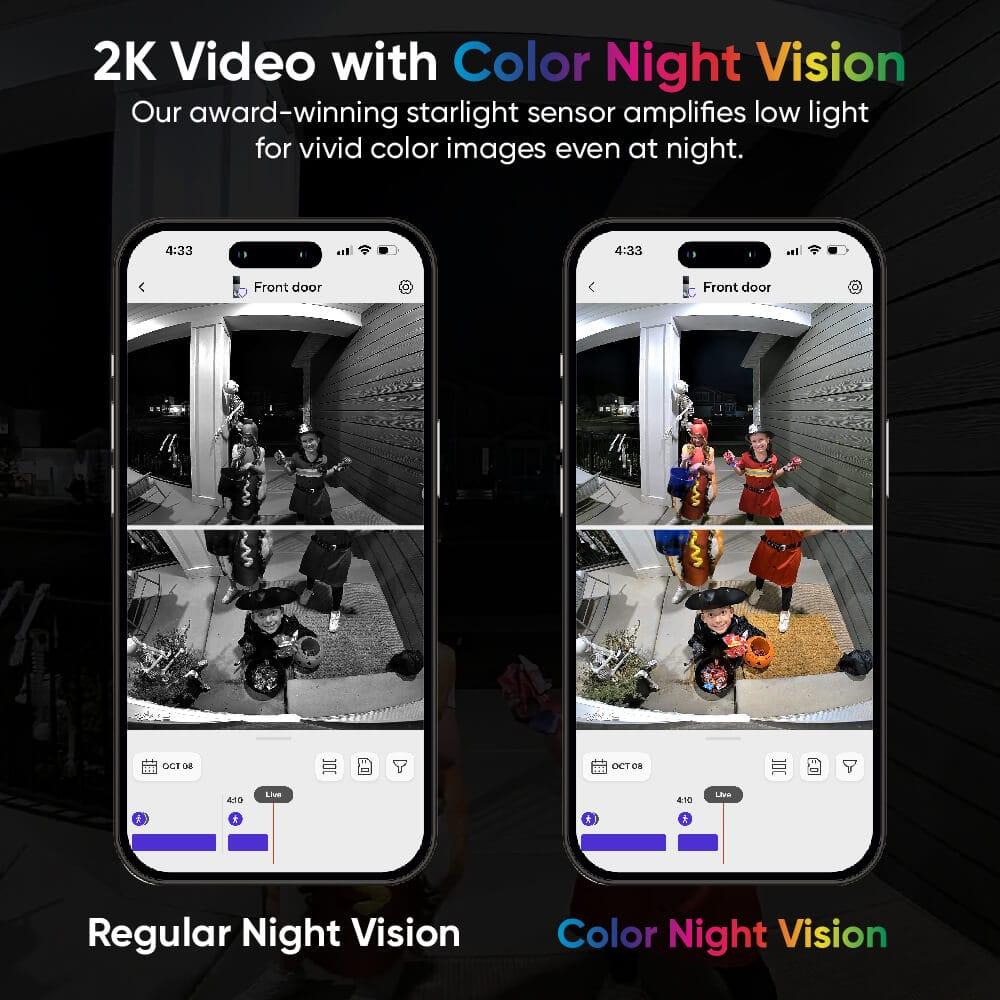
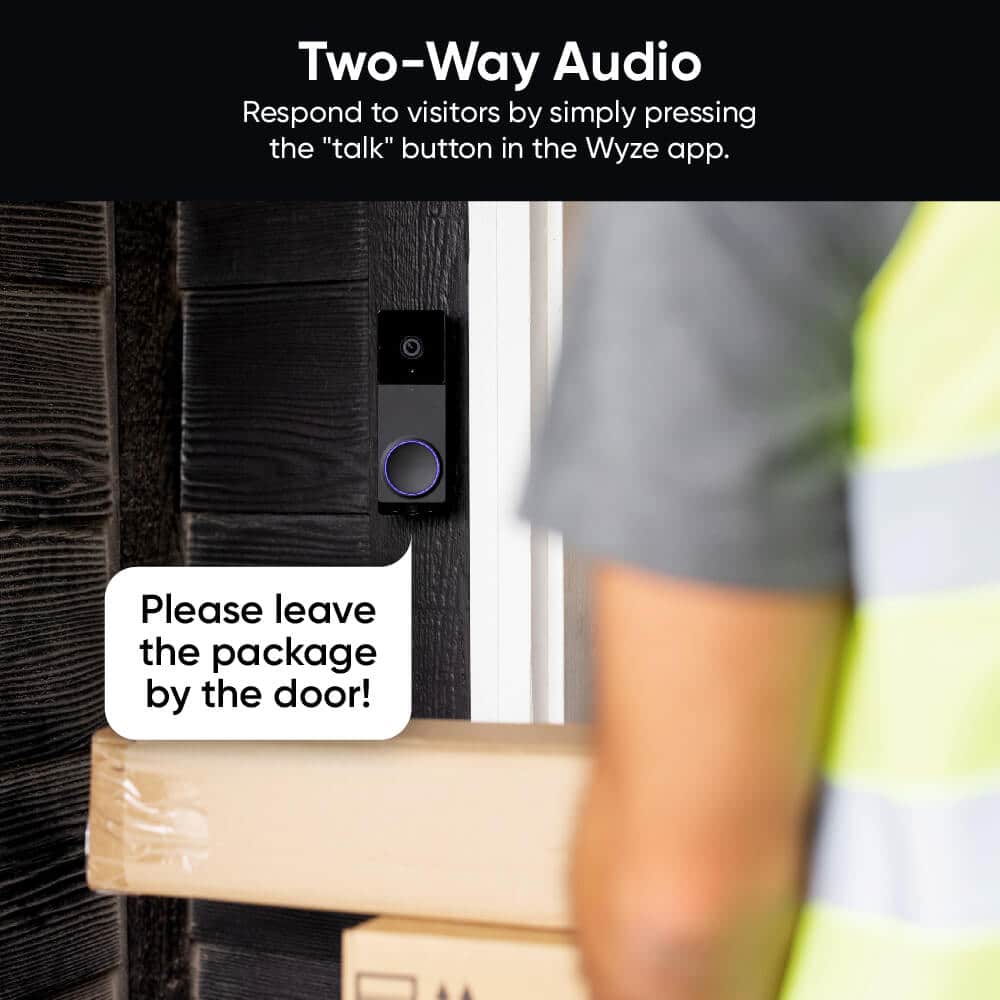
The Wyze Duo Cam introduces a novel dual-camera system - something we haven't seen before in this price range. The top camera captures 2K resolution video of people's faces and upper bodies, while a separate 1080p bottom camera focuses specifically on packages and ground-level activity. This split approach means you get optimal views of both visitors and deliveries without compromise.
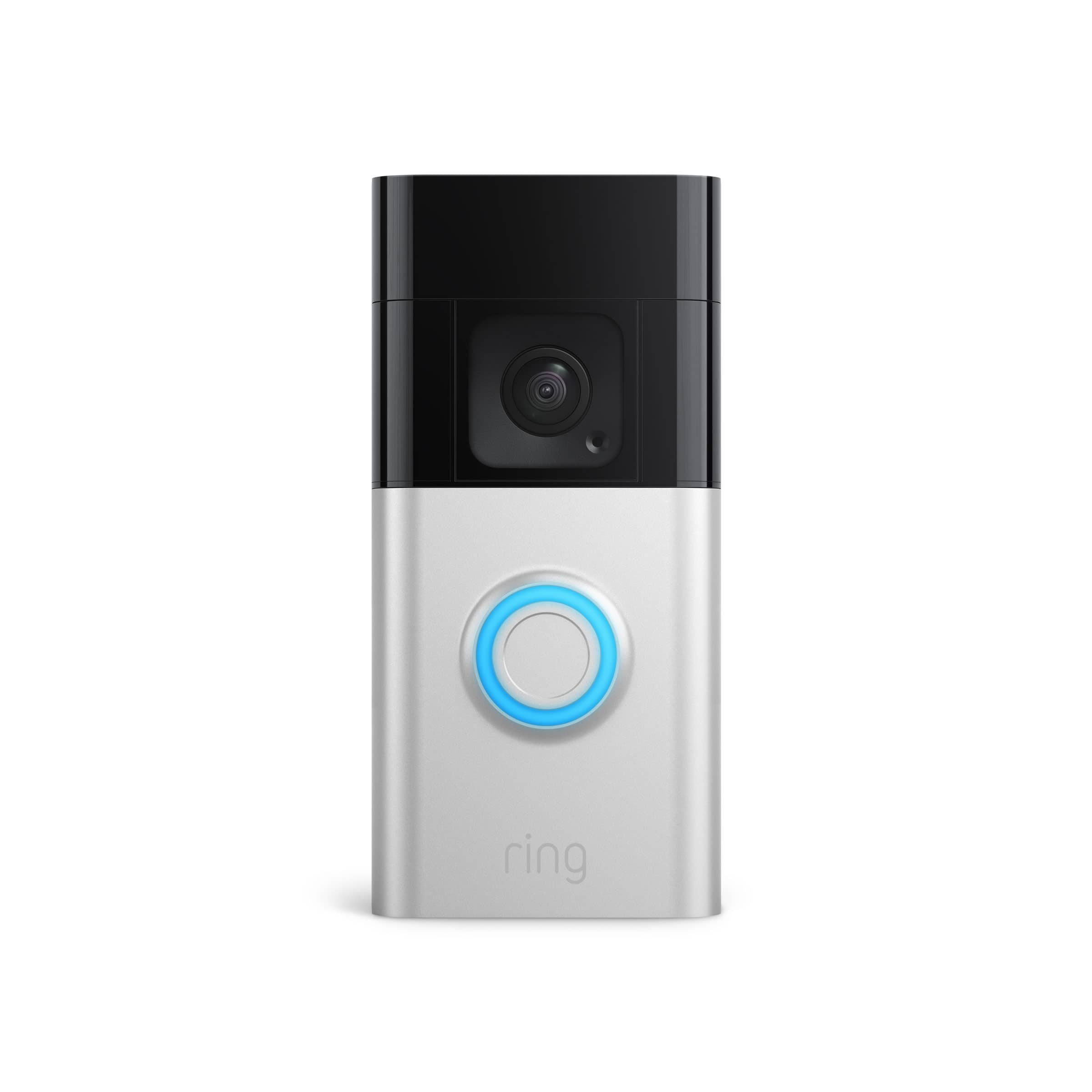
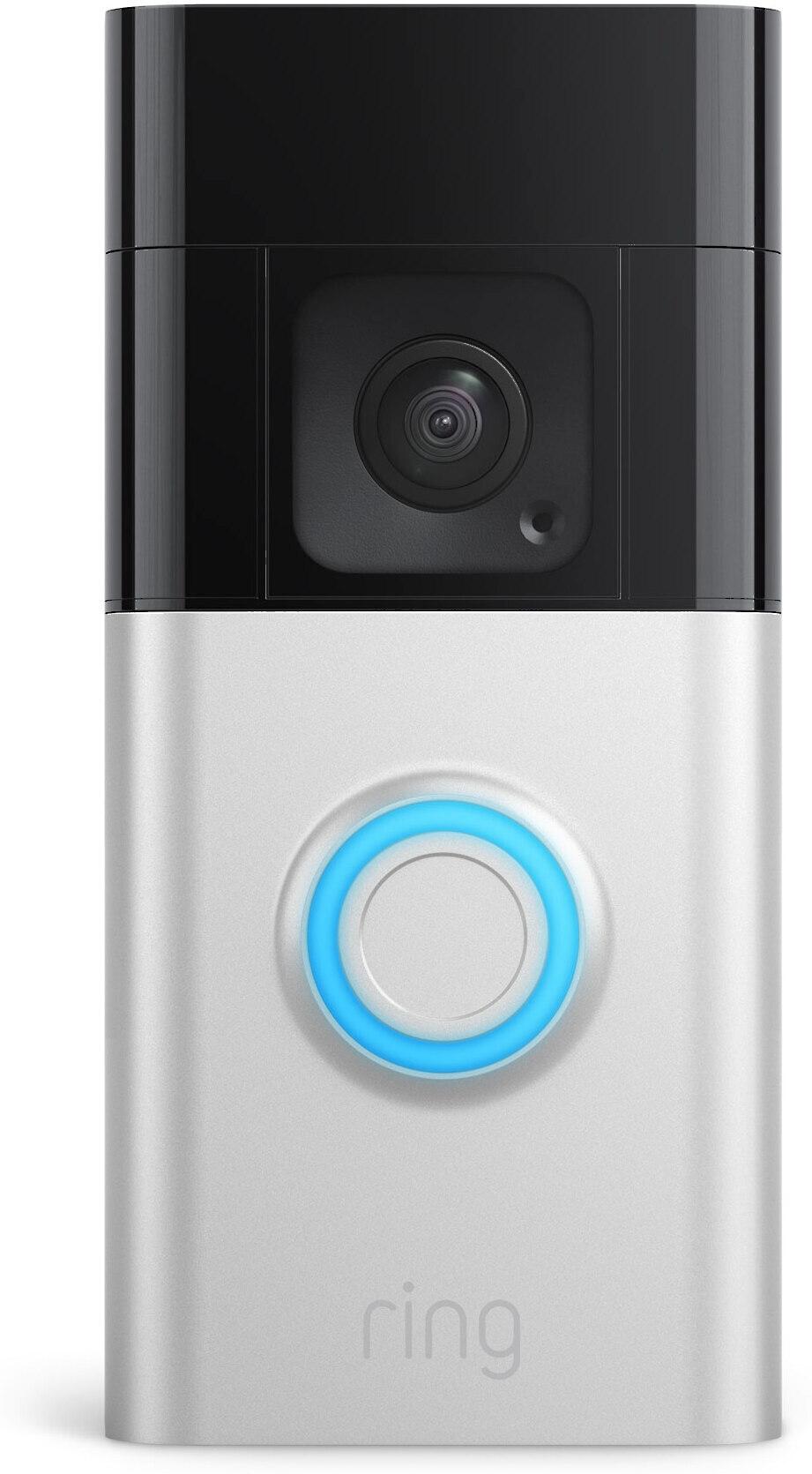
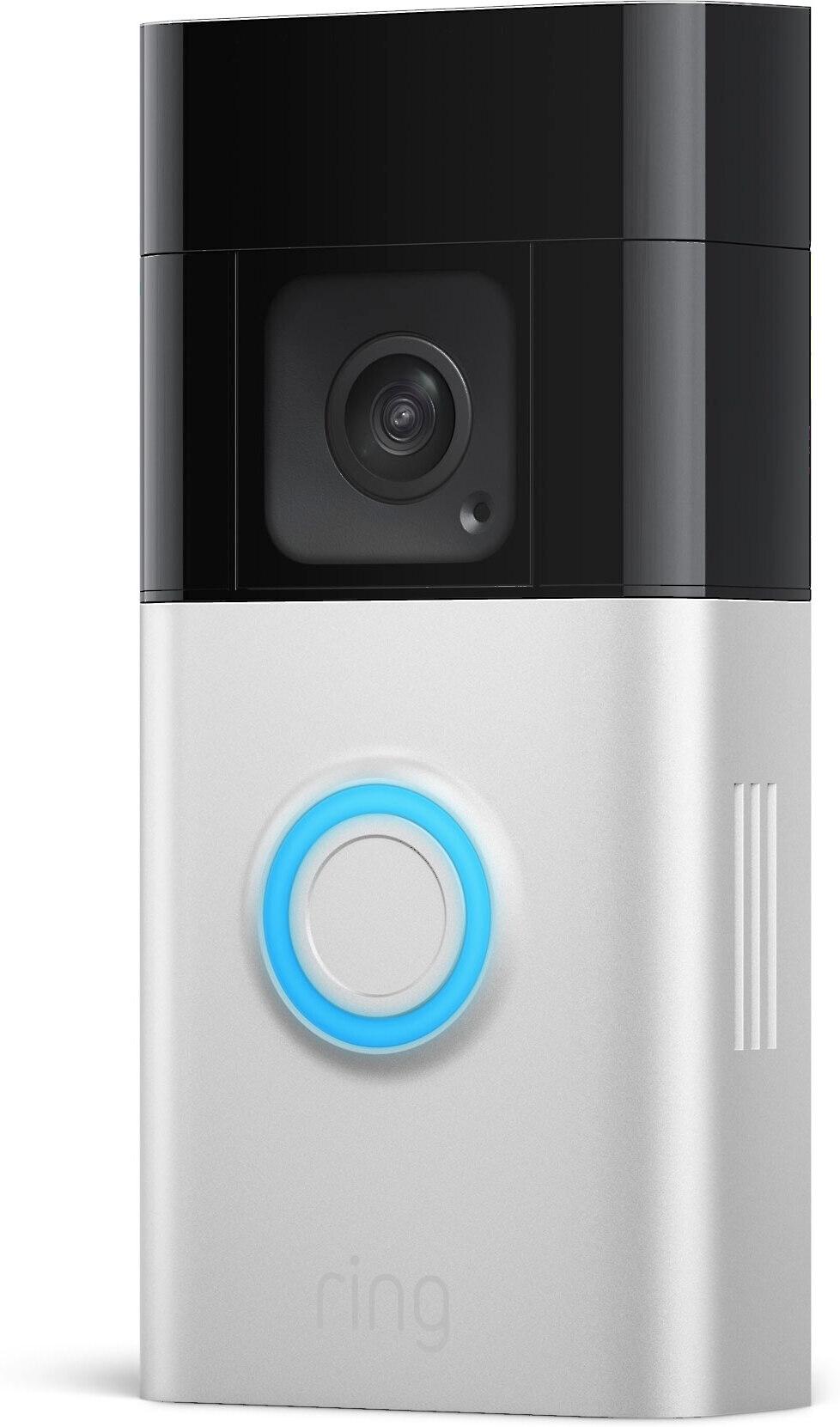
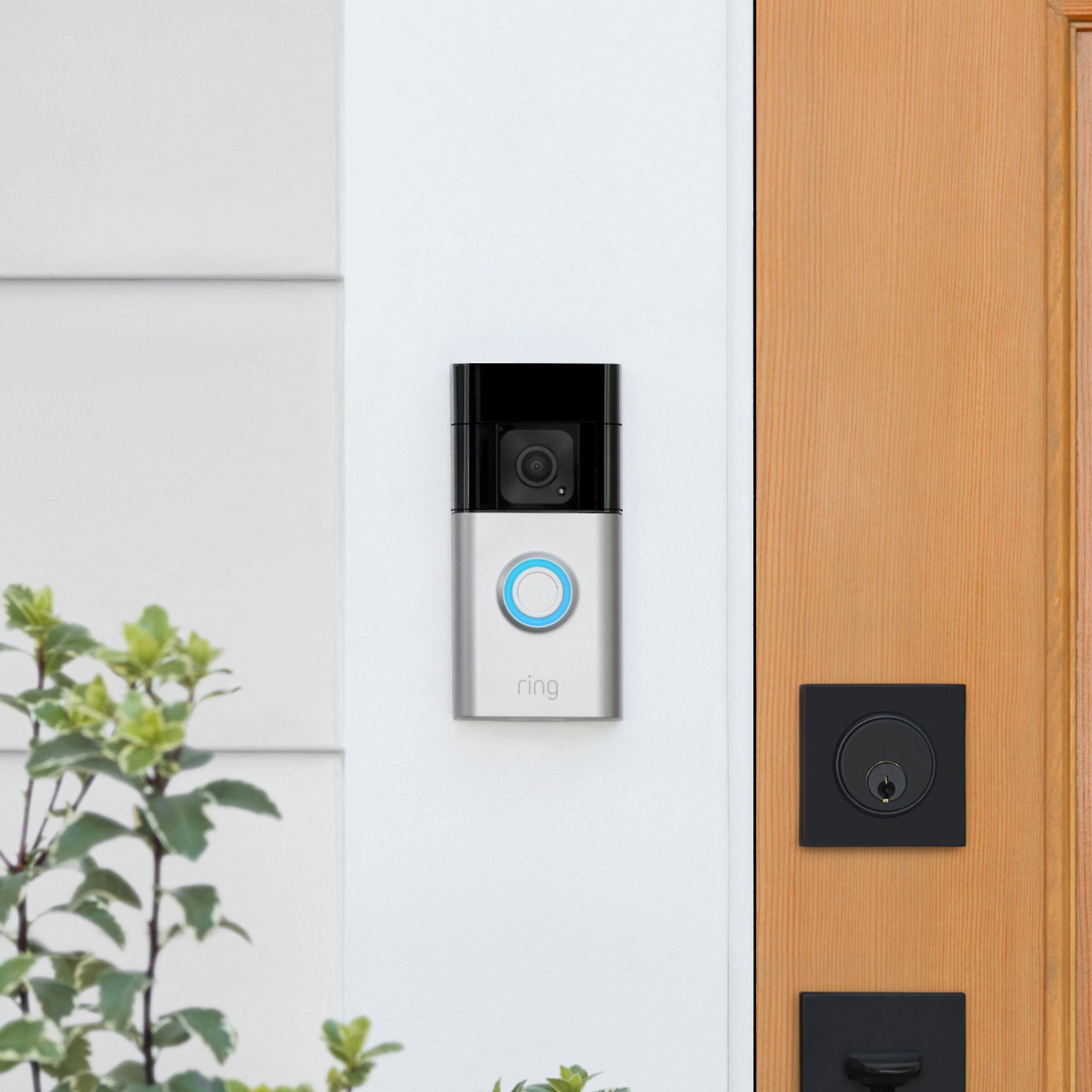
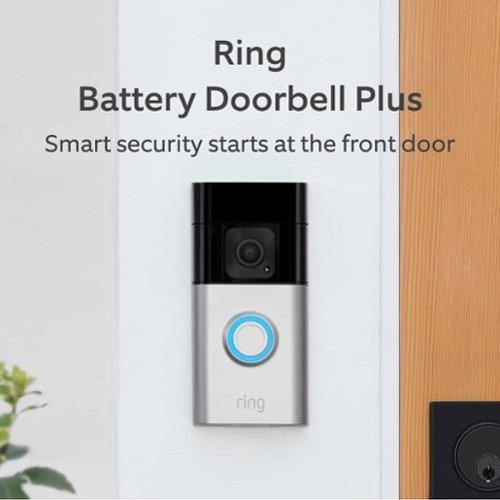
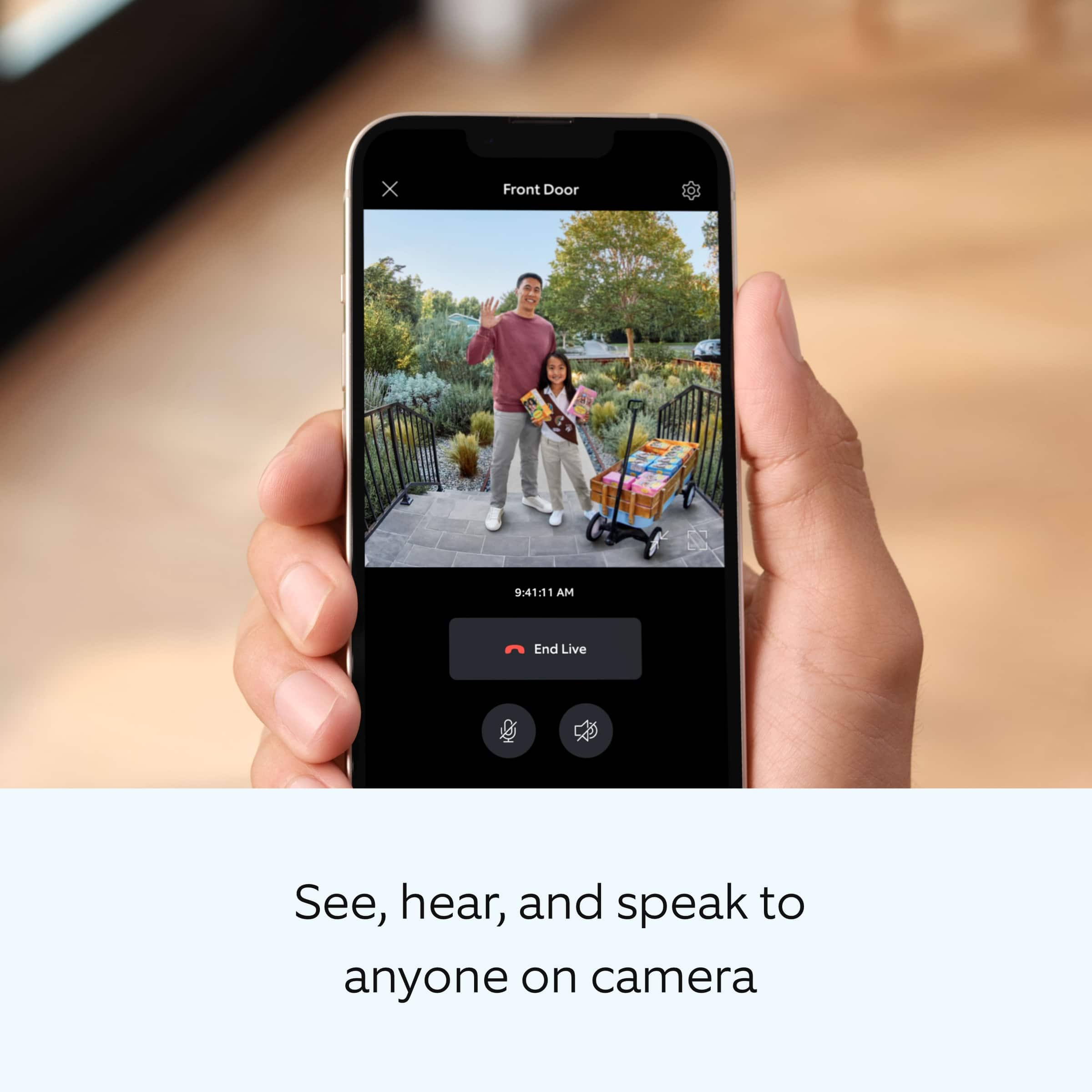
In contrast, the Ring Battery Doorbell Plus uses a single camera with an expanded vertical field of view (what Ring calls "Head-to-Toe"). This 150° x 150° view provides comprehensive coverage using advanced optics and a 1536p resolution sensor. While it's not as high-resolution as Wyze's top camera, the single-lens approach has advantages in low-light performance and consistency.
The Wyze's 2K top camera produces noticeably sharper footage of faces and upper bodies, which is crucial for identification purposes. The dedicated package camera, while lower resolution, provides an optimized view of ground-level activity. In practical use, this dual-system excels at its intended purpose - you'll never miss a package because the camera was aimed too high.
Ring's single-camera approach produces very good quality across its entire field of view, though not quite matching Wyze's top camera resolution. However, Ring has superior low-light performance thanks to more advanced noise reduction and its color night vision feature. The wider field of view also means you're less likely to miss activity at the edges of your porch.
Both devices use AI-powered detection systems, but their approaches differ:
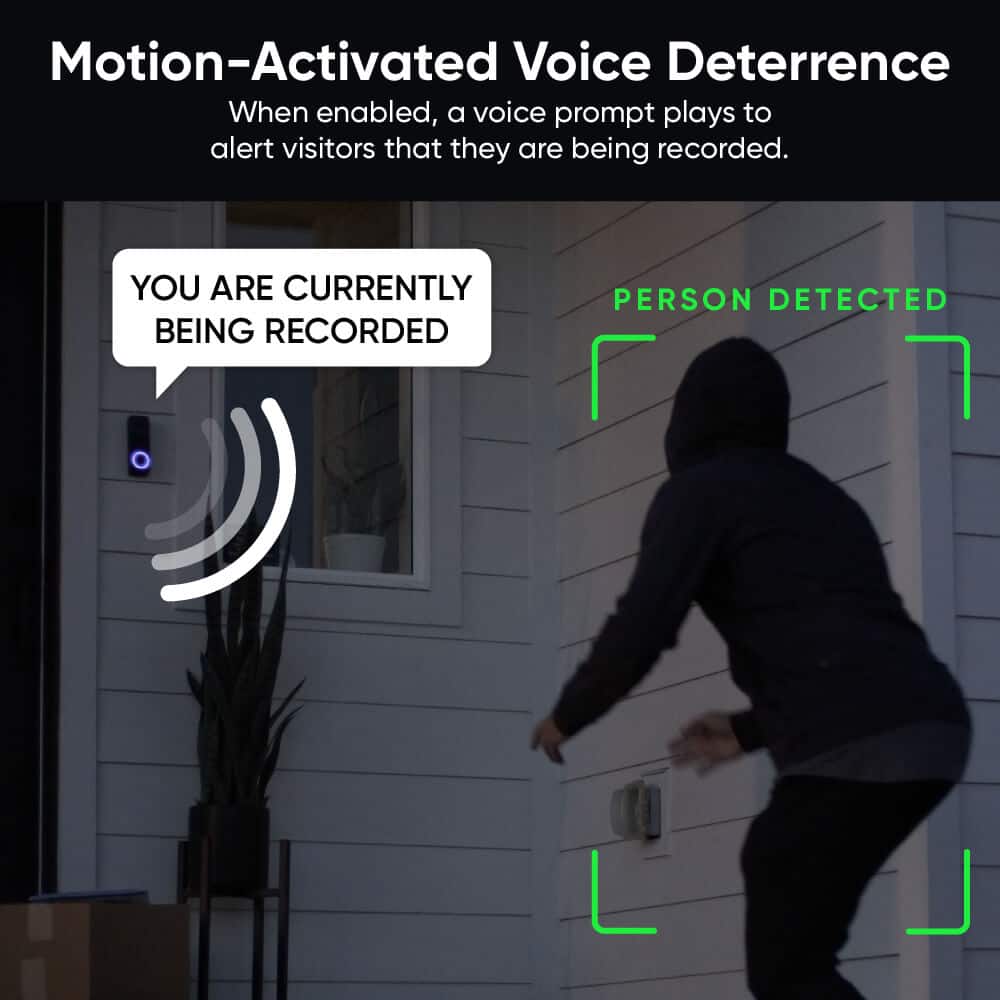
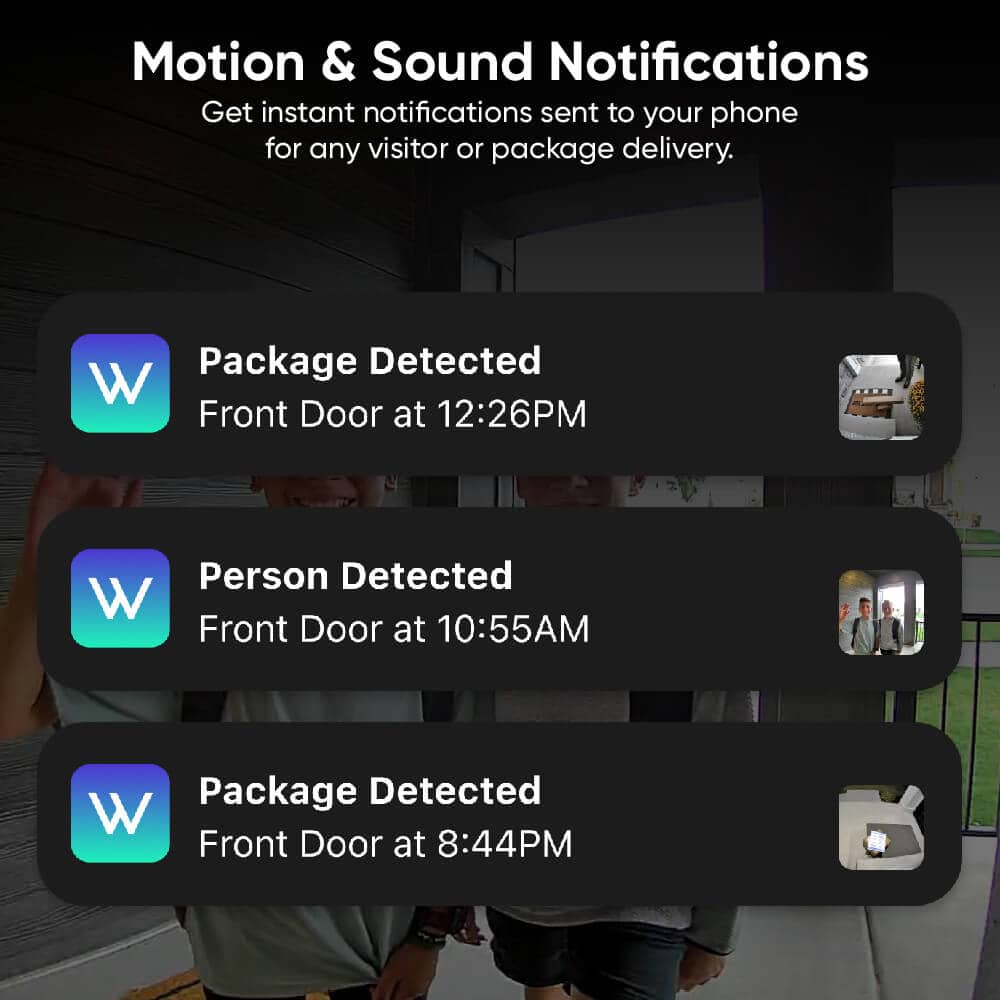
Wyze employs separate detection zones for each camera, allowing granular control over what triggers alerts. You can, for example, set the bottom camera to only notify you about packages while the top camera tracks people. This reduces false positives but requires more setup time to configure optimally.
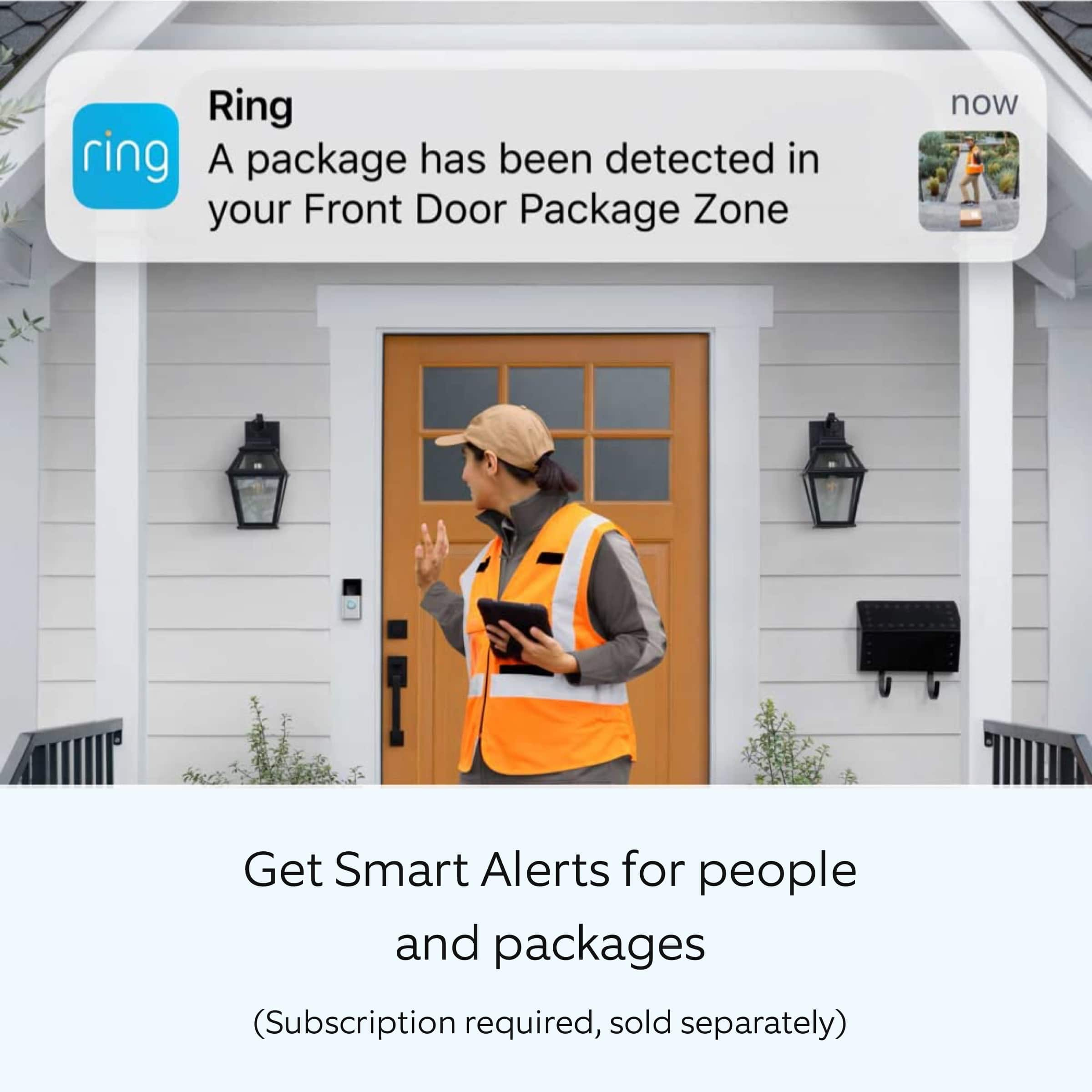
Ring's system is more straightforward but equally effective. Its customizable motion zones are easy to set up, and the detection algorithms have been refined over multiple product generations. The system is particularly good at distinguishing between people and other movement, though it lacks Wyze's specialized package detection.
Here's where we see a major philosophical difference between the two companies:
Wyze supports local storage via microSD card (up to 256GB) alongside optional cloud storage. This gives you the freedom to record without subscription fees, though cloud features like AI detection still require a modest subscription.
Ring requires a subscription for recording any video - there's no local storage option. While this means ongoing costs ($3-10 monthly), it also provides reliable cloud backup and sophisticated integrations with other Ring products.
Ring has a clear advantage for Amazon ecosystem users - it's owned by Amazon and integrates seamlessly with Alexa devices. If you've got Echo speakers throughout your house, they can announce visitors and serve as additional chimes. Ring's extensive product line also means easy integration with Ring security cameras, lights, and alarms.
The Wyze Duo Cam works with both Alexa and Google Assistant, offering more flexibility but less deep integration. Wyze's own ecosystem is growing but doesn't match Ring's breadth in the security space.
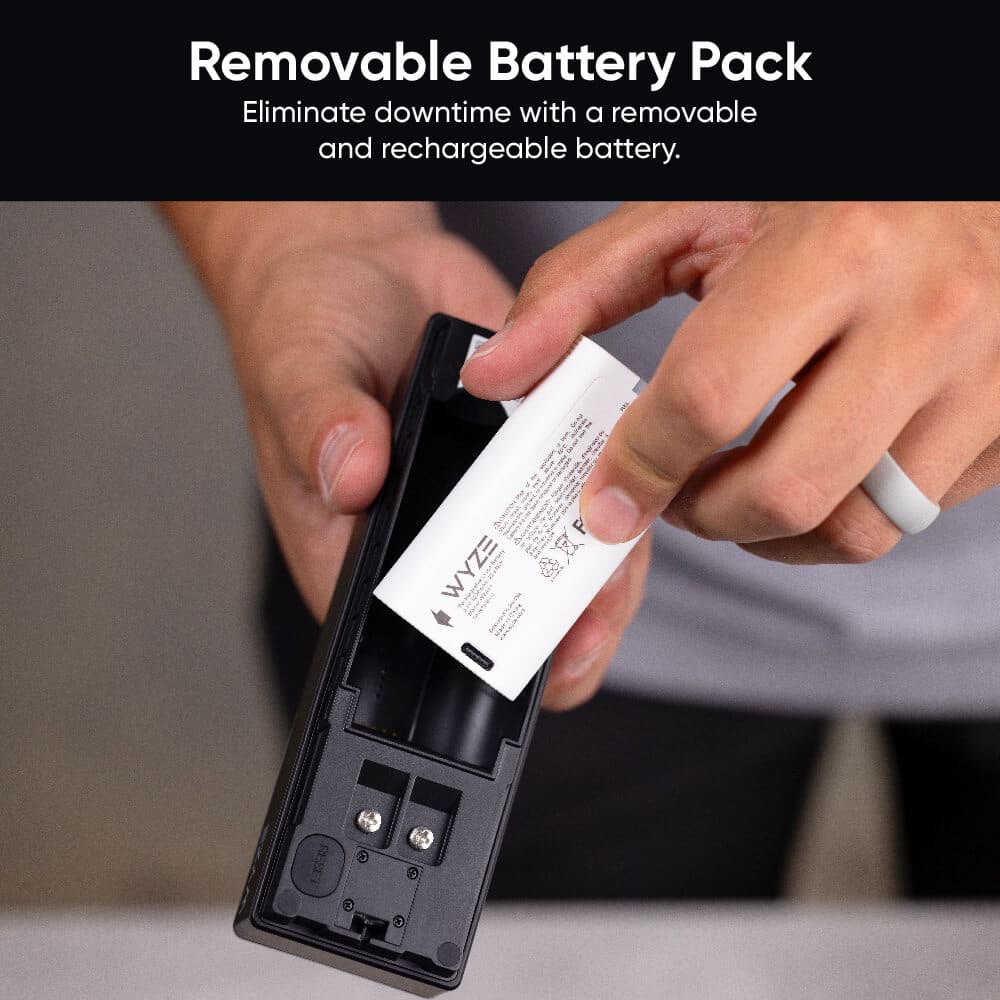
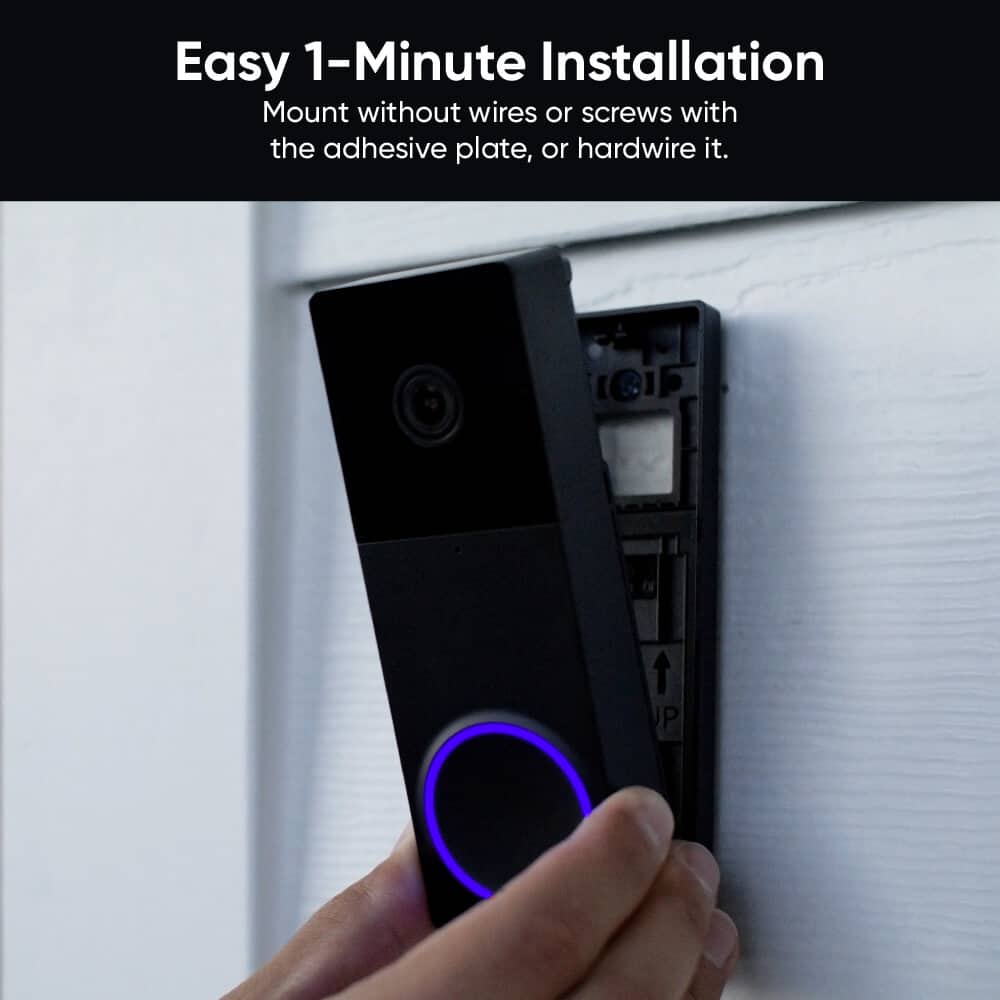
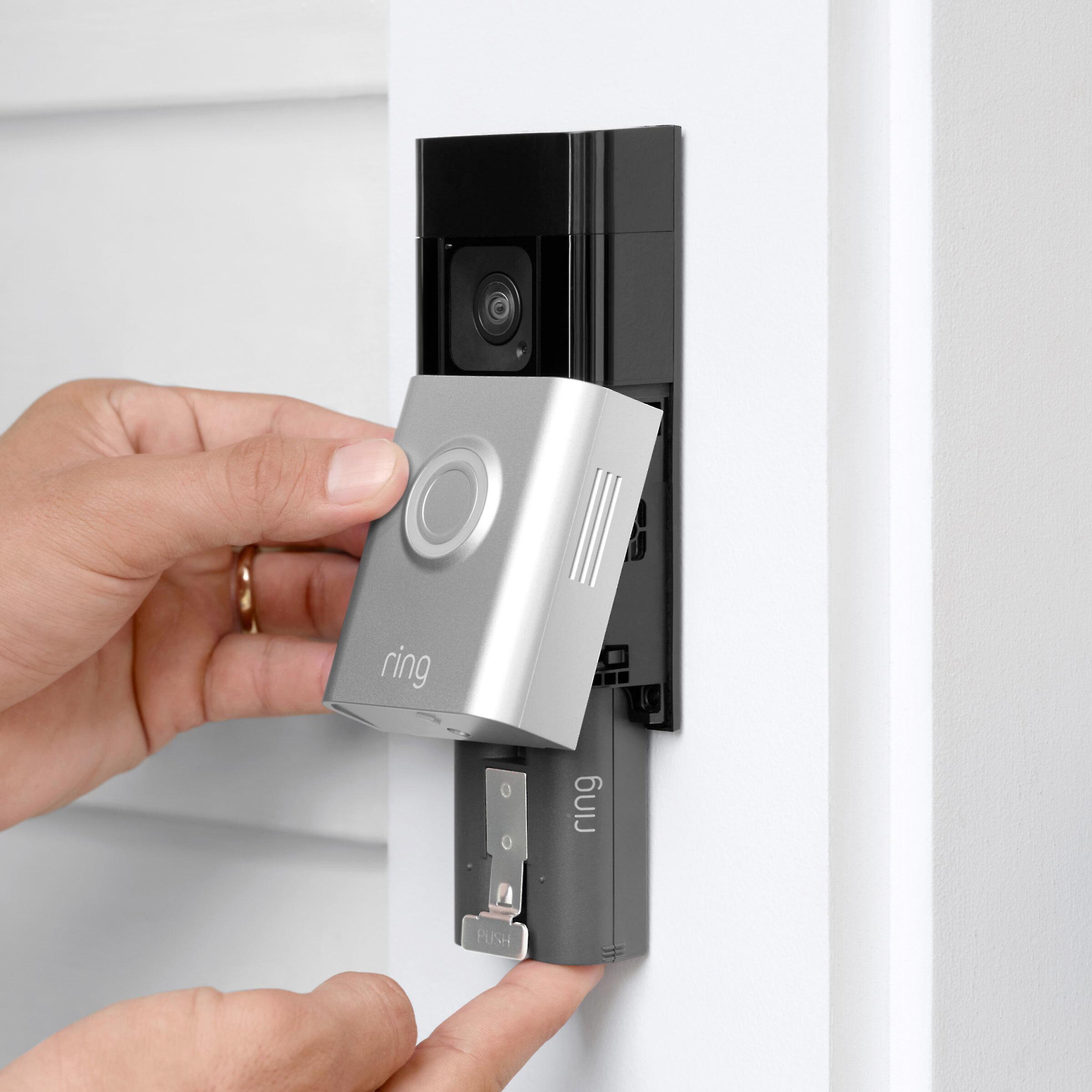
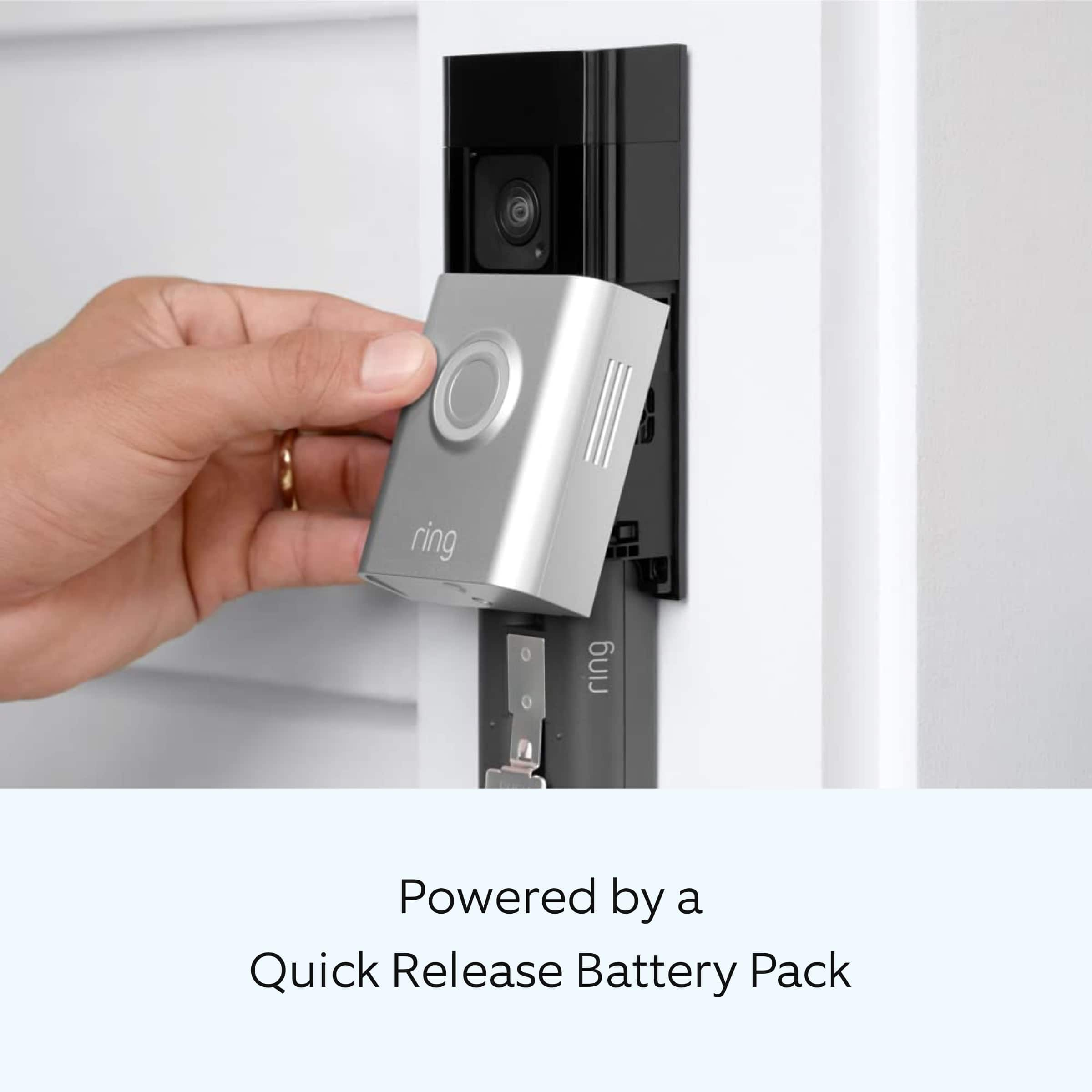
Both doorbells offer battery or hardwired installation, but Wyze provides more flexibility with its power requirements (16-24V AC for hardwiring). Ring requires 8-24V AC but has the advantage of being compatible with more existing doorbell transformers.
Battery life varies significantly based on usage:
Wyze supports dual-band WiFi (2.4GHz and 5GHz), while Ring only works on 2.4GHz networks. While 2.4GHz generally provides better range, having 5GHz support can be valuable in areas with significant 2.4GHz interference.
The Ring Battery Doorbell Plus and Wyze Duo Cam have nearly identical purchase prices around $90, but their long-term costs differ significantly:
Ring requires a subscription for recording video:
Wyze offers more features without subscription, though their Cam Plus service ($1.99/month) adds AI detection and longer cloud clips.
Consider these key factors when choosing:
Both devices represent excellent value at their price points, but they serve different needs. The Wyze Duo Cam pushes innovation with its dual-camera system and local storage options, while Ring offers a more polished, integrated experience at the cost of ongoing subscription fees.
Making the final choice comes down to your specific needs and existing smart home setup. Either way, both represent significant improvements over previous generation doorbells and will serve well as your front door guardian.
| Wyze Duo Cam Video Doorbell ($89.98) | Ring Battery Doorbell Plus ($89.99) |
|---|---|
| Camera System - Determines how well you can monitor visitors and packages | |
| Dual cameras: 2K (top), 1080p (bottom) | Single 1536p camera with head-to-toe view |
| Field of View - Affects how much of your porch area you can see | |
| Top: 132° x 100°, Bottom: 121° x 60° | 150° horizontal x 150° vertical |
| Storage Options - Impacts ongoing costs and recording flexibility | |
| Local (up to 256GB microSD) + optional cloud | Cloud storage only (subscription required) |
| Power Options - Determines installation flexibility | |
| Battery or hardwired (16-24V AC) | Battery or hardwired (8-24V AC) |
| Battery Life - Affects maintenance frequency | |
| 3-6 months typical, 3-4 weeks heavy use | 1-3 months typical |
| WiFi Connectivity - Influences connection stability | |
| Dual-band (2.4GHz and 5GHz) | 2.4GHz only |
| Smart Home Integration - Important for ecosystem compatibility | |
| Works with Alexa and Google Assistant | Deep Amazon/Ring ecosystem integration |
| AI Features - Affects detection accuracy and notifications | |
| Person, package, pet, and vehicle detection | Person and package detection |
| Monthly Subscription Cost - Important for long-term ownership | |
| Optional ($1.99/mo for AI features) | Required ($3-10/mo for recording) |
| Weather Resistance - Crucial for outdoor durability | |
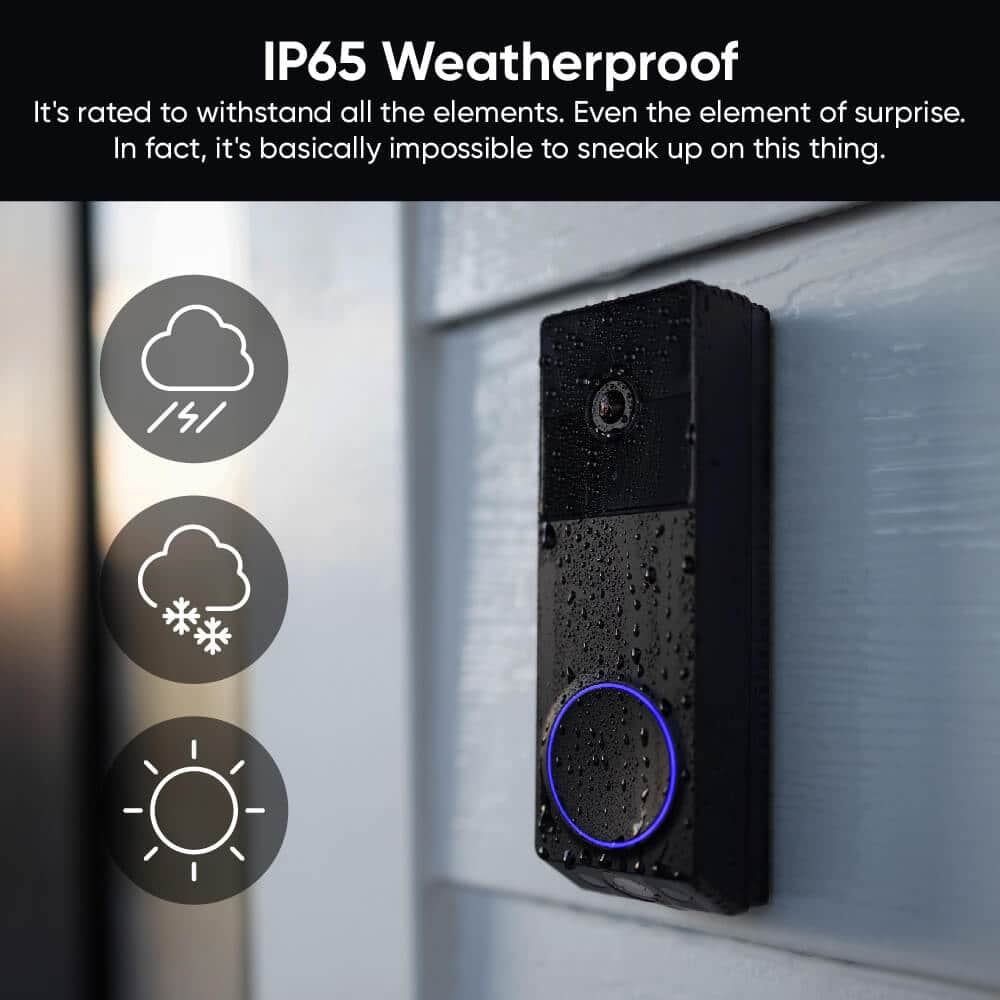
| IP65 rated | IPX5 rated |
| Additional Features - Extras that add value | |
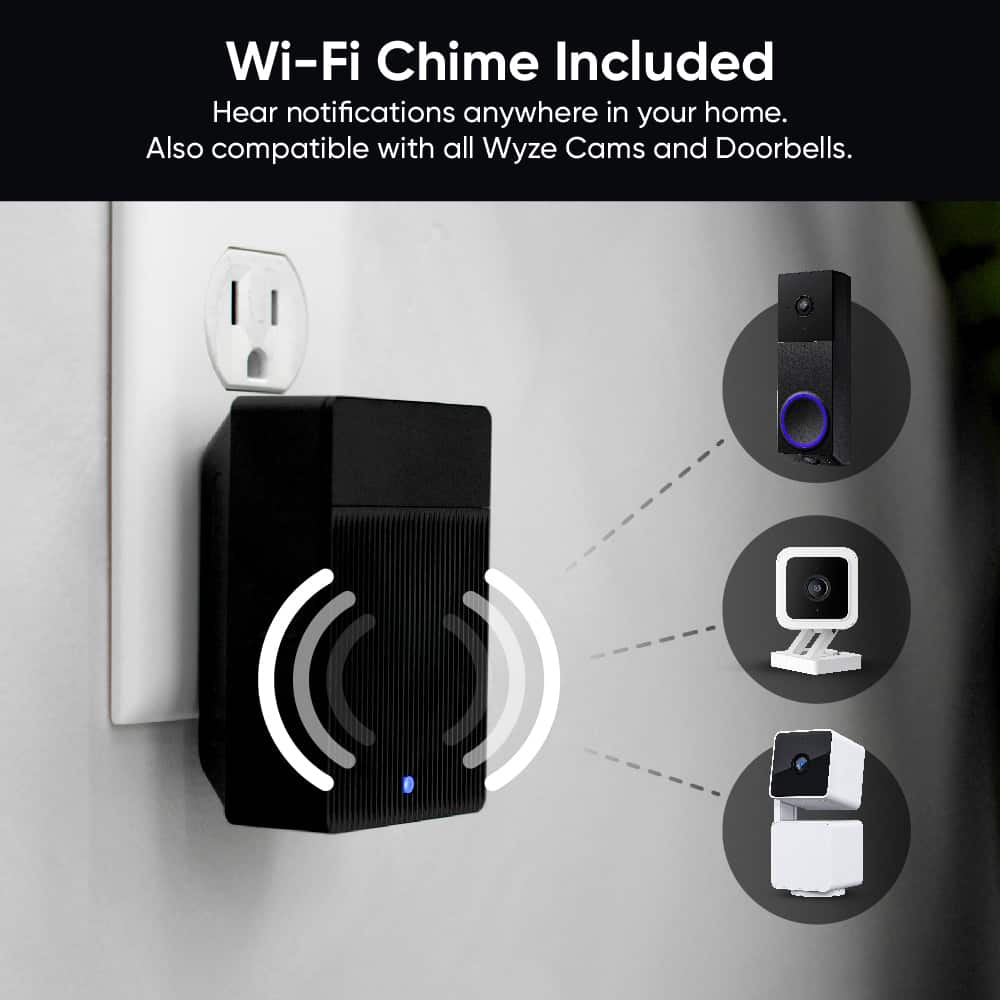
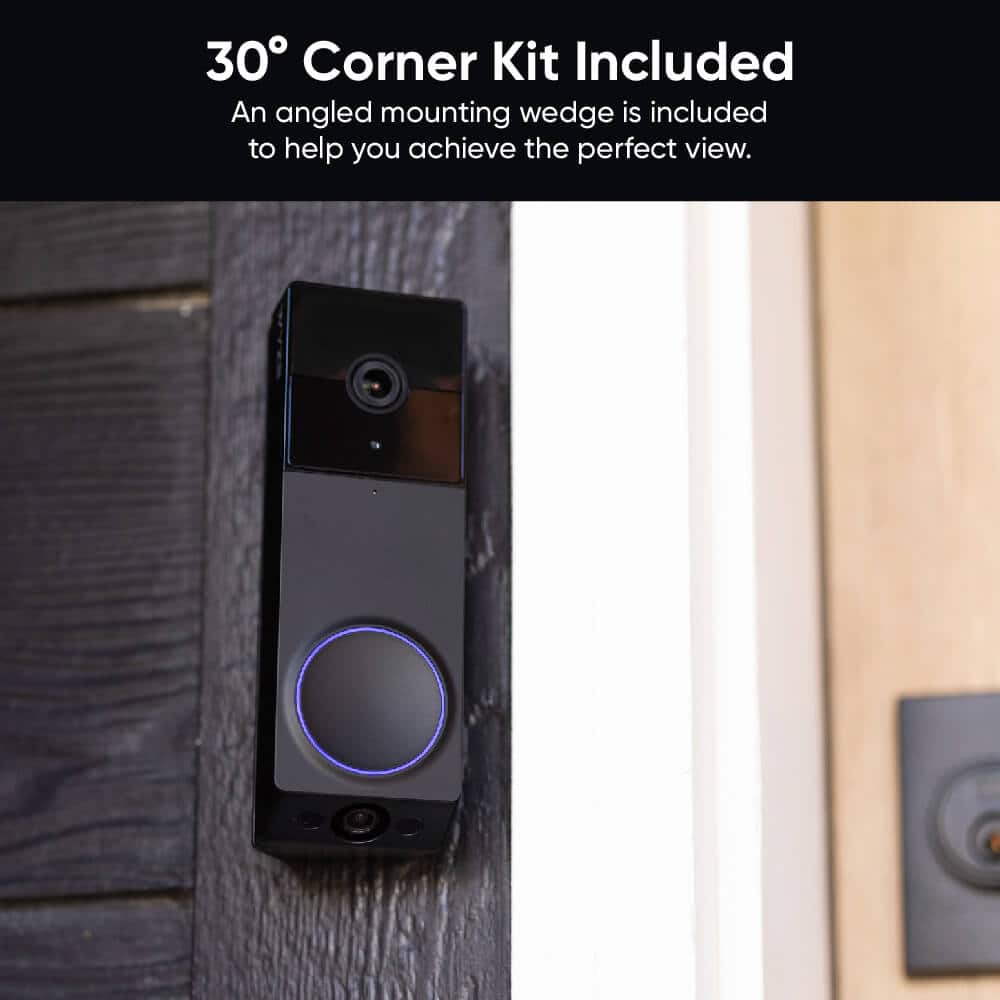
| Included WiFi chime, 30° corner kit | Quick replies, color night vision |
The Wyze Duo Cam Video Doorbell ($89.98) is better for package monitoring and those wanting local storage, while the Ring Battery Doorbell Plus ($89.99) excels in Amazon ecosystem integration and reliable performance.
The Wyze Duo Cam offers higher resolution with its 2K top camera, while the Ring Battery Doorbell Plus provides good 1536p quality with better low-light performance.
Ring requires a subscription ($3-10/month) for video recording, while Wyze offers basic functionality without a subscription and local storage options.
The Wyze Duo Cam typically lasts 3-6 months on battery, while the Ring Battery Doorbell Plus usually needs charging every 1-3 months.
Yes, both can be hardwired or battery-powered. Wyze works with 16-24V AC, while Ring accepts 8-24V AC power.
The Wyze Duo Cam has an advantage with its dedicated bottom camera for package monitoring, while the Ring Battery Doorbell Plus uses a single camera with head-to-toe view.
Both work with Alexa, but Ring offers deeper integration with Amazon devices and services since it's owned by Amazon.
Both have good motion detection, but Wyze offers more detection types (person, package, pet, vehicle) while Ring focuses on person and package detection.
Yes, both are weather resistant. Wyze has an IP65 rating, while Ring has an IPX5 rating - both suitable for outdoor use.
The Wyze Duo Cam supports dual-band WiFi (2.4GHz and 5GHz), while the Ring Battery Doorbell Plus only works on 2.4GHz networks.
Ring offers a wider 150° x 150° field of view, while Wyze uses two cameras with different angles (132° x 100° top, 121° x 60° bottom).
While both cost around $90, Wyze offers better value with no required subscription and dual cameras, but Ring provides better ecosystem integration and proven reliability.
We've done our best to create useful and informative comparisons to help you decide what product to buy. Our research uses advanced automated methods to create this comparison and perfection is not possible - please contact us for corrections or questions. These are the sites we've researched in the creation of this article: androidpolice.com - wyzeguy.com - bestbuy.com - forums.wyze.com - youtube.com - wyze.com - forums.wyze.com - forums.wyze.com - ca.wyze.com - forums.wyze.com - leaseville.com - youtube.com - tomsguide.com - se-en.ring.com - consumerreports.org - linkdhome.com - se-en.ring.com - ae-en.ring.com - wave-electronics.com - bestbuy.com - pcrichard.com - verizon.com - androidpolice.com - sa-en.ring.com - ring.com

Privacy Policy
Terms and Conditions - Affiliate Policy
Home Security
© Copyright 2008-2026.
11816 Inwood Rd #1211, Dallas, TX 75244