

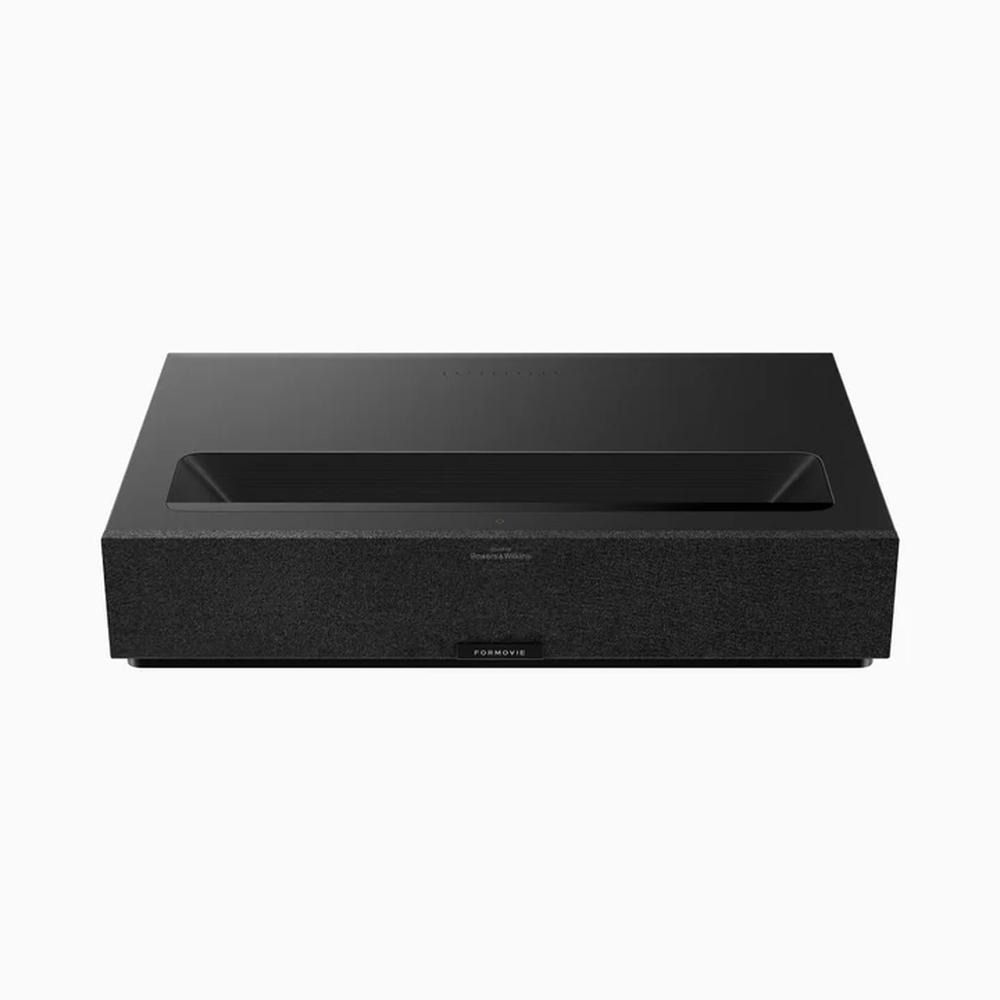

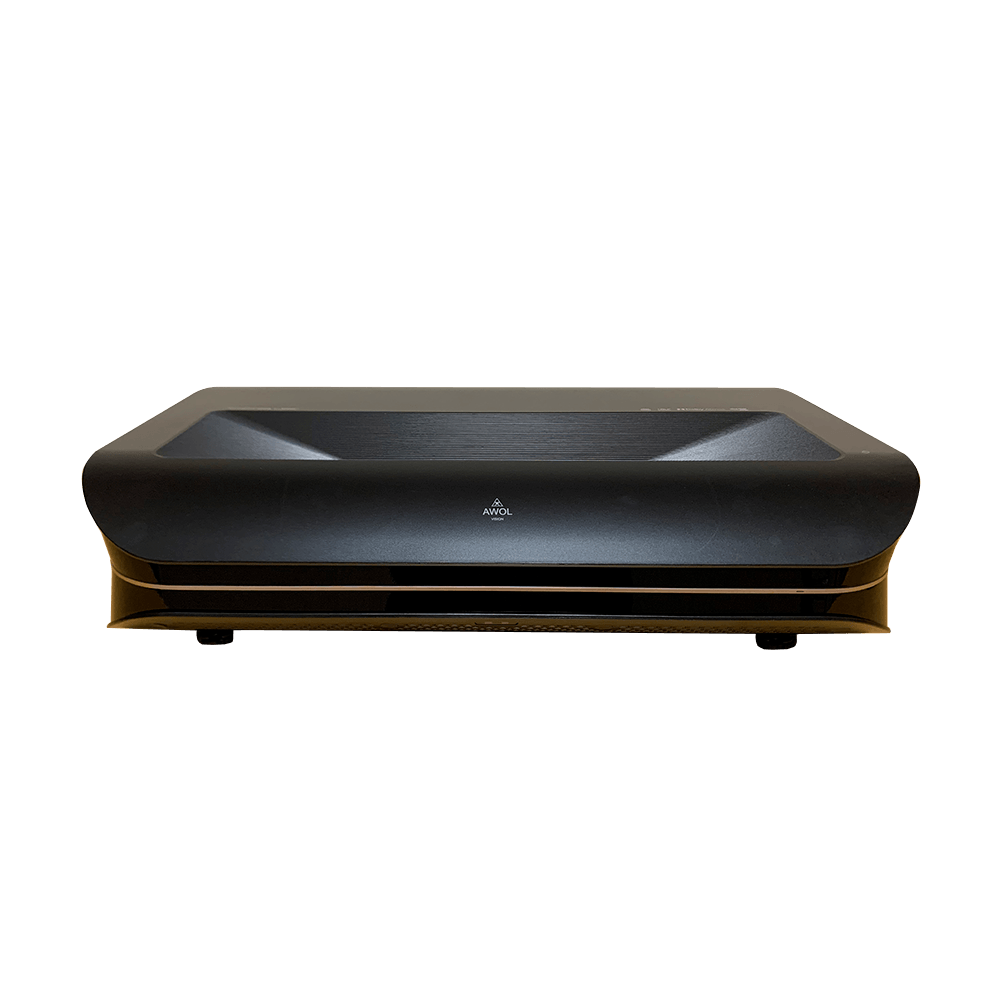
If you're in the market for a high-end home theater projector in 2024, you've likely encountered the AWOL Vision LTV-3500 Pro ($5,999) and Formovie Theater Premium ($2,799) in your research. Both represent the latest in ultra short throw (UST) technology, which allows you to place the projector just inches from your wall while still achieving massive screen sizes up to 150 inches. Let's dive into what makes these projectors different and help you decide which one better suits your needs.
UST technology has come a long way since its early days, when these projectors were primarily built for business presentations. Today's models incorporate advanced triple laser light sources, sophisticated HDR processing, and smart TV features that rival high-end televisions. The Formovie Theater was released in summer 2022, while the AWOL Vision LTV-3500 Pro came later as an upgraded model with enhanced features.
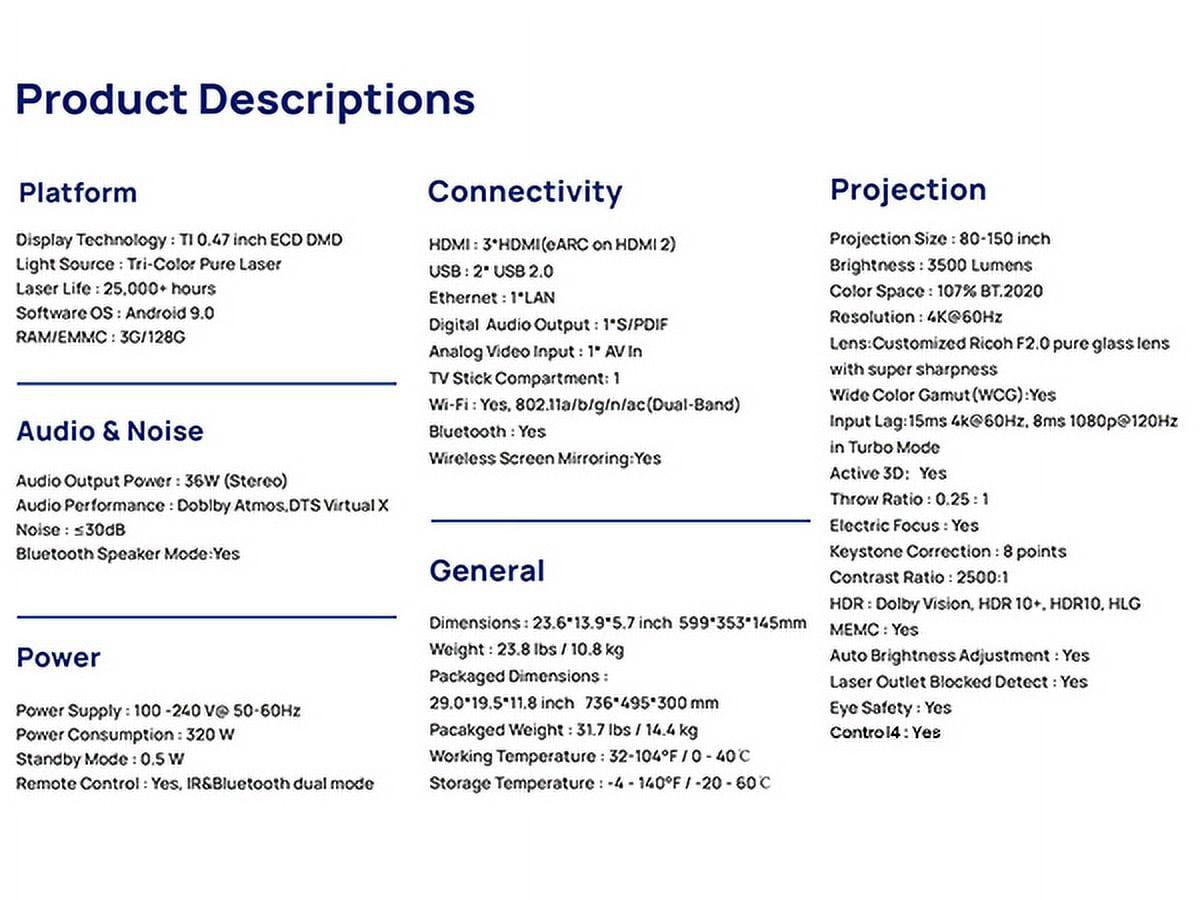
Perhaps the most significant difference between these projectors is their brightness capability. The AWOL Vision LTV-3500 Pro outputs an impressive 3500 lumens, while the Formovie Theater provides 2200 lumens. But what does this mean in real-world use?
Lumens measure the total light output of a projector, and more lumens generally means better visibility in rooms with ambient light. The AWOL's higher brightness makes it significantly more versatile - you can watch sports during the day or keep some lights on during movie night without the image looking washed out. The Formovie, while still bright, performs best in controlled lighting conditions where its superior contrast ratio can shine.
This difference becomes particularly noticeable when watching HDR content. HDR (High Dynamic Range) requires enough brightness to display both dark shadows and bright highlights simultaneously. The AWOL's extra lumens help it deliver more impactful HDR performance, especially in scenes with bright highlights.
Both projectors use similar core technology - a DLP chip with XPR pixel-shifting to achieve 4K resolution, combined with triple laser light sources. However, they take different approaches to image processing and calibration.
The Formovie Theater comes better calibrated out of the box, with more accurate colors that closely match industry standards. It also boasts a higher native contrast ratio of 3000:1 compared to the AWOL's 2200:1. This means that in a dark room, the Formovie can produce deeper blacks and more nuanced shadow detail.
The AWOL Vision provides more extensive calibration controls, allowing enthusiasts or professional calibrators to dial in the exact picture they want. While it requires more setup to achieve its best picture, its higher brightness gives it an advantage in preserving color saturation when there's ambient light.
Both projectors support all major HDR formats including Dolby Vision and HDR10+, but implement them differently:
For gamers, input lag (the delay between pressing a button and seeing the result on screen) is crucial. Here, the AWOL Vision LTV-3500 Pro has a clear advantage:
The Formovie's input lag ranges from 34-43ms depending on resolution, which is acceptable for casual gaming but may be noticeable to competitive players. Both projectors support 4K/60Hz gaming, though neither reaches 4K/120Hz like some high-end gaming TVs.
The Formovie Theater runs Android TV 11.0, providing a polished smart TV experience with built-in streaming apps and Google Assistant integration. The interface is snappy and familiar if you've used other Android TV devices.
The AWOL Vision uses a more basic Android 9.0 implementation but includes more extensive integration options for smart home systems like Control4 and Crestron. This makes it a better choice for custom home theater installations where automation is important.
While most serious home theater enthusiasts will use separate audio systems, built-in sound quality can matter for more casual setups:
Both support eARC for connecting to external sound systems, which I'd strongly recommend for the best experience.
UST projectors require careful placement to achieve optimal image geometry. Both projectors include geometric correction features, but they're best used sparingly as they can impact image quality. The AWOL's slightly shorter throw ratio (0.25 vs 0.21) means it can sit slightly closer to the wall for the same image size.
At $2,799, the Formovie Theater represents exceptional value, delivering premium picture quality and features at a mid-range price point. The AWOL Vision LTV-3500 Pro at $5,999 requires a bigger investment but justifies it with class-leading brightness and gaming performance.
Consider your viewing environment and habits:
Choose the AWOL Vision if:
Choose the Formovie Theater if:
Both projectors represent impressive achievements in UST technology, but they serve different needs. The Formovie Theater excels as a dedicated home theater projector in controlled conditions, while the AWOL Vision offers more flexibility for bright rooms and gaming at a premium price point.
For my own use, I prefer the Formovie Theater's value proposition and picture quality in my dedicated theater room. However, if I were setting up in a living room with large windows, the AWOL's extra brightness would be worth the premium.
Remember that either projector will benefit significantly from a proper ALR (Ambient Light Rejecting) screen, which helps preserve contrast and color saturation by rejecting off-axis light. This is especially important for UST projectors due to their extreme projection angle.
| AWOL Vision LTV-3500 Pro | Formovie Theater Premium |
|---|---|
| Price - Major factor in value proposition | |
| $5,999 | $2,799 |
| Brightness - Critical for ambient light performance and HDR impact | |
| 3,500 ANSI lumens (excellent bright room performance) | 2,200 ISO lumens (best in controlled lighting) |
| Contrast Ratio - Determines black level depth and overall image punch | |
| 2,200:1 native | 3,000:1 native |
| Gaming Input Lag - Lower numbers mean more responsive gaming | |
| 8ms @1080p, 15ms @4K (excellent for gaming) | 34-43ms range (adequate for casual gaming) |
| Color Gamut - Wider coverage means more vibrant colors | |
| 107% BT.2020 (requires calibration) | 107% BT.2020 (better out-of-box accuracy) |
| Throw Ratio - Determines installation distance from wall | |
| 0.25:1 (100" from 8.3 inches) | 0.21:1 (100" from 9.2 inches) |
| Smart Platform - Affects streaming and usability | |
| Android 9.0 (basic interface) | Android TV 11.0 (superior smart features) |
| Audio System - Important if not using external speakers | |
| 36W basic system | Bowers & Wilkins tuned speakers |
| HDR Support - Affects dynamic range and color performance | |
| Dolby Vision, HDR10, HDR10+, HLG | Dolby Vision, HDR10, HDR10+, HLG |
| Light Source Lifespan - Long-term reliability | |
| 25,000 hours | 20,000 hours |
| Smart Home Integration - Important for custom installations | |
| Control4, Savant, Crestron compatible | Basic Google Assistant only |
| Screen Size Range - Installation flexibility | |
| 80" to 150" | 80" to 150" |
| 3D Support - For enthusiasts who enjoy 3D content | |
| Full 3D support with multiple formats | Future firmware update promised |
The AWOL Vision LTV-3500 Pro is significantly better for bright rooms with its 3,500 lumens compared to the Formovie Theater Premium's 2,200 lumens. If you plan to watch during the day or with lights on, the AWOL is the better choice.
The Formovie Theater Premium at $2,799 is substantially more affordable than the AWOL Vision LTV-3500 Pro at $5,999, offering excellent value for its features.
The AWOL Vision LTV-3500 Pro has superior gaming performance with 8ms input lag at 1080p and 15ms at 4K, while the Formovie Theater has 34-43ms input lag, making the AWOL the better choice for gamers.
Yes, both the AWOL Vision LTV-3500 Pro and Formovie Theater Premium support true 4K resolution (3840x2160) using DLP XPR technology.
The Formovie Theater Premium has better smart features with Android TV 11.0, while the AWOL Vision LTV-3500 Pro uses a more basic Android 9.0 system.
Both projectors can display a 100-inch image from very close to the wall - the AWOL needs 8.3 inches while the Formovie needs 9.2 inches.
The Formovie Theater Premium has better native contrast (3000:1) and superior out-of-box calibration, making it the better choice for dedicated home theater rooms.
Yes, both projectors work best with an ALR (Ambient Light Rejecting) screen designed specifically for UST projectors.
The Formovie Theater Premium features superior Bowers & Wilkins tuned speakers compared to the basic 36W system in the AWOL Vision LTV-3500 Pro.
Yes, both projectors support all major HDR formats including Dolby Vision, HDR10, and HDR10+.
The AWOL Vision LTV-3500 Pro has a 25,000-hour rated laser life, while the Formovie Theater Premium is rated for 20,000 hours.
The AWOL Vision LTV-3500 Pro is better for sports viewing due to its higher brightness, which is important for daytime viewing when many sports events are broadcast.
We've done our best to create useful and informative comparisons to help you decide what product to buy. Our research uses advanced automated methods to create this comparison and perfection is not possible - please contact us for corrections or questions. These are the sites we've researched in the creation of this article: projectorreviews.com - dreamediaav.com - youtube.com - projectorcentral.com - awolvision.com - awolvision.de - projectorjunkies.com - youtube.com - awolvision.com - projectorcentral.com - techradar.com - projectorscreen.com - avsforum.com - rtings.com - nothingprojector.com - formovie.com - bmcav.com.au - projectorcentral.com - digitalcinema.com.au - projectorreviews.com - techpowerup.com - nothingprojector.com

Privacy Policy
Terms and Conditions - Affiliate Policy
Home Security
© Copyright 2008-2026.
11816 Inwood Rd #1211, Dallas, TX 75244